


Innovative Odour-Tracking Robot Inspired by Silkworms Designed for Disaster Rescue
The CSR Journal Magazine

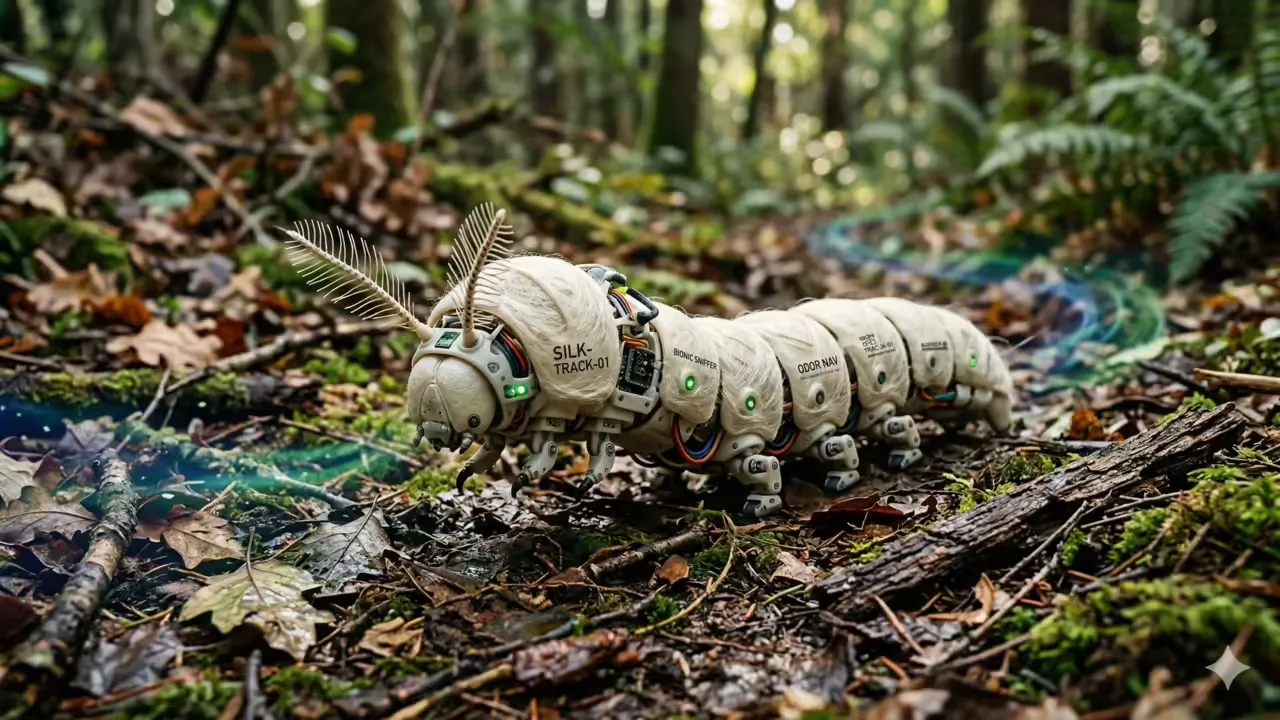
Scientists have unveiled an odour-tracking robot that mimics the capabilities of the silkworm moth, known for its keen ability to detect pheromones. This groundbreaking development aims to address a long-standing limitation in robotic design—sensor dependency. Traditional robots rely heavily on dual sensors for odour tracking, leading to a significant drop in performance if one sensor fails. However, the new robot is designed to maintain effective odour navigation even when one of its sensors is inactive. This adaptation, reflecting natural biological systems, opens avenues for enhanced search and recovery missions, particularly in disaster scenarios.

Biological Insights Guiding Robotic Functionality

The concept draws from the silkworm moth’s unique anatomical features, particularly its ability to navigate effectively with just one functional antenna. Research published in a leading journal highlights the moth’s adeptness in maintaining orientation while using weak scent trails carried by the wind. This biological resilience has inspired engineers to create a robot with asymmetric sensor functionality, enabling it to operate effectively with a reduced sensor count. The findings underscore a shift from traditional precision-based robotics toward designs that offer greater flexibility and adaptability.

Enhanced Functionality Despite Sensor Limitations

In contrast to traditional technologies that depend on algorithms programmed for dual-functionality, the new robot employs a behavioural method, significantly altering the approach to odour tracking. It adapts its movements based on remaining sensor input when faced with malfunction. Remarkably, research indicates that the robots maintain a consistent success rate in odour tracking even when one sensor fails. This represents a transformative evolution in robotic systems, moving away from rigid designs toward more nuanced and resilient structures.

Importance of Odour-Tracking Robot Technology

Machine olfaction—odour-based navigation—holds numerous applications across multiple sectors, including disaster relief, environmental monitoring, and hazardous material detection. Robots equipped with this technology could assist in locating individuals in collapsed structures, identifying gas leaks, or detecting hazardous substances, all without endangering human operators. Unlike traditional sniffer dogs, which require rest and training, these robots can operate continuously in challenging environments, ensuring persistent support during critical missions.

Advances in Robotics Through Natural Models

The ongoing trend in science emphasizes leveraging nature’s solutions to resolve complex engineering issues. Over millions of years, insects have effectively evolved mechanisms for survival and adaptability. By imitating these natural systems, researchers are progressing toward developing robots that possess not only intelligence but also the flexibility to adapt to unforeseen challenges. The silkworm-inspired robot exemplifies this approach, demonstrating that a loss of sensory capacity can be reframed as an opportunity for adaptation rather than failure, signifying a potential paradigm shift in robotic development.

Long or Short, get news the way you like. No ads. No redirections. Download Newspin and Stay Alert, The CSR Journal Mobile app, for fast, crisp, clean updates!

App Store –  https://apps.apple.com/in/app/newspin/id6746449540 

Google Play Store – https://play.google.com/store/apps/details?id=com.inventifweb.newspin&pcampaignid=web_share

Latest News

Popular Videos
