


Indian Institute of Technology Kharagpur Study on Moon Rocks Boosts Insights for Chandrayaan-4
The CSR Journal Magazine

Researchers from the Indian Institute of Technology Kharagpur, in collaboration with the Physical Research Laboratory, have made a significant discovery regarding the Moon’s interior. This finding is anticipated to have a considerable impact on India’s upcoming Chandrayaan-4 mission. The focus of this study is on a specific type of rock known as ilmenite-bearing cumulates (IBC), thought to have formed between 4.3 and 4.4 billion years ago. This period is believed to coincide with a time when a vast ocean of molten rock existed on the Moon.

As this magma ocean cooled, denser mineral layers sank into the lunar interior, creating a historical record of the Moon’s early formation. To explore these ancient materials, the research team conducted experiments that recreated the extreme conditions of the lunar interior. They subjected rock samples to pressures nearing 3 gigapascals and temperatures surpassing 1,500 degrees Celsius. These experiments illuminated how IBC rocks partially melt and interact with the surrounding mantle, generating magmas comparable to the titanium-rich basalts found on the Moon’s surface.

Key Findings from the Study

One of the primary discoveries from this research is that varying melting conditions lead to the formation of different magma types. At elevated temperatures, moderately titanium-rich melts can directly morph into intermediate-Ti basalts. Conversely, at lower temperatures, high titanium melts undergo evolution to form even more titanium-rich and magnesium-poor variants before combining with other rising magmas. This intricate process ultimately results in the high-Ti basalts identified by earlier lunar missions.

The study also provides insights into the behavior of magma deep within the Moon. Under lower pressure conditions, these melts can ascend to the surface, contributing to volcanic activity. However, at higher pressures, certain magmas may descend back into the mantle, hinting at a dynamic internal system characterized by both upward and downward movements, known as mantle overturn.

Implications for Future Lunar Exploration

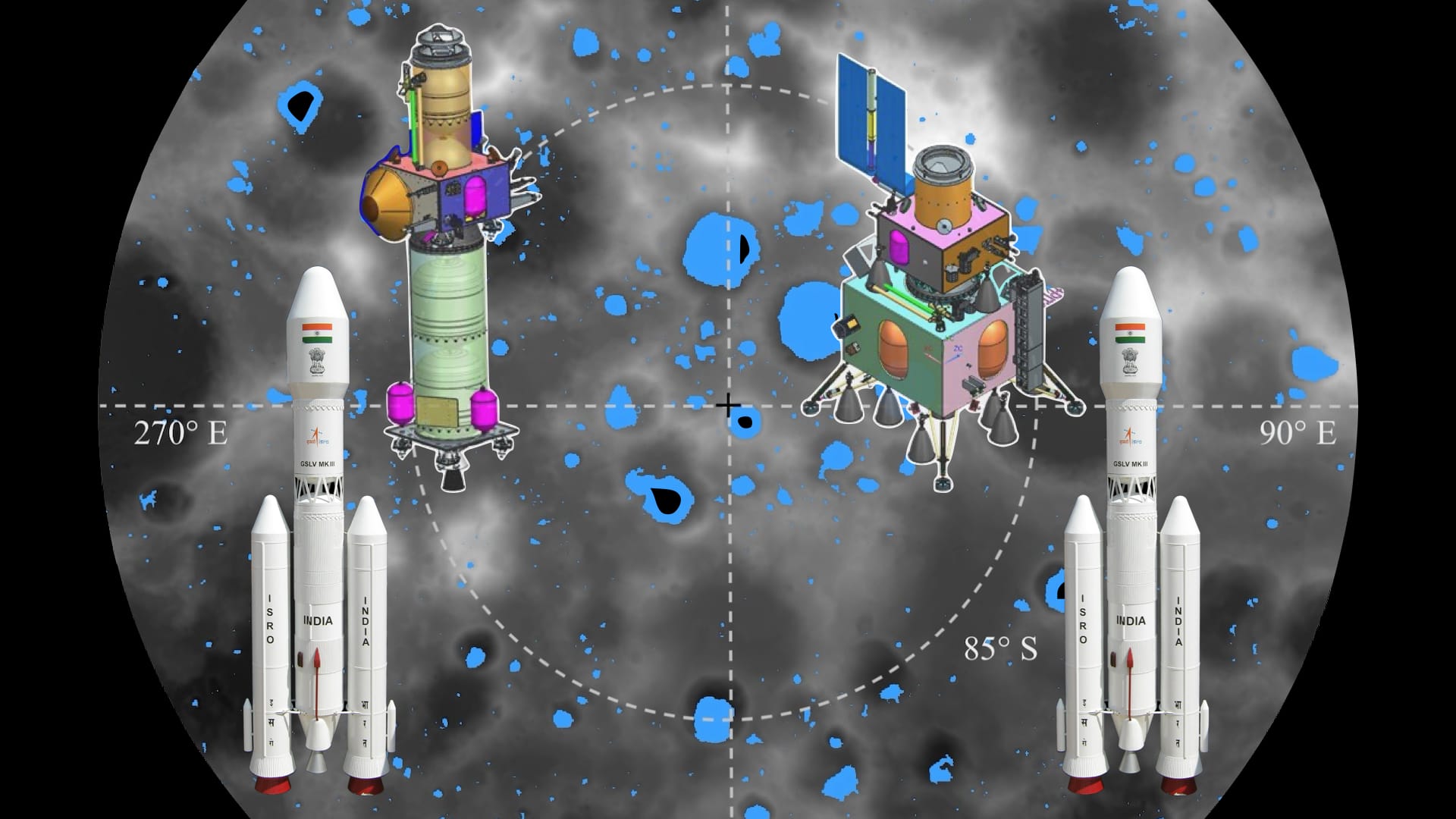
The recent findings not only resolve a longstanding mystery regarding the Moon but also bear significant implications for India’s future lunar exploration plans. The Chandrayaan-4 mission, set to return samples to Earth later this decade, will greatly benefit from a clearer understanding of where titanium-rich materials form and how they evolve. This knowledge will be crucial for identifying suitable landing sites and interpreting the returned specimens.

Scientists anticipate that this research will aid in pinpointing scientifically valuable materials on the lunar surface, thereby influencing mission planning. Furthermore, it will enhance the understanding of orbital data gathered by spacecraft, allowing for improved predictions regarding the Moon’s geological composition.

Chandrayaan-4 Mission Details

As preparations continue for the Chandrayaan-4 mission, designated as India’s inaugural attempt to collect lunar samples for return to Earth, the project represents a significant technological advancement subsequent to the successful soft-landing achieved by Chandrayaan-3 in 2023. Potential landing sites have been identified, with a mountainous area near the Moon’s South Pole classified as one of the safest and most scientifically promising locations for the mission. Researchers from the Space Applications Centre of the Indian Space Research Organisation (ISRO) have indicated this region as a priority for the upcoming endeavor.

The research findings and ongoing endeavors highlight India’s commitment to advancing lunar exploration and understanding the Moon’s geological history. As Professor Sujoy Ghosh commented, the goal is to understand how unique, titanium-rich magmas develop deep within the Moon and eventually reach the surface, which is crucial for future scientific missions.

Long or Short, get news the way you like. No ads. No redirections. Download Newspin and Stay Alert, The CSR Journal Mobile app, for fast, crisp, clean updates!

App Store –  https://apps.apple.com/in/app/newspin/id6746449540 

Google Play Store – https://play.google.com/store/apps/details?id=com.inventifweb.newspin&pcampaignid=web_share

Latest News

Popular Videos
