


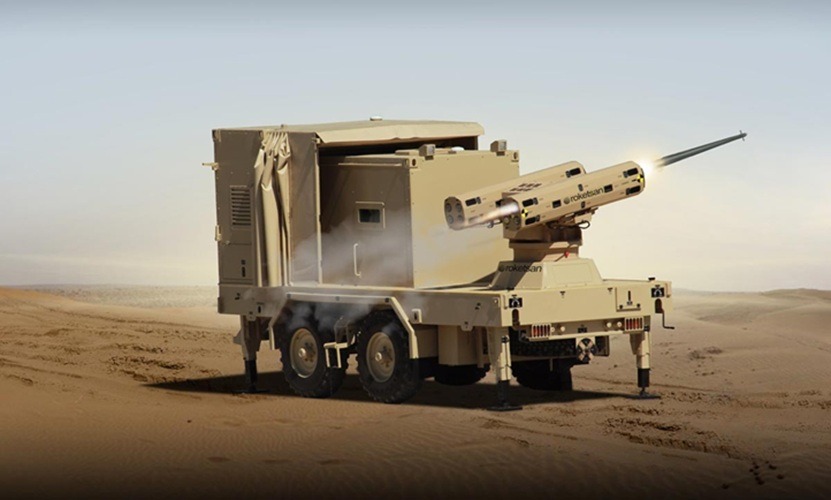

India is closely monitoring developments as Bangladesh’s military establishment has initiated a renewed push to expand its weapons inventory and enhance strategic capabilities, with a particular emphasis on increasing its stockpile of ‘smart’ laser-guided missiles, intelligence sources active in Dhaka said.
As part of a long-term modernisation plan, the Bangladesh Air Force (BAF) has decided to procure the Cirit semi-active laser-guided weapon system manufactured by Turkish Defence firm Roketsan, along with multi-purpose warheads and a comprehensive logistics package. Defence Ministry documents accessed by intelligence agencies indicate that the procurement process has already been initiated.
On Monday, the Directorate General Defence Purchase (DGDP) under Bangladesh’s Ministry of Defence floated an international tender inviting bids from foreign manufacturers. However, sources indicated that the BAF has shown a clear preference for the Turkish-made Cirit system.
Why Cirit missiles matter
Defence experts describe the Cirit missile as a cost-effective and highly accurate precision weapon, particularly suited for use on armed helicopters. “Cirit laser-guided missiles are optimised for engaging static or moving lightly armoured or unarmoured targets,” said a Bangladesh-based artillery expert. “The next-generation Cirit bridges the tactical gap between 70-mm unguided rockets and guided anti-tank missiles.”
Roketsan has highlighted the missile’s versatile design, which allows integration across multiple platforms. Bangladeshi defence sources noted that the system aligns well with the country’s operational requirements and military scenarios. The Cirit has been tested in both air-to-surface and surface-to-surface engagement roles.
Existing use and operational role
The BAF already operates Cirit laser-guided missiles on its Selex Falco Astore unmanned aerial vehicles and has previously procured the system for its T129 ATAK attack helicopters, reflecting a growing emphasis on precision-strike capabilities. On drones, the missiles are primarily intended for counter-insurgency and anti-armour roles.
When paired with UMTAS anti-tank missiles, the Cirit system significantly enhances precision operations in challenging terrains such as the Chittagong Hill Tracts, defence analysts said.
Sources also revealed that the BAF is in the final stages of deciding to acquire at least six Turkish-built T129 ATAK attack helicopters. This acquisition, along with other planned purchases, is seen as part of Bangladesh’s broader effort to redefine its strategic autonomy, procurement philosophy and long-term air combat doctrine.
Broader defence modernisation push
The potential acquisition of advanced platforms, including fourth-generation Eurofighter Typhoon multi-role combat aircraft, signals a more assertive approach to defence modernisation. Analysts describe this shift as a form of “autonomy posturing” in South Asia.
Defence experts note that pairing Eurofighter Typhoons with T129 ATAK helicopters would allow the BAF to conduct a full spectrum of modern air operations—ranging from extended-range maritime strikes to low-altitude air support across Bangladesh’s coastline, forests, hilly regions and long land borders.
In August this year, Roketsan conducted trials integrating the Cirit missile system with multiple firing platforms, including unmanned surface vessels, self-propelled anti-tank systems, amphibious and tracked armoured vehicles, as well as T129 ATAK helicopters. These tests are believed to have further strengthened Bangladesh’s interest in the system as it seeks to expand and diversify its precision-guided strike capabilities.
Long or Short, get news the way you like. No ads. No redirections. Download Newspin and Stay Alert, The CSR Journal Mobile app, for fast, crisp, clean updates!
App Store – https://apps.apple.com/in/app/newspin/id6746449540
Google Play Store – https://play.google.com/store/apps/details?id=com.inventifweb.newspin&pcampaignid=web_share