


app-store-logo
play-store-logo
February 21, 2026

India is Emerging as a Key Global Power, Driven by Economic Growth and a Demographic Advantage amid Changing Geopolitics

The CSR Journal Magazine

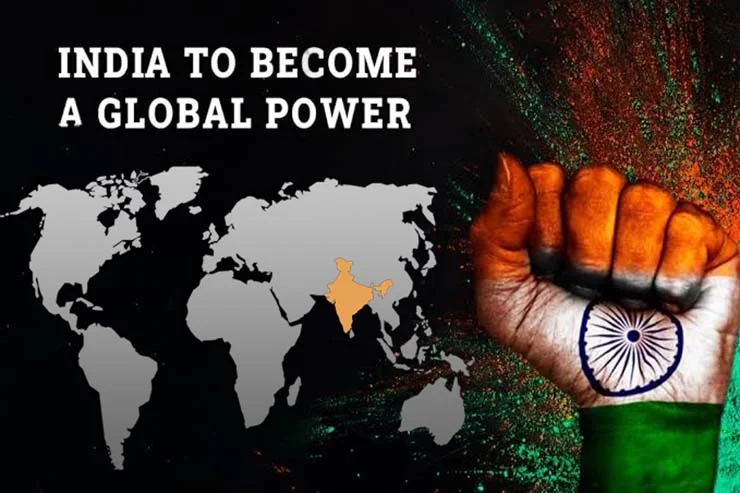
In the landscape of 21st-century geopolitics, the emphasis has often been on the rivalry between the United States and China. However, recent discussions suggest that a significant player may not be situated in either of these two nations. India, recognized as the fastest-growing major economy and the most populous country, is emerging as a pivotal force in global affairs. Insights from international relations scholar Amitav Acharya indicate that as other major powers experience demographic decline, India’s most valuable asset might simply be its population. This raises important questions about India’s role in shaping the global order.

The Concept of a ‘Third Pole’

One key idea presented is the notion of India becoming a “third pole” of global power, wherein it operates independently from both the United States and China. India is envisioned as a significant center of influence, characterized by its position as one of the top three economies globally, its strategic prowess in the Indian Ocean, a youthful demographic, and as a diplomatic entity capable of engaging with multiple countries without forming formal alliances. In Acharya’s framework, this vision supports a multipolar world order, wherein power is shared among various nations, and India is a crucial player.

Accelerated Economic Growth

While acknowledging that China historically industrialized and reduced poverty at a faster rate, Acharya emphasizes that this perspective may overlook longer-term trends. In the years following India’s independence, the nation took a prominent role in Asian affairs, a period during which China was solidifying its Communist governance. Though China eventually outpaced India, recent growth figures indicate that India has begun to surpass China’s growth rate, albeit starting from a lower economic baseline. India’s commitment to democracy presents both challenges and opportunities, particularly in the labor market. Expanding access to trade, especially with Europe and the United States, could offer India not only growth but also enhanced economic stability.

Demographic Advantages and Challenges

Contrary to China’s declining birthrate and aging population, India is poised to benefit from a “demographic dividend,” characterized by a large workforce and relatively fewer elderly dependents. Unlike China, India did not enforce a one-child policy, allowing it to maintain a younger labor input. However, Acharya cautions that demographic trends alone do not guarantee success. Initiatives focused on job creation, education reform, and skill enhancement will be vital. Moreover, integrating its economy into global supply chains that combine manufacturing, services, and technology could determine the outcome of this demographic phase.

The Shift to Multi-Alignment Strategy

India’s foreign policy has evolved from a stance of non-alignment during the Cold War to a more nuanced approach termed “multi-alignment.” This strategy aims to mitigate dependency on any singular global power. By fostering relationships with the United States, engaging with Russia, and strengthening trade ties with the European Union, India seeks to maintain its strategic independence. This complex balancing strategy remains feasible as long as major powers are willing to accept a flexible geopolitical landscape; however, external pressures from the United States could complicate this model if loyalty is demanded.

The Role of the Indian Diaspora

Under the leadership of Prime Minister Narendra Modi, the Indian diaspora has been leveraged as a diplomatic resource, with significant events held in American cities to enhance India’s visibility and influence. Despite this, there is a recognition that American perspectives on India remain less developed compared to views on China. Indian Americans have made noteworthy achievements in technology and politics; however, their rising prominence has also encountered resistance amid growing populist sentiments. Acharya indicates that this resentment is rooted in broader anti-immigrant trends rather than solely economic displacement. The political diversity within the diaspora is evolving, with some members aligning with conservative ideologies as a means of integrating into a polarized American society.

Long or Short, get news the way you like. No ads. No redirections. Download Newspin and Stay Alert, The CSR Journal Mobile app, for fast, crisp, clean updates!

App Store –  https://apps.apple.com/in/app/newspin/id6746449540 

Google Play Store – https://play.google.com/store/apps/details?id=com.inventifweb.newspin&pcampaignid=web_share

Latest News

Popular Videos