


app-store-logo
play-store-logo
March 7, 2026

Impact of US-Israel-Iran Tensions on Global Climate
The CSR Journal Magazine

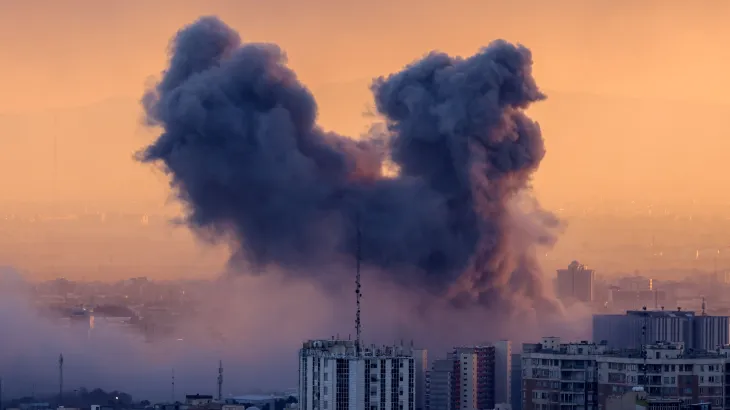
As tensions escalated in the Middle East in early 2026, significant attention was drawn to the human and economic costs of the conflict, including the rising prices of oil and disruptions to shipping routes. However, the environmental ramifications, particularly the release of greenhouse gases, received little to no focus. Each military operation, from missile strikes to the mobilization of aircraft, contributes to fuel consumption and emissions, adding to an already precarious atmospheric situation. Professor Anjal Prakash from the Indian School of Business indicated that these conflicts divert necessary resources from efforts aimed at reducing carbon emissions and compromise the objectives outlined in the Paris Agreement.

The Environmental Toll of Warfare

War has proven to be a significant yet often overlooked factor exacerbating climate change challenges. Conflicts across the globe not only inflict human suffering but also incur environmental costs that threaten the future of the planet. A study conducted in 2024 revealed that the initial four months of the Israel-Gaza conflict produced emissions exceeding the total annual carbon output of 26 countries. When factoring in the emissions from rebuilding destroyed infrastructure, the total emissions surpass those of over 135 nations, including Sweden and Portugal. Similarly, the ongoing conflict in Ukraine has resulted in substantial emissions, with nearly three years of fighting contributing approximately 230 million metric tonnes of carbon dioxide, equivalent to the annual emissions of Austria, Hungary, the Czech Republic, and Slovakia combined.

Specific Emissions from the Iran Conflict

As of March 2026, the looming threat of a large-scale conflict in the Gulf region poses a serious risk to global climate stability. The burning of oil refineries and gas processing plants not only contributes carbon dioxide but also releases other harmful pollutants such as sulfur dioxide, nitrogen oxides, and carcinogenic substances. Given that the Persian Gulf is a semi-closed body of water, the potential for catastrophic environmental fallout from military actions is substantial. Moreover, shipping detours due to ongoing tensions further increase emissions, as vessels taking longer routes consume more fuel, thus adding an invisible layer of environmental impact.

Implications for India

India faces significant challenges as the world’s most populous country and a major crude oil importer, largely dependent on the now-disruption Gulf routes. This situation is forcing a return to coal—a fossil fuel that contradicts India’s climate commitments—due to supply shortages. The country has pledged to reduce emissions by 45 percent from 2005 levels by 2030 and aims for net-zero emissions by 2070. However, conflicts causing oil supply disruptions extend the timeline for achieving these goals. Additionally, India’s western coastline is vulnerable to pollution from the Gulf, which exacerbates public health issues in a country already grappling with severe air quality challenges.

The Need for Change in Emissions Reporting

While conflicts are likely to persist, the global community’s failure to account for their climatic impacts represents a critical oversight. With the upcoming COP31 conference scheduled to take place in Australia and the Pacific, the necessity for compulsory military emissions reporting has never been more pressing. India, as a significant non-combatant economy experiencing disproportionate adverse effects, is in a pivotal position to advocate for such measures during international discussions.

Long or Short, get news the way you like. No ads. No redirections. Download Newspin and Stay Alert, The CSR Journal Mobile app, for fast, crisp, clean updates!

App Store –  https://apps.apple.com/in/app/newspin/id6746449540 

Google Play Store – https://play.google.com/store/apps/details?id=com.inventifweb.newspin&pcampaignid=web_share

Latest News

Popular Videos
