


“If America Strikes Us, We Should Attack Indian Cities Like Delhi & Mumbai”: Ex-Pak Envoy
The CSR Journal Magazine

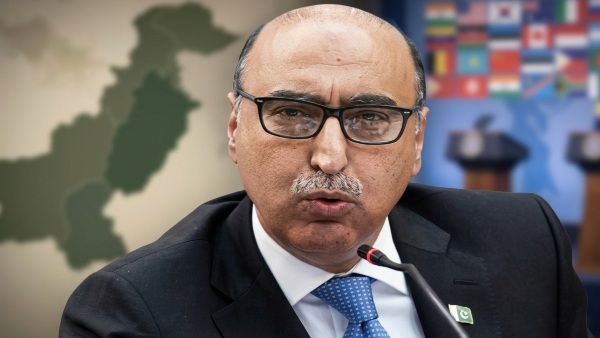
Abdul Basit, the former high commissioner of Pakistan to India, has made contentious remarks suggesting that if Pakistan were to be attacked by the United States, a logical course of action would be to target major Indian cities such as New Delhi and Mumbai. In an interview with a local Pakistani news channel, Basit stated that America would unlikely strike Pakistan’s nuclear assets. He implied that in a hypothetical scenario where the US attacked Pakistan, the country’s response would inevitably affect India, as the US is beyond Pakistan’s nuclear reach.

Comments on Strategic Responses

In discussing his views, Basit asserted, “If someone casts an evil eye on us, we will attack Mumbai and New Delhi in India without even thinking twice.” He emphasized that the decision to retaliate against India would be immediate, reflecting a stance of aggression in response to perceived threats. This statement has drawn attention within the context of rising tensions between the neighboring countries and their respective military capabilities.

Response to US Intelligence Statements

The controversial remarks came in light of US National Intelligence director Tulsi Gabbard’s statements before the Senate intelligence committee, where she highlighted concerns regarding Pakistan’s long-range ballistic missile program. Basit critiqued Gabbard’s assertions, accusing her of harboring a biased view against Pakistan. He noted, “Pakistan’s deterrence is India-specific,” while also remarking that Gabbard failed to recognize India’s own missile capabilities.

Pakistan’s Missile Arsenal

According to reports from the Center for Arms Control and Non-Proliferation, Pakistan’s nuclear arsenal includes various operational ballistic missiles. While the country primarily possesses short to medium-range systems, it is enhancing its cruise missile capabilities. The types of missiles within its ground arsenal range from 5 to 40 kilotons in yield, including short-range missiles like the Abdali and Ghaznavi, along with medium-range systems including the Shaheen-2. The Shaheen-3, capable of striking targets up to 2,750 kilometers away, is in development but does not classify as an intercontinental ballistic missile (ICBM), which requires a minimum range exceeding 5,500 kilometers.

Political Reactions in India

The remarks made by Basit have drawn significant backlash from Indian political figures. Tuhin Sinha, a spokesperson for the Bharatiya Janata Party (BJP), criticized Basit’s threats as evidence of Pakistan’s instability. He stated that the response showcases a nation rattled by previous military operations undertaken by India. This statement reflects the current state of diplomatic tension between the two countries.

Official Response from Pakistan

In response to the US official’s comments and Basit’s statements, Tahir Andrabi, spokesperson for Pakistan’s Ministry of Foreign Affairs, categorically rejected any assertions suggesting a threat posed by Pakistan’s missile capabilities. He maintained that Pakistan’s strategic resources are purely defensive, aimed at preserving national sovereignty and fostering peace within South Asia.

Long or Short, get news the way you like. No ads. No redirections. Download Newspin and Stay Alert, The CSR Journal Mobile app, for fast, crisp, clean updates!

App Store –  https://apps.apple.com/in/app/newspin/id6746449540 

Google Play Store – https://play.google.com/store/apps/details?id=com.inventifweb.newspin&pcampaignid=web_share

Latest News

Popular Videos
