


app-store-logo
play-store-logo
February 18, 2026

Human-Centric Careers Surpass Tech Roles in India
The CSR Journal Magazine

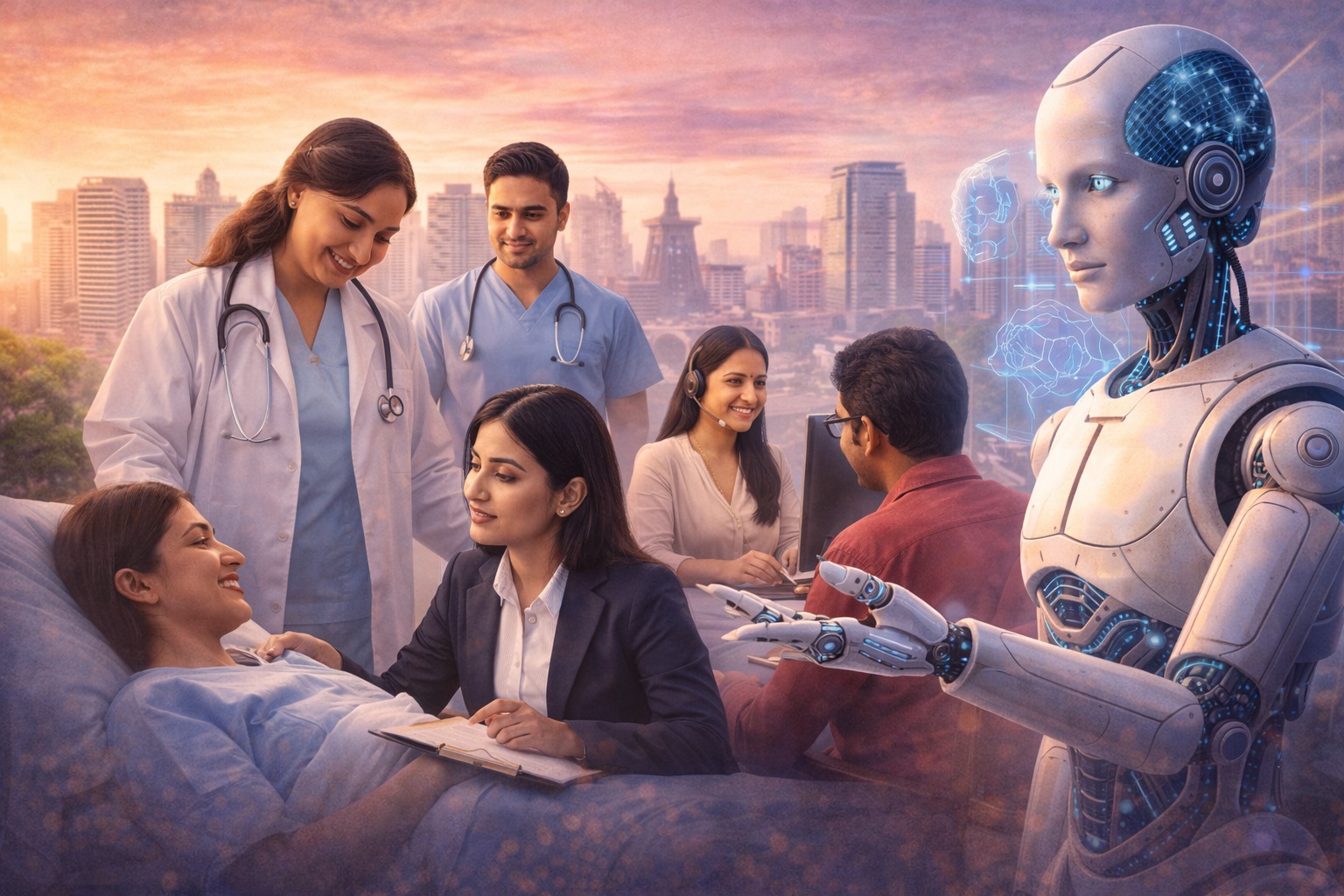
For a considerable time, expertise in technology was regarded as a secure path to career advancement in India, with fields such as software engineering, IT services, and programming dominating both hiring practices and professional aspirations. As the country approaches 2026, this established paradigm appears to be evolving, suggesting a significant reevaluation of the components essential for cultivating a future-ready career. Data from the Indeed Best Jobs 2026 list indicates that while technology positions are still vital, the roles that are witnessing the most rapid growth and offering the highest salaries are increasingly grounded in human capabilities, particularly in healthcare, infrastructure leadership, architecture, senior management, and customer experience-driven services.

Human Skills in Demand Amidst AI Advancement

This transformation underscores the emergence of India’s experience economy, emphasizing that value is not solely derived from digital efficiency but also from human decision-making in complex, high-stakes situations. The core of this change lies in a fundamental limitation inherent to technology. While artificial intelligence can enhance processes, it lacks the ability to accept accountability for outcomes. Saravanan Kesavan, Dean and Professor of Operations at BITS School of Management, highlighted that AI cannot replicate essential human attributes such as judgment, empathy, and leadership. His studies reveal that although AI excels in scenarios with historical data, humans outperform in uncertain or novel circumstances.

Kesavan elaborated that AI is adept at accurately predicting demand when past data is available. However, in situations involving new products or first-time scenarios, human input is more reliable. Furthermore, achieving empathy poses additional challenges for AI; in his research involving workforce scheduling, AI effectively maximized profits but struggled to accommodate employee requests for flexibility due to personal obligations—a nuance more readily handled by human supervisors. He emphasized that leadership skills are inherently human, as AI systems only follow goals set by people without the capability to define purpose or inspire trust.

Long-Term Implications for the Job Market

Indicators from the labor market suggest that this evolution is a permanent structural change rather than a temporary correction. Neeti Sharma, CEO of TeamLease Digital, noted that India is experiencing a redistribution of value within career landscapes, rather than the diminishing of tech roles. She reported that almost two-thirds of companies have scaled back hiring in specific tech positions due to automation driving efficiency improvements. In contrast, healthcare hiring surged nearly 62 percent year-on-year by 2025. Roles that necessitate judgment, empathy, and leadership are increasingly difficult to automate, making them more valuable assets in the workforce.

Sharma further explained that significant long-term drivers exist, with India projected to need approximately three million additional healthcare workers by 2030 due to an aging populace and enhanced access to medical care. Continued investment in infrastructure has been pivotal in sustaining the demand for civil engineers, project leaders, and operations managers. As she noted, these trends are not simply post-pandemic fluctuations.

The Shift Towards Leadership and Human-Centric Roles

This evolution is pragmatically sound from a business context. Dipal Dutta, CEO of RedoQ, stated that as technology becomes widely available, it ceases to present a competitive edge. In this context, human judgment emerges as the distinguishing factor. With AI increasingly performing routine analytical tasks, organizations are focusing on roles that necessitate accountability and contextual insight. He cited that in healthcare, decisions entail ethical considerations beyond mere data analysis, while in infrastructure, effective execution relies heavily on competent leadership.

Dutta highlighted that the growing emphasis on culture, quality of decision-making, and execution capabilities is driving demand in sectors requiring human-centric skills, including healthcare professionals, architects, civil engineers, and senior executives.

Guidelines for Future Professionals

For upcoming generations, the emerging landscape demands a nuanced approach to skill acquisition. Saravanan Kesavan advised that neither technical nor soft skills alone suffice. Future professionals should strive to become proficient in communicating with AI without necessarily coding. He suggested that mastering simple interactions with machines, combined with strong domain expertise, will be critical.

Umesh Kothari, Assistant Dean at SP Jain School of Global Management, mentioned that employers are on the lookout for individuals capable of translating technological advances into practical outcomes. He affirmed that while technical know-how remains essential, sustained career advancement increasingly hinges on capabilities related to problem-solving, communication, and decision-making amid uncertainty. Such professionals will be adept at integrating digital tools with real-world applications, a combination deemed most resilient in the evolving job market.

Long or Short, get news the way you like. No ads. No redirections. Download Newspin and Stay Alert, The CSR Journal Mobile app, for fast, crisp, clean updates!

Latest News

Popular Videos
