


app-store-logo
play-store-logo
March 13, 2026

How Does a Mutual Funds Systematic Withdrawal Plan Work
The CSR Journal Magazine

Think about the last time you tried to make a large bucket of popcorn last through a three-hour movie. If you’re like most of us, you probably inhaled half of it during the trailers and spent the final act staring at un-popped kernels.

Investing often feels the same. We spend years, decades even, building this massive “bucket” of wealth, but when it’s actually time to start using it—say, for a sabbatical, a lifestyle upgrade, or retirement—we panic. How do you take out enough to live well without emptying the bucket too soon?

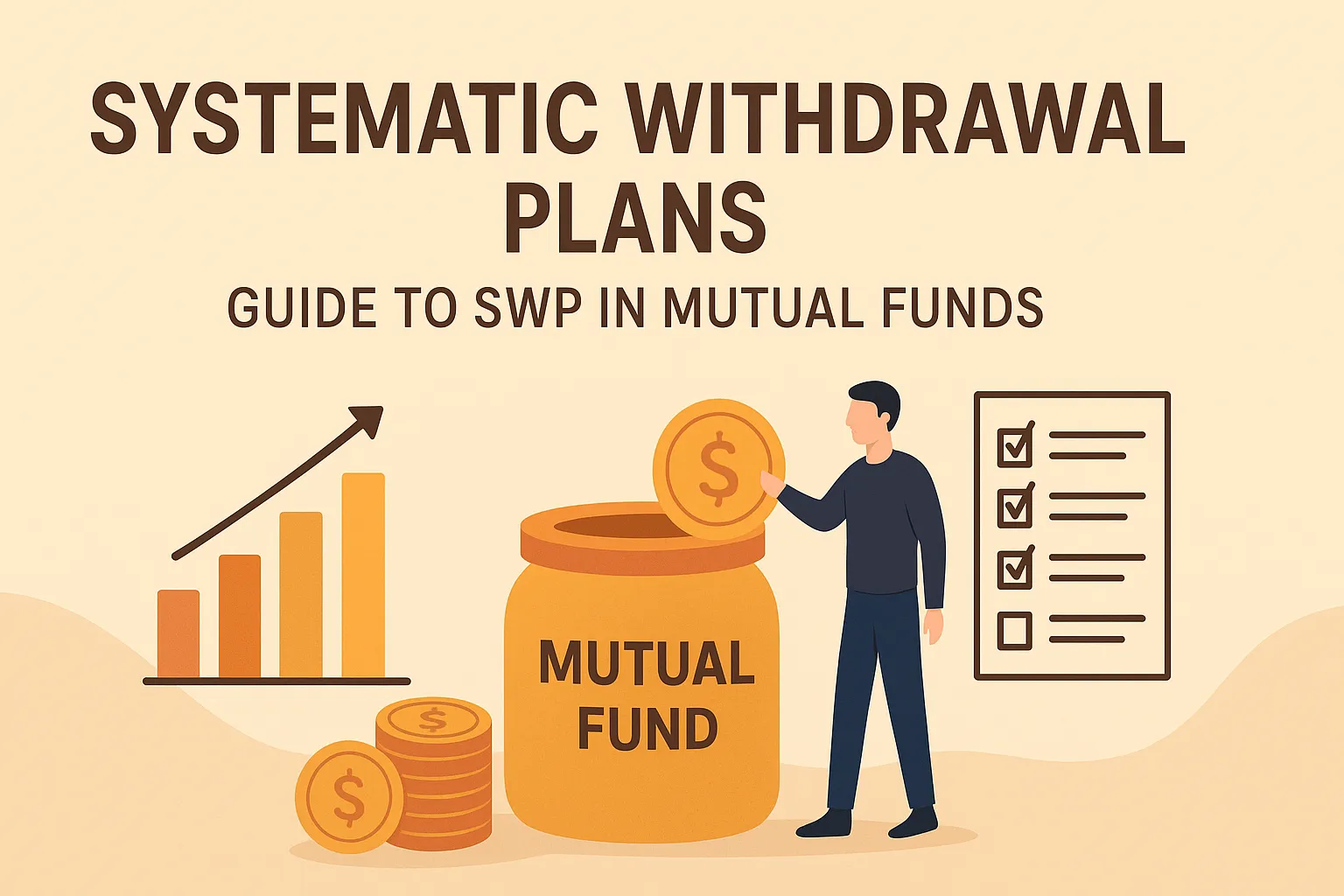
This is where the Systematic Withdrawal Plan, or SWP, enters the frame. It is essentially the inverse of a SIP. While a systematic investment plan is about disciplined accumulation, an SWP is about disciplined distribution. It’s the art of un-investing.

The Mechanics of the “Reverse SIP”

At its core, an SWP is a facility that allows you to withdraw a fixed amount of money from your mutual fund at regular intervals—monthly, quarterly, or even annually. You aren’t just selling everything and sitting on a pile of cash. Instead, you are telling the fund house, “Hey, every month on the 10th, send ₹50,000 to my bank account.”

How does the fund house find that money? They sell just enough units of your mutual fund to match your requested amount.

Imagine you have 10,000 units of a fund. If you need ₹10,000 and the current Net Asset Value (NAV) is ₹100, the AMC sells 100 units. You get your cash, and you still have 9,900 units left. If the market goes up next month and the NAV hits ₹110, they only need to sell about 91 units to give you that same ₹10,000.

Your remaining “tree” stays planted, and you’re just picking the fruit. It’s a very clean, automated way to create a self-made salary.

The Magic of Rupee Cost Averaging (in Reverse)

We often talk about rupee cost averaging when buying — buying more units when prices are low. In an SWP, a similar logic applies, but it requires a bit of a mental shift. When the markets are down and the NAV is low, your SWP will redeem more units to meet your fixed cash requirement. When the markets are booming, it redeems fewer units.

Is this a risk? It can be, if you’re withdrawing too aggressively during a brutal bear market. But if your withdrawal rate is lower than the fund’s growth rate, your corpus can actually keep growing even as you take money out. It is a strange, beautiful paradox where you’re spending money and potentially getting richer at the same time. Not always, of course—markets aren’t that kind—but with a balanced portfolio, it’s a strategy that many seasoned investors prefer over the unpredictability of dividends.

Why Everyone Is Talking About Tax Efficiency

In the world of Indian finance, “Dividend” has become a bit of a dirty word lately, mostly because of how it’s taxed. When a fund pays out an Income Distribution cum Capital Withdrawal (IDCW), that money is added to your total income and taxed at your slab rate. If you’re in the 30% bracket, that’s a massive haircut.

SWPs are different. When you withdraw via SWP, you aren’t receiving “income” in the eyes of the taxman; you are “redeeming units.” You are only taxed on the capital gains part of that withdrawal, not the whole amount.

If you’ve held equity units for more than a year, your gains are Long-Term Capital Gains (LTCG). As of 2026, you even get an exemption on the first ₹1.25 lakh of LTCG in a year. For a working professional or a retiree, this tax arbitrage is often the deciding factor. It’s the difference between having a leaky bucket and a sealed one.

The Strategy: Managing the “Withdrawal Rate”

There is a slight messiness to it, though. You must be realistic. If your fund is growing at 10% but you’re withdrawing 12%, you are eating into your principal. Eventually, the bucket will be empty. Most experts suggest a withdrawal rate of 4% to 6% to ensure the longevity of the corpus.

It’s also not a “set it and forget it” thing in the absolute sense. You should ideally review your SWP once a year. If the market has had a stellar run, maybe you can afford that extra vacation. If it’s been a rough year, perhaps you trim the withdrawal a bit. It’s a reflection of real life — sometimes you spend a little more, sometimes you tighten the belt.

Final Reflections

An SWP isn’t just a technical tool; it’s a psychological one. It removes the “should I sell now?” anxiety. It treats your portfolio as a productive asset rather than a hoard of gold you’re afraid to touch. Whether you’re funding a startup dream, paying for a child’s foreign education, or just ensuring your parents have a dignified retirement, the SWP provides the one thing the market usually lacks: predictability.

Disclaimer: Investments in the securities market are subject to market risk, read all related documents carefully before investing.

Long or Short, get news the way you like. No ads. No redirections. Download Newspin and Stay Alert, The CSR Journal Mobile app, for fast, crisp, clean updates!

App Store –  https://apps.apple.com/in/app/newspin/id6746449540 

Google Play Store – https://play.google.com/store/apps/details?id=com.inventifweb.newspin&pcampaignid=web_share

Latest News

Popular Videos
