


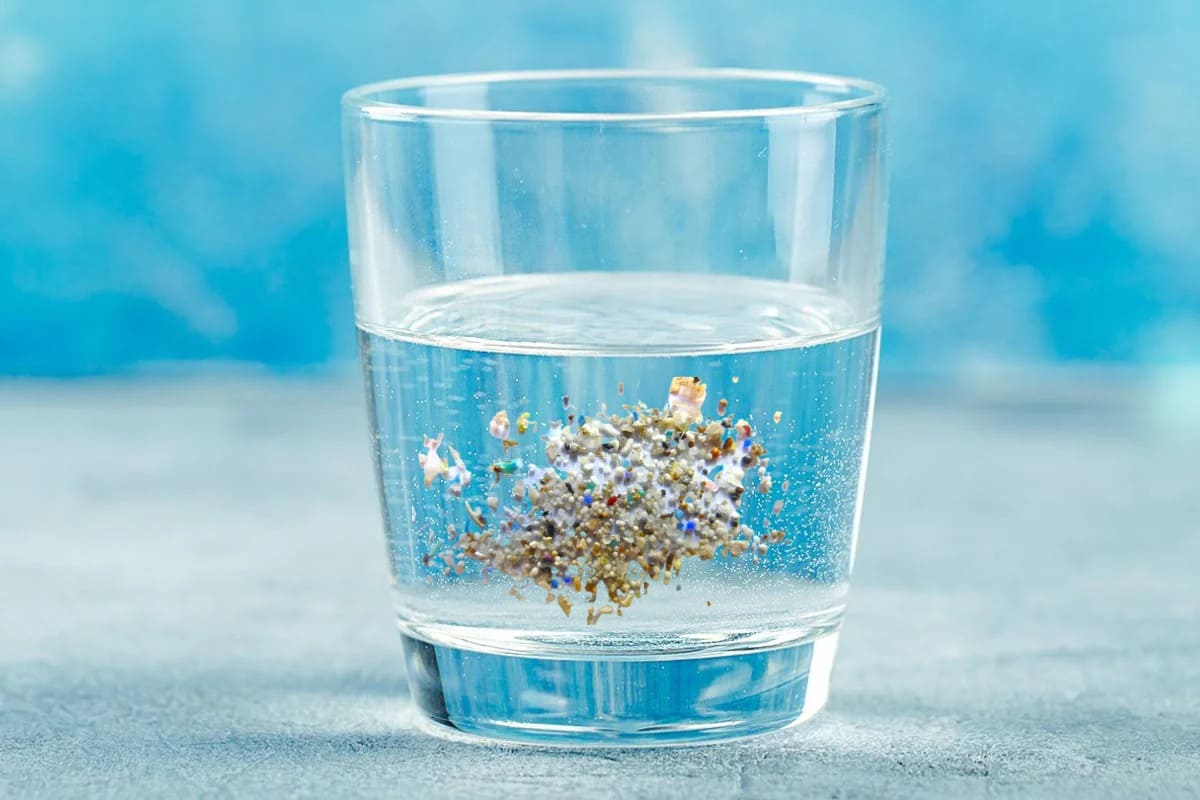

From the depths of the oceans to the peaks of the Himalayas, Microplastics are everywhere. Research across India has discovered significant microplastic presence in both tap and bottled water highlighting the urgency of containing microplastics. In February 2025, significant levels of microplastics in a wetland in Bhoj near Bhopal stoked concerns.
Scientists and analysts discovered microplastics at two lakes which were major sources of drinking water to Bhopal and adjacent villages. Reported concentrations were over the range and certainly beyond permissible levels for most European lakes. Similarly, a study by scientists from NEERI Nagpur in 2024 reported microplastics in almost all tested brands. Microplastics in local brands was reported at approx. 212 ppl (particles per litre) while the national packaged-drinking water brands were reported at 72 plus or minus 36 ppl. The study also found that particle fragments made up 71% of microplastic particles and fibres at 23%. Predominant polymers detected were polyethylene (PE) and polyethylene terephthalate (PET).
MICROPLASTIC PARADOX
Be it drinking water or packaged food, microplastic despite the need is today a paradox. Plastics are needed for packaging water and for food. However, microplastics also act as carriers for harmful chemicals and pathogens, besides destroying ecological balance. Their extremely small size enables them to cross biological barriers, potentially triggering inflammation, oxidative stress, and other long-term health effects.
Naturally, to policymakers and industry leaders, the mere presence of microplastics indicates a need for action. Plastic particles smaller than 10 micrometers permeating water systems cannot be treated with 100% guarantee by traditional methods. Moreover, invisible contaminants capable of entering the human bloodstream and organs, presents a challenge that transcends environmental degradation and touches the very core of public health and consumer trust. So, plastics have revolutionized modern life but their mere presence is an ecological liability. How do we balance it then?
NEEDING A REGULATORY TURNING POINT
An Indian parliamentary discussion revealed that nationwide studies were initiated in 2024, funded by FSSAI and involving CSIR and other institutes. The institutions were reportedly surveying and validating methods for detecting micro- and nanoplastics in major packaged food matrices. Preliminary findings indicate that microplastics are present in widely used consumables such as sugar and salt.
The FSSAI more recently has introduced updated Packaging Regulations (2025), marking a milestone in sustainable materials governance. The regulator amended packaging regulations to permit certain recycled plastics only if they met strict migration and contamination limits, using FSSAI-approved technologies and mandatory traceability labelling. Among the most significant developments in the latest guidelines was the spotlight on food-grade recycled PET (rPET) for use in food and beverage packaging, provided it met rigorous safety and quality standards.
This progressive move indicates that India is keen on moving towards global practices while acknowledging that recycling when executed with precision and accountability can be part of a solution rather than becoming a problem. However, it also raises the bar for manufacturers and food brands. Only those capable of producing or using high-purity rPET should ideally enter the food-contact business.
CLOSING THE LOOP SAFELY
Recycled PET, commonly known as rPET, is not simply reused plastic but a sophisticated, science-driven process to transform post-consumer PET bottles into new and safe packaging materials. While rPET is safe, the quality also depends on the purity of input and precision of post-processing methods. Advanced recycling systems that involve multi-stage washing, decontamination under high temperatures, and solid-state polymerization are essential to ensure all impurities including residual potential microplastic precursors are eliminated.
This emphasis on purity and traceability ensures that rPET packaging not only complies with FSSAI’s stringent standards but also addresses the core concern of contemporary microplastic leakage. By maintaining molecular integrity and minimizing material degradation, high-quality rPET reduces the risk of particle shedding, thereby preventing contamination of drinking water and protecting consumer health.
The path to a microplastic-free future will not be easy. It needs heightened regulations but at the same time it also demands collaboration across sectors — scientists, manufacturers, regulators, and consumers. Building circularity should not be merely picking tons of scrap plastic from one part and upcycle them; rather the emphasis should be on scientific treatment.
The fight against microplastic contamination is, in essence, a fight for the purity of life itself. India does have a chance to lead by example to prove that sustainability and safety can coexist and that the future of packaging can be cleaner and greener.
Disclaimer: Views of the author are personal and do not necessarily represent the website’s views.

Author of the above article Mahesh Kumar Yogi is a textile and manufacturing professional with more than three decades of leadership experience in recycled and virgin fibers, synthetic yarns, PET Resins and sustainable manufacturing. He currently leads LNJ GreenPET, the LNJ Bhilwara Group’s venture into recycled food-grade plastic, as its Chief Executive Officer and Director. In this role, he is leading the company’s ambition to become India’s largest producer of food-grade recycled PET resin. Mr. Yogi oversees advanced manufacturing units and is currently steering the development of a new 100,000-ton per annum recycling plant in Tonk, Rajasthan.