


app-store-logo
play-store-logo
February 13, 2026

Historical Roots of Kissing in India: From Vedic Scholars to Contemporary Reactions
The CSR Journal Magazine

Every year during Valentine’s week, discussions on social media in India often raise questions regarding public displays of affection, particularly kissing. Some argue that such expressions are a “western concept” that conflicts with traditional Indian values. This perspective appears contradictory given India’s rich historical context regarding intimacy, exemplified by ancient texts and artworks that celebrate romantic expressions. The ancient Kama Sutra, among other cultural artifacts, suggests that intimate contact, including kissing, has long been a subject of study and reverence in Indian society.

Vedic Literature and Early Kissing Practices

Academic discourse has highlighted that the roots of kissing in Indian culture can be traced back to Vedic literature from the second millennium BCE. Scholars, such as anthropologist Vaughn Bryant, identified early references to forms of lip contact and nose rubbing as precursors to modern kissing practices. Epic texts, notably the Mahabharata, which was compiled over several centuries, also depicted affection expressed through kissing. By the time the Kama Sutra was written in the first few centuries CE, kissing had been categorized with specific techniques and contexts, treated as an art form that required intellectual engagement. The text elaborates on the appropriate timing, intensity, and emotional implications of kisses, revealing a sophisticated understanding of romantic interaction.

The Khajuraho Temples: Artistic Expressions of Desire

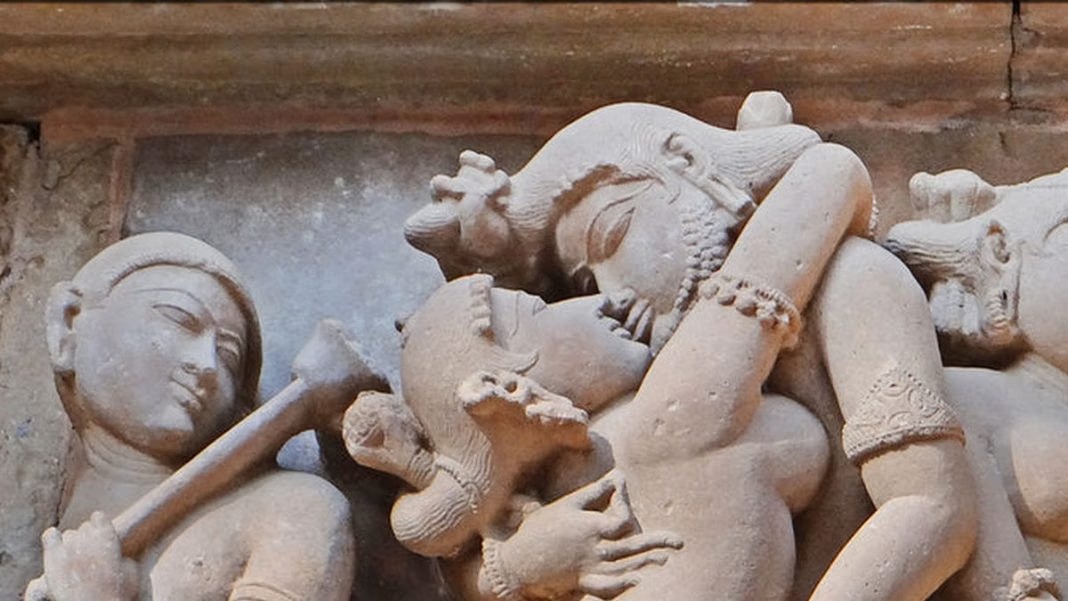
The temples of Khajuraho in Madhya Pradesh, constructed between the 9th and 12th centuries, are renowned for their intricate sculptures that openly depict various forms of intimacy, including kissing. These artworks are not merely decorative; they convey a profound cultural message about the acceptance and sacredness of desire. Historians emphasize that the erotic imagery found in these temples served more than an aesthetic purpose; it reflected an understanding of ‘kama’ as one of life’s essential aims, coexisting with other pursuits such as dharma, artha, and moksha.

Global Perspectives on the Origins of Kissing

Recent studies have prompted a reevaluation of the belief that India was the sole origin of kissing. A 2023 academic paper highlighted evidence from ancient Mesopotamia showing references to lip contact dating back to at least 2500 BCE. Furthermore, prehistoric sculptures from various regions suggest that intimate contact may have occurred independently across different cultures. While kissing’s cultural manifestations may vary, India’s extensive documentation of this practice continues to be significant.

The Biological Dimension of Kissing

Beyond cultural narratives, kissing possesses a biological aspect that is worth considering. Recent findings indicate that approximately 67% of the global population carries the herpes simplex virus type 1, which is transmitted through oral contact. Research indicates that the evolution of this virus may have been influenced by human behaviors, including kissing. Ancient evidence suggests that the practice transcends recorded history, implying that kissing is deeply embedded in human interactions.

Cultural Shifts and the Modern Context

An examination of India’s historical relationship with expressions of affection reveals considerable transformations over time. While ancient and medieval India openly recognized pleasure and intimacy, the advent of British colonialism introduced Victorian-era moral standards that redefined societal attitudes toward public displays of affection. As a result, contemporary views often categorize open affection as inappropriate, despite historical evidence to the contrary. This alteration in cultural perception is perceived not as a decline but as a rebranding of traditional values.

Reflecting on Kissing in Contemporary India

On designated days like Kiss Day, online debates frequently reference the notion of Indian culture vis-a-vis expressions of affection. The legacy of Indian philosophy recognizes desire as a legitimate part of life, evidenced by historic texts and artistic expressions. While social norms have always been complex, the historical context indicates that open expressions of affection were commonplace. As modern discussions about kissing continue, it is crucial to acknowledge that these practices are part of a universal human experience, not an exclusive Western phenomenon. The exploration of this history serves as a reminder of India’s profound engagement with intimacy and may prompt a reconsideration of contemporary attitudes toward public displays of affection.

Long or Short, get news the way you like. No ads. No redirections. Download Newspin and Stay Alert, The CSR Journal Mobile app, for fast, crisp, clean updates!

Latest News

Popular Videos
