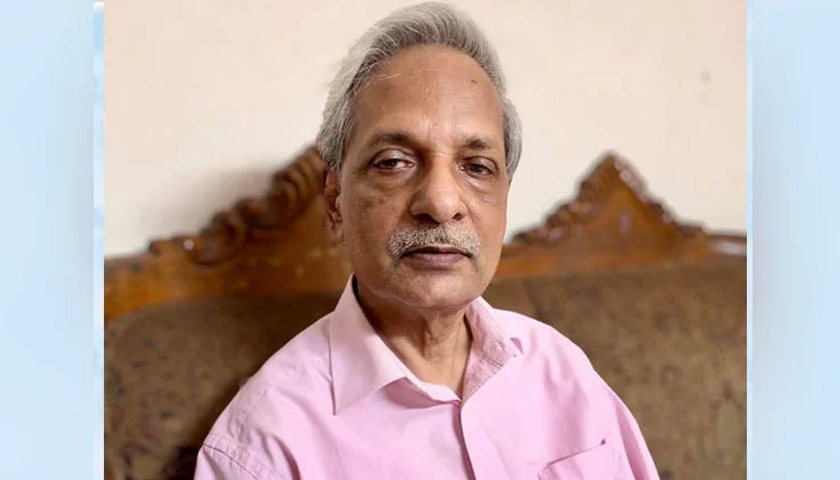
Veteran politician Nitai Roy Chowdhury has officially become a minister in Bangladesh’s new government, marking a noteworthy moment for minority representation within the ruling Bangladesh Nationalist Party (BNP). Chowdhury took his oath during a ceremony held at the South Plaza of the Jatiya Sangsad Bhaban, officiated by President Md Sahabuddin. Prime Minister Tarique Rahman, leading the BNP, also took office on the same day, signaling a significant political shift after nearly two decades of political opposition.
Recent Elections and Government Formation
Following the recent general elections, the BNP secured a commanding victory, winning 209 seats in the 300-member parliament. The party’s allies added three more seats to form a robust coalition government. This election marked the first national polls since the removal of former Prime Minister Sheikh Hasina in 2024. Rahman, son of former Prime Minister Khaleda Zia and former President Ziaur Rahman, is recognized as the first elected male prime minister in Bangladesh in 35 years, having returned to the country after 17 years in exile.
Cabinet Composition
The new cabinet is composed of 50 members, including 25 ministers, 24 state ministers, and three technocrats. Among those sworn in alongside Chowdhury are prominent party figures such as Mirza Fakhrul Islam Alamgir, Amir Khasru Mahmud Chowdhury, Salahuddin Ahmed, Iqbal Hasan Mahmud (Tuku), and Major (retd.) Hafiz Uddin Ahmed. India’s engagement at the event was noted by the presence of Lok Sabha Speaker Om Birla.
Background of Nitai Roy Chowdhury
Nitai Roy Chowdhury, born on January 7, 1949, in Hatbaria village of Mohammadpur in Magura district, is a seasoned Bangladeshi politician and lawyer. He gained his education from Alokdia Pukhuria High School, Magura Government College, and graduated from the University of Dhaka. His political career began during his student days with the Chhatra Union.
Chowdhury first entered Parliament in 1988, representing the Magura-2 constituency after being elected on a Jatiya Party ticket. He held prominent roles, including Chairman of the Magura District Council and State Minister in various ministries, including Education, Youth and Sports, and Law, Justice and Parliamentary Affairs. His tenure as Youth and Sports Minister occurred in late 1990.
After the fall of the HM Ershad government, Chowdhury transitioned to the BNP, ascending the party ranks to become a vice president and senior advisor to the leadership. He is also a member of the BNP’s standing committee, which is responsible for high-level policymaking.
Electoral Victory and Minority Representation
In the 13th Parliamentary elections, Chowdhury was once again elected from the Magura-2 constituency, receiving 147,896 votes and defeating his main opponent, Mustarshid Billah from the Bangladesh Jamaat-e-Islami party. This election saw Chowdhury among four candidates from minority communities who won, including another Hindu leader, Goyeshwar Chandra Roy, representing a district in Dhaka. The Hindu population constitutes approximately eight percent of Bangladesh’s nearly 170 million residents.
Chowdhury’s induction into the cabinet reflects the BNP government’s initiative to engage with minority communities as it embarks on its five-year term, emphasizing a broader commitment to representation within the national political framework.