


Growing Obesity Crisis in India: One in Four Indians Overweight, Experts Warn
The CSR Journal Magazine

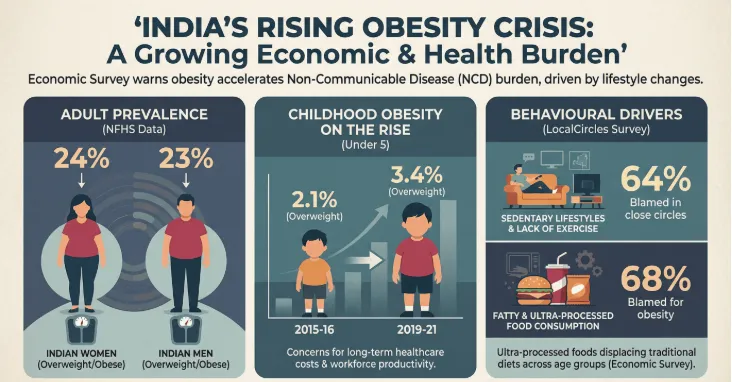
India is currently grappling with a significant obesity crisis, with statistics indicating that one in four Indians is classified as overweight. This troubling trend is often misinterpreted as merely a lifestyle choice rather than being recognized as a serious health condition. This issue was highlighted during a recent panel discussion organized by the Indian Council of Medical Research (ICMR) and AIIMS, coinciding with World Obesity Day. Experts in the field emphasized that although there is increased awareness around obesity, many individuals remain reluctant to pursue necessary treatment. Furthermore, those who make attempts at weight loss often encounter difficulties in maintaining their progress.

Challenges to Effective Management

Dr Rajiv Bahl, the Secretary of the Department of Health Research and Director General of ICMR, pointed out that the lack of effective long-term interventions contributes to the struggle many face in modifying their behavior. He identified broader societal and environmental challenges that complicate efforts to manage obesity. Specifically, he noted that unhealthy food options are generally more affordable and accessible, while healthier alternatives are frequently more difficult to incorporate into daily life.

Expert Insights on the Nature of Obesity

The panel included experts such as Dr Anoop Misra, Director of the National Diabetes, Obesity and Cholesterol Foundation, Dr Naval Vikram, Professor at AIIMS, and Dr Vandana Jain, a Professor in Pediatric Endocrinology at AIIMS. Dr Kamini Walia, a scientist at ICMR, stressed the need to view obesity as a complex disease influenced by a combination of genetic, metabolic, environmental, and social factors, rather than solely attributing it to personal choices. Clinicians on the panel highlighted that obesity is a chronic condition that necessitates ongoing management and is affected by various factors, including diet and physical activity.

Importance of Early Intervention

It was acknowledged that obesity often manifests during childhood. Dr Vandana Jain discussed how family food preferences and activity patterns significantly impact early habits, underscoring the need for healthier home environments to combat this issue from a young age. Dr Anoop Misra also emphasized that Indians are prone to developing metabolic issues even at lower body weights, making early detection crucial for effective management.

Barriers to Treatment and Policy Gaps

Experts shared concerns regarding the limitations of newer anti-obesity medications, noting that their impact should be considered alongside lifestyle changes rather than being seen as a comprehensive solution for the population at large. Furthermore, the lack of effective policies and implementation measures aimed at facilitating access to nutritious food and spaces dedicated to physical activity continues to pose significant challenges in addressing the obesity epidemic. Emerging research areas such as gut microbiome, early nutritional practices, and maternal health are being investigated for their potential implications on obesity risk beginning from infancy.

Stigma and Its Effects

One of the prominent issues discussed was the stigma surrounding obesity, which often acts as a deterrent to individuals seeking assistance. The experts advocated for a shift in perspective, recognizing obesity as a legitimate disease, which may help move the focus towards effective long-term management strategies and preventive measures.

Long or Short, get news the way you like. No ads. No redirections. Download Newspin and Stay Alert, The CSR Journal Mobile app, for fast, crisp, clean updates!

App Store –  https://apps.apple.com/in/app/newspin/id6746449540 

Google Play Store – https://play.google.com/store/apps/details?id=com.inventifweb.newspin&pcampaignid=web_share

Latest News

Popular Videos
