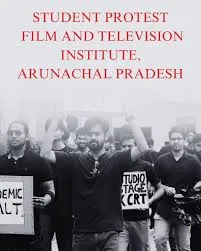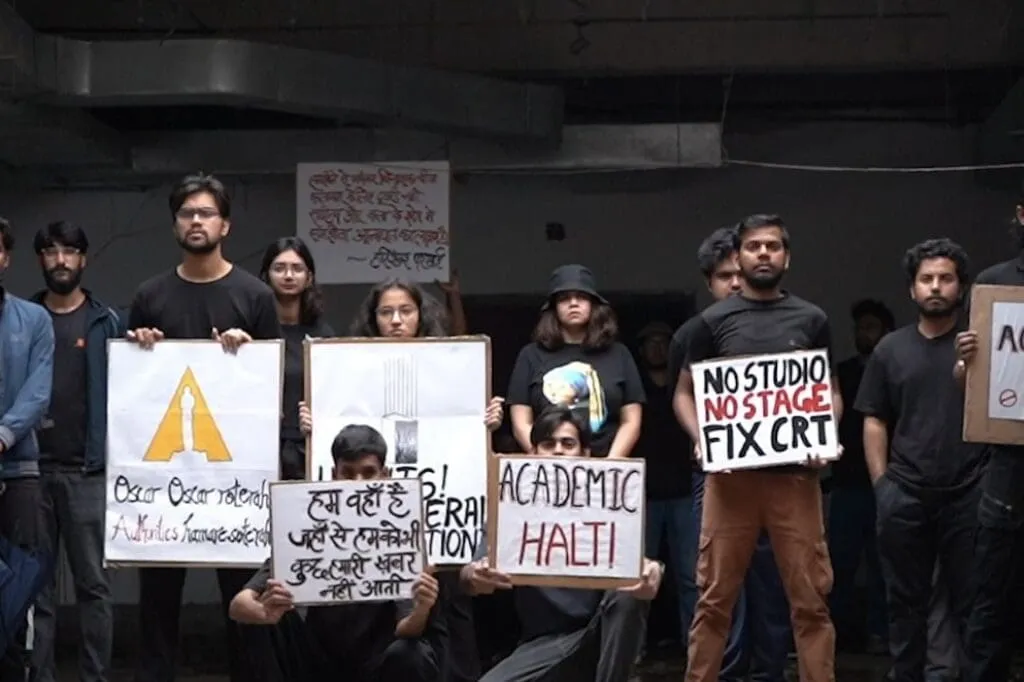

Students of the Film and Television Institute of India (FTII), Itanagar campus, have refused to begin their second semester, alleging that the institute continues to run from an “unfinished and non-functional campus” lacking essential academic infrastructure. In a statement issued on Tuesday, students from the Screen Acting and Documentary Cinema departments said they had already lost an entire semester due to what they described as a “collapsed academic environment”.
The students pointed to a wide range of infrastructure failures: non-operational studios, faulty classrooms, inadequate camera equipment, absence of a sound studio, lack of medical support, and restricted access to basic amenities.
“The institute that was promised as a state-of-the-art national campus is still under construction,” the students said. They added that repeated letters to the Satyajit Ray Film and Television Institute (SRFTI) in Kolkata and the Union Ministry of Information & Broadcasting—since December last year—had brought no action.
Two academic shutdowns already this year
The campus has already faced two shutdowns—in March and May—caused by unresolved infrastructure issues. Although classes resumed in August, students allege that all construction and improvement work abruptly stopped, and no further intervention came from the Ministry.
Citing recent RTI replies and official correspondence between SRFTI and the Ministry, students said the campus remains incomplete and has been deemed unfit for admitting new students in 2025, leading to a pause in fresh admissions.
“If the institute is officially unfit for future students today, why were we admitted last year when the situation was worse?” they asked, calling themselves “experimental subjects in a prematurely launched institution”.
Training severely compromised
Screen Acting students argued that meaningful camera-acting training is impossible without functioning studios and performance spaces. Losing another semester, they said, would cause irreversible academic damage.
Students of Documentary Cinema expressed similar concerns, stating that professional documentary training requires a sound studio, a usable studio floor, and reliable fieldwork support—none of which are currently available. Without these, they said, their diploma projects would fall short of international technical standards.