


Former Diplomat Discusses US Interest in Mecca Agreement
The CSR Journal Magazine

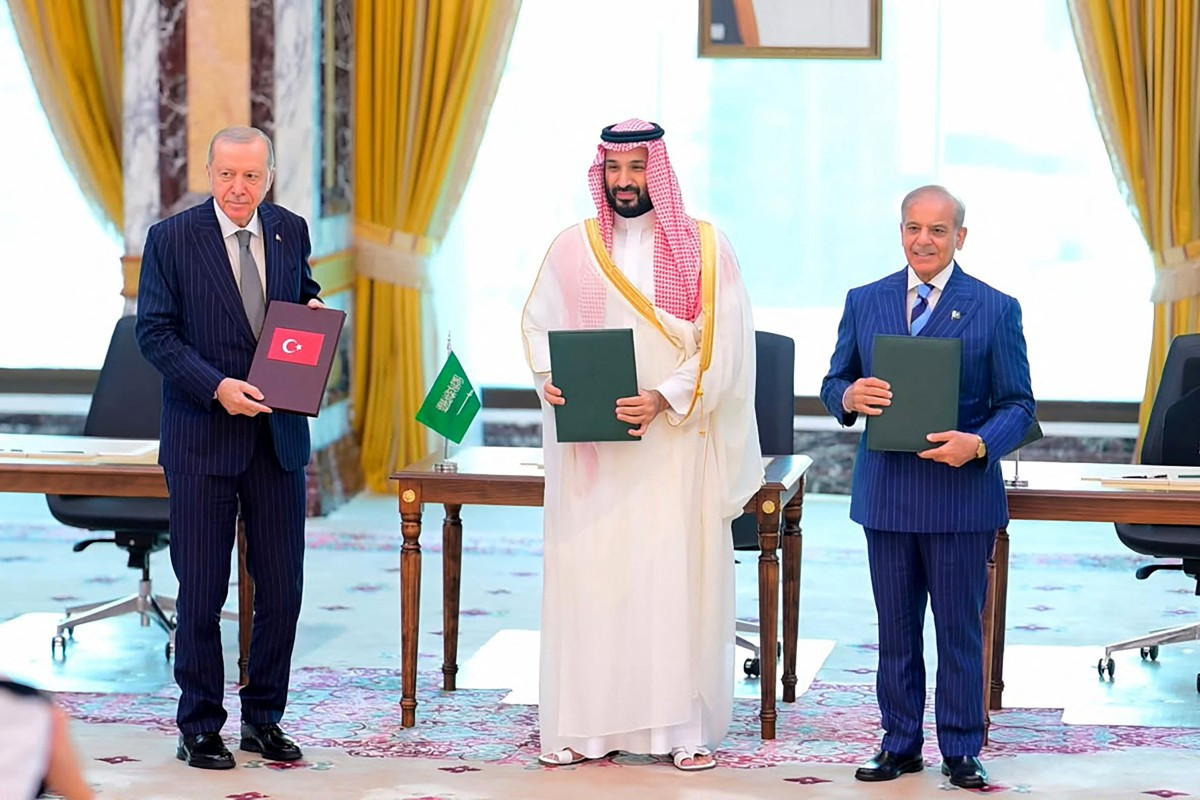
The recent signing of the Mecca Joint Defence Agreement, involving Saudi Arabia, Turkiye, and Pakistan, has garnered attention from the United States, which welcomed the development. This agreement comes as a significant diplomatic move amid changing dynamics in the region, where the influence of the US appears to be diminishing. Former diplomat Vidya Bhushan Soni shared insights on the implications of this agreement and its potential effects on US foreign policy, especially regarding Iran.

Soni indicated that the signing of this pact highlights a shift in the global geopolitical landscape, suggesting that the United States no longer holds the same stabilising power in regions it once influenced. He posited that Washington’s involvement has decreased as local alliances begin to take precedence over traditional US-led initiatives.

Furthermore, the former envoy noted that the agreement reflects a recalibration of power in the Middle East, wherein regional players are stepping up to address security concerns, partially due to the waning presence of the US military and diplomatic engagement.

Security Concerns Regarding the Houthi Movement

Soni pointed out that Saudi Arabia remains particularly concerned about the Houthi movement in Yemen, which poses a significant threat to its security. He argued that while the international community tends to focus on the Israel-Palestine conflict and Iran, the implications of the Houthis’ activities must not be overlooked. He described the Houthis as a critical issue specifically for Saudi Arabia, given their potential to disrupt maritime operations near the Bab-el-Mandeb Strait, a crucial shipping route.

The former diplomat noted that Riyadh’s worries stem from the group’s ongoing attacks and their capacity to impact trade routes significantly. Despite the establishment of a prior agreement with Pakistan aimed at security collaboration, Soni questioned the effectiveness of such pacts in mitigating the threats posed by the Houthis, highlighting that attacks continue unabated.

According to Soni, Saudi Arabia’s perception of the Houthi threat is particularly acute, and the impact of the Mecca Agreement on this issue remains to be seen. He emphasized the need for the Kingdom to address this challenge proactively as it shifts its strategic approach.

US Foreign Policy Shifts and Presidential Focus

In discussing US President Donald Trump’s reception of the Mecca Agreement, Soni pointed out that Washington’s attention appears to be increasingly concentrated on Iran, rather than the Houthi issue. He argued that with the establishment of this new defence pact, the pressure on the US may alleviate somewhat, as regional players aim to tackle security concerns collaboratively.

Soni mentioned Trump’s strategic interest in promoting the Abraham Accords, suggesting that enhancing alliances with countries like Saudi Arabia, Turkiye, and Pakistan could indirectly bolster US objectives in the region, particularly concerning Iran. He articulated that increased acceptance of these accords would be beneficial for Israel’s security, aligning with Trump’s broader diplomatic goals.

Moreover, Soni asserted that the arrangement would not burden the US financially or militarily, as participating nations would contribute their respective strengths. This transition allows the US to lessen its direct obligations in the region and potentially redirect its focus towards countering Iran’s influence, thus reshaping its involvement in Middle Eastern affairs.

Long or Short, get news the way you like. No ads. No redirections. Download Newspin and Stay Alert, The CSR Journal Mobile app, for fast, crisp, clean updates!

App Store –  https://apps.apple.com/in/app/newspin/id6746449540 

Google Play Store – https://play.google.com/store/apps/details?id=com.inventifweb.newspin&pcampaignid=web_share

Latest News

Popular Videos
