


app-store-logo
play-store-logo
March 13, 2026

First Successful Live Births in India Using Umbilical Cord Stem Cell Therapy for Severe Asherman’s Syndrome

The CSR Journal Magazine

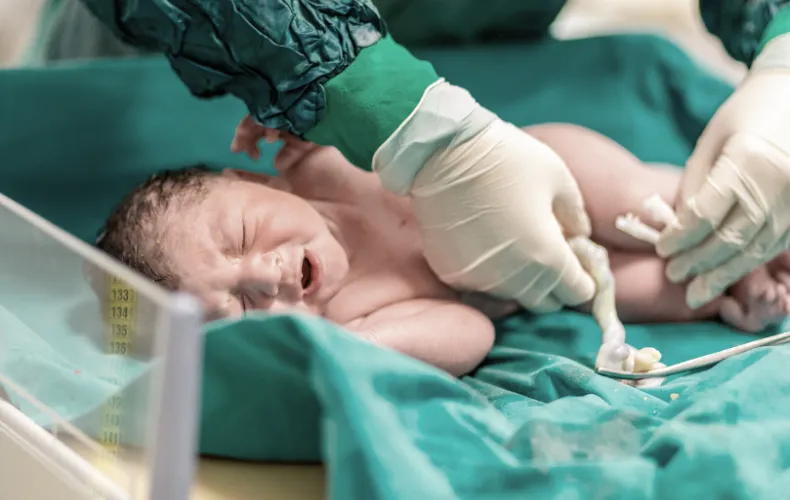
In a notable advancement in reproductive healthcare, medical professionals at a private hospital in New Delhi have achieved two successful live births by utilizing umbilical cord-derived stem cell therapy to treat severe Asherman’s Syndrome. This development offers renewed possibilities for women struggling with infertility resulting from this challenging condition. The initiative was spearheaded by the Centre of IVF and Human Reproduction, in collaboration with the hospital’s Department of Biotechnology and Research. The ongoing clinical trial is registered with the hospital’s research cell and has been supported through intramural funding.

Understanding Asherman’s Syndrome

Asherman’s Syndrome is characterized by partial or complete obstruction of the uterine cavity due to significant intrauterine adhesions, which can occur as a result of recurrent dilation and curettage procedures, infections, or surgeries performed on the uterus. In severe instances, the condition can severely hinder a woman’s ability to sustain a pregnancy. To tackle this issue, the medical team utilized mesenchymal stem cells extracted from Wharton’s jelly located in the umbilical cord. This source is known for its considerable regenerative capabilities, accessibility, low immunogenicity, and non-invasive collection methods.

Innovative Treatment Procedure

The procedure involved the direct injection of umbilical cord-derived mesenchymal stem cells (UC-MSCs) beneath the endometrium using an IVF ovum pick-up needle under hysteroscopic guidance. This targeted approach allows for the delivery of stem cells into the basal layer of the endometrium, which is crucial for the regeneration of the uterine lining. Unlike some previously conducted global studies that required scaffolds or biomaterials, this method presents a technically simpler process that may enhance regenerative results.

Clinical Trial Overview

This case marks the first report of its kind from India and is among the initial instances globally employing this specific therapeutic technique. The pilot clinical trial involves a total of ten patients diagnosed with severe refractory Asherman’s Syndrome. To date, two patients have delivered healthy infants, while the other eight participants are under ongoing monitoring and assessment.

Successful Patient Outcomes

Among the successful cases, a 39-year-old woman with severe uterine adhesions that developed following treatment for a miscarriage underwent stem cell therapy. Post-treatment, improvements were noted in menstrual flow and endometrial thickness, enabling the transfer of an embryo that resulted in the birth of a healthy male baby at 35 weeks, weighing 2.0 kg. In another instance, a 40-year-old woman with a history of recurrent pregnancy loss and severe uterine adhesions experienced similar positive outcomes. After undergoing the procedure, she delivered a female infant via Cesarean section at 31 weeks, with an infant weight of 1.8 kg.

Significant Improvements Observed

The medical team recorded substantial improvements following the stem cell treatment, including enhanced endometrial thickness, improved menstrual cycles, and decreased intrauterine adhesion scores. These advancements facilitated the successful transfer of frozen embryos and subsequent pregnancies. Severe Asherman’s Syndrome typically restricts reproductive options for women, often leading them to consider surrogacy or adoption, particularly given the stringent regulations on surrogacy in India. This novel regenerative treatment using umbilical cord stem cells represents a potentially effective fertility restoration option for women facing otherwise insurmountable uterine complications.

Future Implications for Fertility Treatment

The study continues as a registered clinical trial at Sir Ganga Ram Hospital, where two successful live births have already been documented among ten enrolled patients. Researchers express optimism that should the trial maintain its positive trajectory, stem cell therapy could emerge as a groundbreaking solution for the treatment of refractory Asherman’s Syndrome on a global scale.

Long or Short, get news the way you like. No ads. No redirections. Download Newspin and Stay Alert, The CSR Journal Mobile app, for fast, crisp, clean updates!

App Store –  https://apps.apple.com/in/app/newspin/id6746449540 

Google Play Store – https://play.google.com/store/apps/details?id=com.inventifweb.newspin&pcampaignid=web_share

Latest News

Popular Videos