


app-store-logo
play-store-logo
February 27, 2026

First Lunar Eclipse of 2026: Understanding Myths, Beliefs, and Science of the Blood Moon
The CSR Journal Magazine

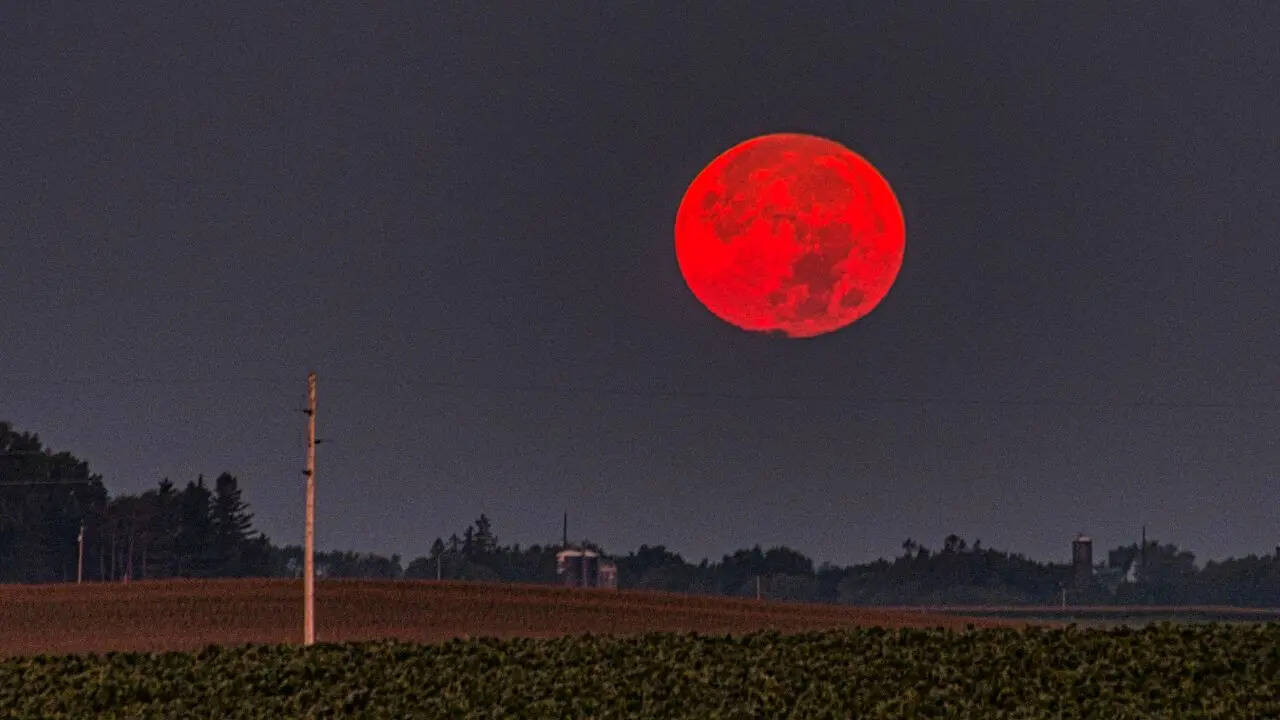
On March 3, 2026, the night sky will witness a significant astronomical event as the first lunar eclipse of the year occurs. This total lunar eclipse, often referred to as a Blood Moon, will render the Moon a reddish hue at its peak. This event is particularly interesting in India, as it coincides with the vibrant festivities of Holi and will be partly visible after sunset. While astronomy sheds light on the phenomenon through the alignment of celestial bodies, various cultural narratives surrounding Chandra Grahan continue to influence the public’s perception of this event.

Timing and Visibility in India

The lunar eclipse is set to take place between the evening of March 2 in the Americas and the morning of March 3 across Europe and Asia. The total phase of the eclipse will occur from 11:04 to 12:03 UTC. For viewers in India, the eclipse will be partially visible, with the Moon rising while the eclipse is ongoing. The final partial phase should be visible shortly after sunset, around 6:30 PM IST, particularly in eastern regions. Other parts of North and South America, Europe, Asia, Australia, and polar regions will have an extended view of the event.

Cultural Beliefs Surrounding Chandra Grahan

In Hindu tradition, a lunar eclipse is designated as Chandra Grahan and is often thought to be an inauspicious time known as Grahan Kaal. During this period, many individuals observe practices such as sutak, which involves refraining from cooking or consuming food, while temples usually remain closed. Following the eclipse, it is customary to take ritual baths and offer prayers. Mythologically, eclipses are associated with Rahu, who is believed to swallow the Moon, prompting the suggestion to chant mantras, donate food, and engage in charitable acts. Pregnant women are traditionally advised to stay indoors during the eclipse.

Global Perspectives on Lunar Eclipses

Various cultures around the world interpret lunar eclipses through their own lenses. For example, ancient Mayan stories describe a jaguar devouring the Moon, while Chinese mythology attributes the phenomenon to a dragon. In Vietnamese folklore, a giant toad is said to play a role. Despite these diverse narratives, the notion of a cosmic force disrupting the Moon resonates universally across different cultures.

Scientific Explanation of the Blood Moon

From a scientific viewpoint, a lunar eclipse occurs when Earth positions itself directly between the Sun and the Moon during a full Moon. In this scenario, Earth’s atmosphere scatters sunlight, obstructing blue wavelengths and allowing red light to penetrate. A noteworthy aspect of the 2026 eclipse is the potential appearance of a navy-blue fringe along the Moon’s edge during its peak totality, a result of ozone in the upper atmosphere absorbing specific light wavelengths. Observers can safely view the eclipse with the naked eye, requiring no protective gear.

Important Details About the Eclipse

The total lunar eclipse referred to as the Blood Moon will take place on March 3, 2026. In India, the eclipse will be partially visible after sunset. The phenomenon can be observed without eye protection, ensuring a safe experience for all interested viewers.

Long or Short, get news the way you like. No ads. No redirections. Download Newspin and Stay Alert, The CSR Journal Mobile app, for fast, crisp, clean updates!

App Store –  https://apps.apple.com/in/app/newspin/id6746449540 

Google Play Store – https://play.google.com/store/apps/details?id=com.inventifweb.newspin&pcampaignid=web_share

Latest News

Popular Videos
