In a state where everything is processed through a political lens, the festival of colors, Holi known locally as Dol Jatra became the latest battleground for West Bengal’s political heavyweights today. With the crucial State Assembly Elections only months away, the traditional exchange of abeer and gulal was replaced by high-stakes outreach, strategic messaging, and a clear demonstration of street-level mobilization.
The day saw contrasting images emerging from different camps, offering a stark preview of the narratives that will dominate the upcoming electoral campaign.
TMC: The Message of Cultural Heritage and Unity
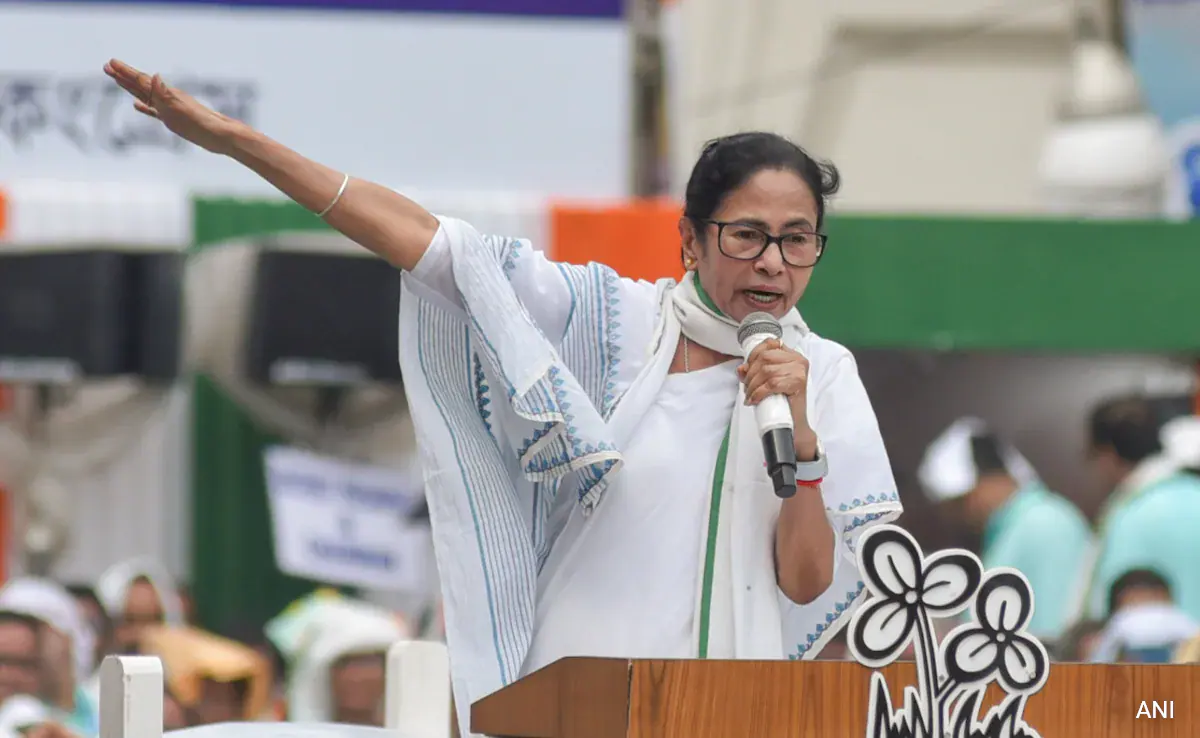
Mamata Banerjee, the Chief Minister and TMC supremo, set the tone early. Keeping with her image as the state’s cultural custodian, she participated in a massive “Dol Yatra O Milan Utsav” event in Kolkata. Surrounded by diverse cultural troupes, she was seen playing traditional instruments and, significantly, performing a brief Dandiya dance, a clear gesture aimed at the state’s significant non-Bengali trading communities, particularly Gujaratis and Marwaris.
Her messaging was centered on “unity in diversity,” a counter-narrative to the BJP’s perceived homogeneous Hindutva. Her nephew and TMC National General Secretary, Abhishek Banerjee, echoed this on social media, emphasizing that colors do not ask for caste or religion, urging for a “vibrant society where every shade is allowed to exist with equal respect.”
Political Implication: The TMC’s strategy is clear defend its fortress by reinforcing its image as the inclusive, indigenous protector of “Banglar Sanskriti” (Bengal’s culture). By reaching out to non-Bengali communities during Holi, they are attempting to neutralize the BJP’s traditional base within those groups while consolidating their core voter base against an “outsider” force.
BJP: Hindutva Push and “Saffron Holi” Prophecy
The BJP, meanwhile, used the festival to amplify its aggressive Hindutva campaign. Leading the charge, Leader of Opposition Suvendu Adhikari chose Bhawanipore, the Chief Minister’s home turf, for his outreach. Adhikari was seen leading a procession with a massive Gopal (Lord Krishna) idol, delivering a potent “message of Hindutva” to the residents.
Adding fuel to the fire, senior BJP leader and state National President Nitin Nabin flagged off a crucial phase of the party’s “Parivartan Yatra” (March of Change) from Islampur and Malda. In fiery speeches, he declared that “the people of Bengal will celebrate Holi twice this year.” He prophesied that while the first Holi is on schedule, the “second Holi will be a Saffron Holi to mark the BJP’s victory.” He aggressively pushed the narrative of corruption and “appeasement politics,” promising to rename Islampur to “Ishwarpur” if voted to power. Other senior leaders like Dilip Ghosh, Agnimita Paul, and JP Nadda also led rallies across the state, linking the festival of spring to a “fire of change” simmering in Bengal.
Political Implication: The BJP is intensifying its core ideology of Hindutva to polarize the electorate, while simultaneously using corruption charges (the “Mamata Tax”) and women’s safety issues to detach traditional TMC voters. Their “double Holi” promise is a psychological tool designed to mobilize their cadre and create an aura of inevitable victory.
Left and Congress: Redefining the Color Red Amid Deletion Fears
While the TMC and BJP were immersed in color, the Left Front and Congress were consumed by a darker hue the fear of voter list manipulation. CPI(M) State Secretary Mohammed Salim announced that instead of traditional celebrations, Left Front workers would hold a march to the Chief Electoral Officer’s office. This was in protest against the recently published voter rolls following the Special Intensive Revision (SIR), which allegedly saw the deletion of 63.66 lakh names.
Salim labeled the Election Commission the “Nirjatan (Torture) Commission,” accusing both the TMC and BJP of shadow-boxing over religious issues while genuine voters are being disenfranchised. The Congress, led by Adhir Ranjan Chowdhury, largely remained on the defensive, focusing on administrative demands rather than street-level festive mobilization.
Political Implication: For the Left Front, this is a desperate battle for survival. By focusing on the voter list issue, they hope to present themselves as the only “serious” political force concerned with democratic processes, appealing to intellectual and anti-incumbency voters disillusioned by the binary of TMC-BJP polarization. Their inability to match the other two in festive outreach, however, highlights their continued struggle with mass mobilization.
The Road Ahead to the Assembly
The Holi celebrations have formally inaugurated the campaign season. While the streets were painted in multiple colors today, the real color of West Bengal’s future will be decided by which political pigment sticks closest to the hearts of its 7.04 crore voters. The upcoming election will not just be about arithmetic; it will be a clash of cultures, ideologies, and identities, all fighting for supremacy in the most politically volatile state in India.
Long or Short, get news the way you like. No ads. No redirections. Download Newspin and Stay Alert, The CSR Journal Mobile app, for fast, crisp, clean updates!