


EU Proposes NATO-Style Framework to Address Drone and Cyber Threats
The CSR Journal Magazine

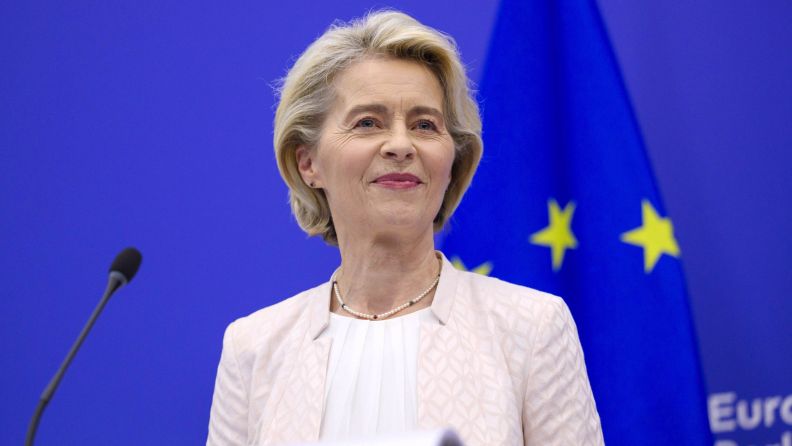
The European Commission President, Ursula von der Leyen, has stated that the European Union requires a mechanism akin to NATO to effectively manage incidents involving drones, acts of sabotage, and cyberattacks. This statement was made on Wednesday during her address in Strasbourg, aiming to improve the EU’s reaction to such threats, many of which have been attributed to Russia.

According to von der Leyen, a unified approach is necessary to tackle threats that do not constitute outright armed aggression but still represent significant security challenges. She highlighted the need for a common system that would enhance coordination among EU member states in response to such incidents.

The call for a NATO-like approach specifically references Article 4 of NATO’s founding treaty. This provision allows for member countries to convene emergency consultations when they perceive a threat to their territory. Von der Leyen advocates for a similar model within the EU, which could facilitate a collective response to hybrid threats across the region.

Proposal for a European Security Council

In her address, von der Leyen also indicated that the European Commission intends to outline proposals aimed at establishing a European Security Council. This initiative would involve collaboration with various international partners, including the United Kingdom, Canada, Norway, and Ukraine, although she provided no specific details on this development.

Emphasising the need for a cohesive strategy, she noted, “Europe needs its own counter-hybrid playbook.” Von der Leyen stressed the urgency of achieving consensus on how to address certain incidents that threaten national security but do not escalate to armed aggression. The remarks underscore the EU’s aim to develop a robust framework for responding to increasingly complex security challenges.

Recent events have amplified concerns regarding hybrid threats. Officials from Germany, Denmark, and Poland have recently alleged Russian involvement in various hostile activities, including drone incursions, sabotage, and surveillance of military facilities. These claims underscore the necessity for a coordinated European response to such actions.

Recent Incidents and Ongoing Challenges

Earlier this week, Italian fighter jets engaged in an operation alongside NATO forces successfully intercepted and downed a drone flying over Lithuania, marking the first such incident within EU airspace. This drone is believed to have originated from Belarus, which maintains a close relationship with Russia. The incident highlights the growing complexity of security threats facing EU member states.

Despite these developments, Europe and NATO continue to grapple with the nuances of addressing actions that do not meet the threshold of outright aggression. Von der Leyen explained that if this proposed mechanism were activated by a single member state, it would prompt all member states to convene and coordinate a unified European response to deter escalation and alleviate any significant impacts.

Her remarks further emphasise the necessity of a consolidated response to hybrid threats within Europe. The ongoing discussions around establishing a mechanism akin to NATO’s Article 4 reflect a critical step towards reinforcing the EU’s collective security posture. This strategic reorientation aims to ensure that Europe is better equipped to face contemporary security challenges in an increasingly turbulent geopolitical landscape.

Long or Short, get news the way you like. No ads. No redirections. Download Newspin and Stay Alert, The CSR Journal Mobile app, for fast, crisp, clean updates!

App Store –  https://apps.apple.com/in/app/newspin/id6746449540 

Google Play Store – https://play.google.com/store/apps/details?id=com.inventifweb.newspin&pcampaignid=web_share

Latest News

Popular Videos
