


app-store-logo
play-store-logo
March 12, 2026

Epic Fury vs Operation Sindoor: An Analysis of Wartime Communication
The CSR Journal Magazine

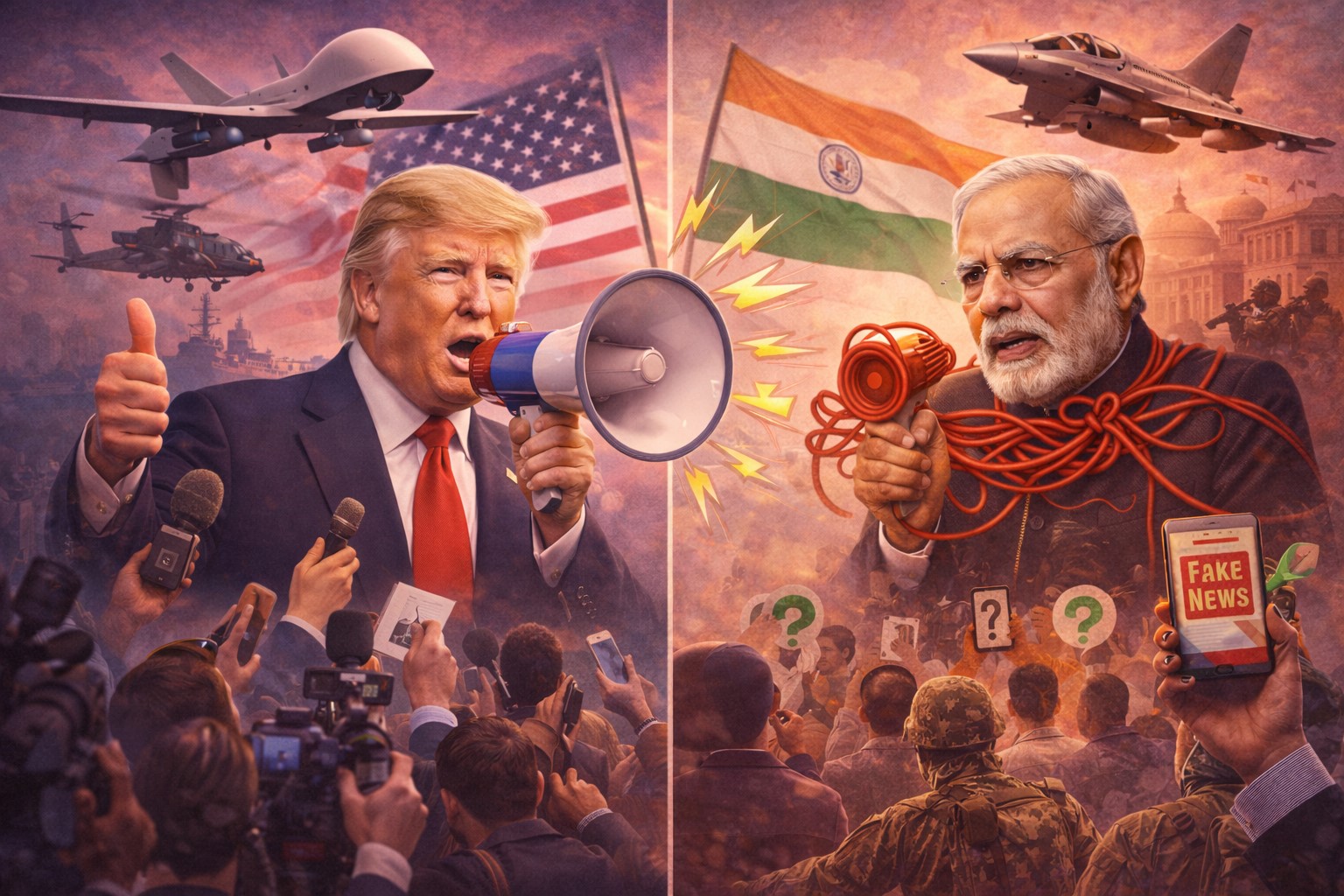
Warfare inflicts profound devastation, and no nation desires conflict yet it remains an unfortunate reality. When highly advanced military forces engage in war, their strategies become focal points for analysis and learning for other nations. Although many military units may struggle to replicate the technological and financial prowess of the United States Armed Forces, one critical aspect—communication during conflict—is universally essential. Effective communication is not merely about promoting a narrative; it is vital for operational success and preventing misunderstandings. As the United States continues its military operations in Iran, its communication strategy has been noted for its clarity and effectiveness, prompting a comparative analysis with India’s messaging during Operation Sindoor, a counter-terrorism initiative lasting over five days.

Comparing Communication Approaches

The Open Source Intelligence (OSINT) team examined the communication strategies employed by the United States during Operation Epic Fury against those utilized by India in Operation Sindoor. The findings indicate that while India possessed significant military capabilities, its communication efforts fell short. The lack of effective messaging allowed unfounded narratives to thrive and escalate. Conversely, the U.S. has maintained a consistent flow of information, albeit not without flaws, presenting developments in a timely manner.

Layers of Communication in Military Operations

A notable contrast between American and Indian messaging resides in the institutional involvement in public communication. In the United States, information dissemination is a multi-tiered endeavor, involving contributions from various governmental levels, including the President, Secretary of Defense, and CENTCOM. This multiplicity allows a more thorough addressal of developments occurring across the political and military landscapes. On the other hand, during Operation Sindoor, India’s messaging was more concentrated, mainly emerging from joint press briefings involving officials from the Ministry of External Affairs and the Ministry of Defence. The lack of active engagement from senior political figures rendered the communication structure less transparent, limiting its efficacy in reducing public speculation about military operations.

Frequency and Volume of Communication

In terms of the volume of official communications, the United States significantly outperformed India during the first five days of both operations. The U.S. issued a total of 18 press releases and conducted 11 briefings, alongside nine interviews, focusing on the objectives and real-time developments on the battlefield. In contrast, India’s approach featured nine press releases and eight briefings, which, although substantive, often lacked the variety found in U.S. messaging. This discrepancy limited the depth of information shared with the public and resulted in notable gaps in awareness regarding military operations and objectives.

Timeliness in Communication

Timeliness is another critical factor in effective wartime communication. The United States frequently communicated developments within hours of incidents, such as aircraft losses or operational successes. This rapid response helped control the narrative and clarify objectives. In contrast, India’s communication was often slower, with delays in addressing misinformation prevalent on social media. Noteworthy was a single day during Operation Sindoor when five briefings were held, indicating a responsive shift, but overall, the communication remained largely focused on diplomatic matters over tactical updates.

Qualitative Differences in Messaging

The qualitative nature of communication also differed significantly. U.S. messaging typically featured precision and clarity, with acknowledgment of operational challenges after incidents occurred. While some issues were occasionally downplayed politically, the general trend remained one of transparency. India’s communication, on the other hand, was less precise, often failing to specify the extent of damage or operational results, which contributed to ongoing speculation long after the conflict ended.

Long or Short, get news the way you like. No ads. No redirections. Download Newspin and Stay Alert, The CSR Journal Mobile app, for fast, crisp, clean updates!

App Store –  https://apps.apple.com/in/app/newspin/id6746449540 

Google Play Store – https://play.google.com/store/apps/details?id=com.inventifweb.newspin&pcampaignid=web_share

Latest News

Popular Videos
