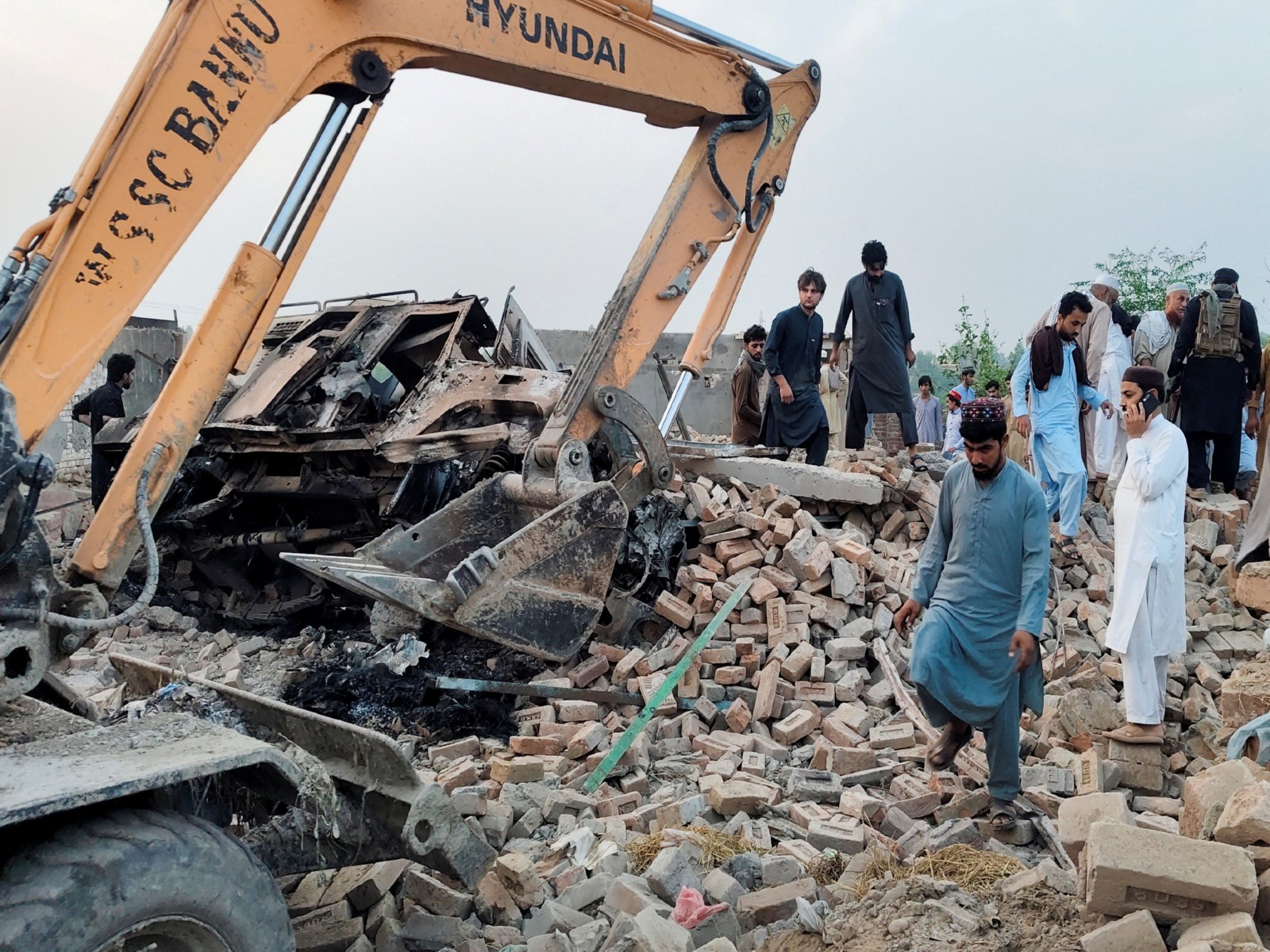
Residents gather on the rubble of a damaged police post after a car bombing in Bannu, Khyber Pakhtunkhwa province, Pakistan May 10, 2026. Picture taken with a mobile phone. REUTERS/Ehsan Khattak TPX IMAGES OF THE DAY
Following the imposition of emergency rule in Khyber Pakhtunkhwa, former Chief Minister Sohail Afridi and provincial party president Junaid Akbar were detained. Meanwhile, Ali Amin Gandapur, another former chief minister, has been placed under house arrest, as confirmed by the Pakistan Tehreek-e-Insaf (PTI) party, which is led by Imran Khan, currently imprisoned. This move has escalated the existing discord between the provincial leadership and the central government led by Prime Minister Shehbaz Sharif.
The emergency situation has arisen amid allegations that the provincial administration is failing to adequately combat rising militancy in the area. The PTI has refuted these claims, asserting that they divert attention from their political persecutions. In a statement on social media platform X, the PTI condemned Gandapur’s house arrest, describing it as an attempt to intimidate their leaders and detract from their political struggles.
The PTI has been mobilising support for demonstrations in Islamabad, focusing on the demand for Khan’s release. These developments have raised concerns within the federal government regarding potential unrest in the capital, adding further complexities to an already volatile situation.
Military Deployment Ordered Amid Security Concerns
In light of increasing security threats, the Interior Ministry of Pakistan has announced that troops will be deployed to Khyber Pakhtunkhwa, known for its historical challenges with militant groups, particularly the Tehreek-e-Taliban Pakistan (TTP). Interior Minister Mohsin Naqvi stated that the security conditions had gravely deteriorated in several districts.
Naqvi reported that in some areas of the province, local inhabitants refrain from going outside after dark, indicating escalating fears among residents. The government has accused the provincial administration of failing to tackle these challenges effectively, which has led to a more pronounced military presence.
Prime Minister Sharif has highlighted the necessity of responsive governance, especially in light of continued attacks against security personnel and civilians. He emphasised that the federal government could not remain idle while threats persist, framing the situation as one requiring decisive action rather than inaction.
Implications of Emergency Rule on Khyber Pakhtunkhwa
The recent emergency rule in Khyber Pakhtunkhwa has raised significant concerns regarding provincial autonomy and democratic representation. The province has long been a bastion of Imran Khan’s PTI and plays a pivotal role in the political landscape of Pakistan, particularly due to its proximity to areas of conflict in Afghanistan.
President Asif Ali Zardari, upon Prime Minister Sharif’s advice, issued the emergency declaration following a decision by the federal cabinet. This effectively suspends the existing provincial administration led by Chief Minister Sohail Afridi, marking a critical juncture in the province’s political history.
According to Law Minister Azam Nazeer Tarar, governance will transition to a provincial governor, accompanied by an advisory council, for an initial period of six months. The emergency has been invoked under Articles 232 and 234 of Pakistan’s Constitution, which allows federal intervention in provincial matters when there are security threats or disruptions in governance.
While the government has not framed the emergency as a complete suspension of fundamental rights, legal provisions demand parliamentary oversight and approval for any such measures. This situation could lead to further debates about the balance of power between provincial and federal authorities in Pakistan.
Long or Short, get news the way you like. No ads. No redirections. Download Newspin and Stay Alert, The CSR Journal Mobile app, for fast, crisp, clean updates!
Pakistan's electricity emergency has deepened recently, with the total power shortage reportedly exceeding 4,000 megawatts. Several generation units remain offline while the production from...