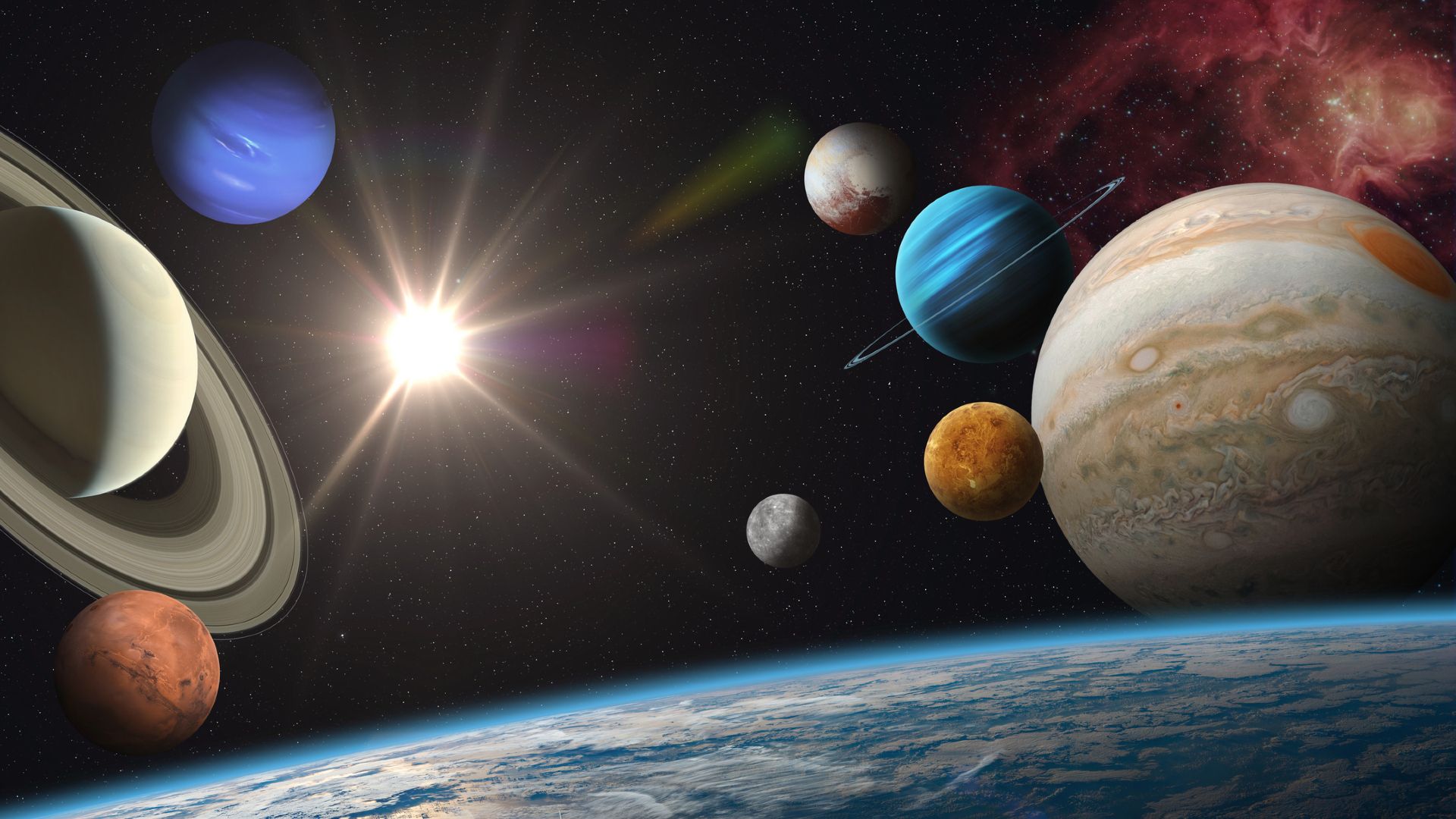
The lifespan of planets varies widely and is influenced more by their host stars than by the planets themselves. While some planets exist for millions of years, others can last for trillions. This variability highlights the absence of a universal timeline governing planet existence.
Planets are formed from microscopic particles of dust that accumulate in the gaseous discs surrounding young stars. Initially, these tiny grains collide and coalesce, with gravity accelerating this process. According to current astrophysical insights, the formation of gas giants like Jupiter begins with the development of large, rocky cores that subsequently attract significant amounts of hydrogen and helium. In contrast, terrestrial planets such as Earth experience chaotic periods of massive impacts during their final formation stages.
Defining Planetary Death
Planetary death can be understood in terms of physical destruction, such as a catastrophic collision or being consumed by a star. However, other perspectives consider a planet dead when it can no longer maintain the conditions necessary for life. For instance, if oceans evaporate, tectonic activities cease, or the atmosphere dissipates, a planet may be deemed lifeless.
Earth’s Future and Solar Connection
The fate of Earth is intricately linked to that of the Sun, which is in the process of fusing hydrogen into helium at its core. This reaction produces the energy required to sustain life on our planet. However, the Sun is not eternal. In about 5 billion years, it is expected to exhaust its hydrogen reserves and transform into a red giant. Prior to this transformation, the increasing luminosity of the Sun is projected to result in the boiling away of Earth’s oceans, leading to a significant reduction in surface water. Ultimately, Earth may be engulfed when the Sun expands or might be ejected into space due to the unpredictable dynamics of stellar mass loss.
Overall, it is estimated that Earth’s total lifespan, from formation to potential annihilation, spans approximately 9.5 billion years. In contrast, many stars throughout the universe are smaller, cooler red dwarfs that consume fuel at a much slower rate. Consequently, planets orbiting these stars could significantly outlive Earth.
Geological Factors Influencing Longevity
Astrophysical models indicate that the geological conditions of planets may define their lifespans more than stellar characteristics. For Earth-like planets orbiting red dwarfs, processes such as plate tectonics and mantle convection could continue regulating climate for tens of billions of years. Specifically, mantle convection might persist for anywhere between 30 and 90 billion years, whereas melting of the mantle could last from 16 to 23 billion years. Although these estimates carry a degree of uncertainty, they suggest that many rocky planets may encounter internal changes that lead to their “death” long before their stars expire.