



DUSU President’s Role in Addressing Student Issues Remains Limited

The CSR Journal Magazine

The recent elections for the Delhi University Students’ Union (DUSU) highlight the importance of student representation in university governance. Polling took place on September 19, 2026, across various colleges within Delhi University, with voter turnout recorded at 40.46 per cent among the over 1.51 lakh eligible voters. This year, seven candidates are competing for the title of president, with significant attention focused on Yash Dabas from the Akhil Bharatiya Vidyarthi Parishad (ABVP), Vijay Shankar Meena from the National Students’ Union of India (NSUI), and Ananya Raturi from the AISA-SFI alliance. The outcome of this election may shape student governance but comes with limitations on the president’s powers.

Understanding the Powers of DUSU

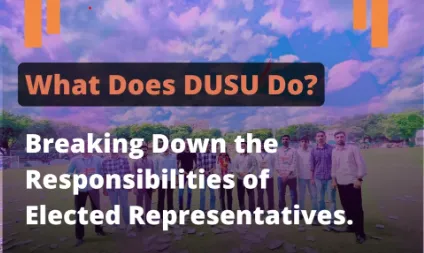
The DUSU comprises four central positions: President, Vice President, Secretary, and Joint Secretary, all of whom are elected directly by students from the university’s faculties and member colleges. The president’s primary role is to chair the union meetings, represent the student body in discussions with the administration, and influence the issues that the union prioritises. However, the authority of the president is constrained; crucial decisions regarding fee structures, exam schedules, and hostel policies are ultimately outside the president’s purview. The real influence of DUSU lies in its capacity to exert pressure, rather than having the power to enforce changes unilaterally.

When faced with increases in hostel rents or fee hikes associated with the implementation of the National Education Policy, DUSU has historically responded by issuing formal letters requesting re-evaluations rather than directly cancelling increases. Their protests, petitions, and sit-ins aim to attract attention, but final decisions reside with the university administration. The union’s leverage is derived from its visibility and capacity to mobilise student support, as well as the occasional intervention from the High Court.

Besides the president, the Vice President often steps into the president’s role when necessary and actively leads specific campaigns, particularly those related to hostel accessibility and safety. The Secretary oversees the internal operations of the union while coordinating with college-specific student bodies. Meanwhile, the Joint Secretary assists in both roles and is responsible for outreach efforts across the numerous member colleges affiliated with DUSU.

The Limitations of DUSU’s Influence

The power dynamic between DUSU and the Delhi University administration is less robust than campaign narratives suggest. DUSU functions as a representative body with the capacity to escalate grievances, organise protests, and draw attention to student issues. However, core administrative functions such as determining fee structures, hostel allocations, and academic calendars remain firmly within the jurisdiction of the university’s governing bodies. Student leaders cannot influence admission criteria, set tuition rates, or modify academic policies.

Campaign regulations imposed by the Lyngdoh Committee restrict the campaign activities of candidates. There are strict guidelines against defacement, unauthorised posters, and candidates are required to deposit a refundable bond to cover potential property damages. Additionally, the Delhi High Court has prohibited victory processions this year, adding another layer of complexity to the election process.

DUSU operates on a modest annual budget of approximately Rs 24 lakh, primarily sourced from a yearly student subscription of Rs 20 included in their admission fees. This limited financial framework poses challenges for significant campus projects, as there is no extensive discretionary fund available.

The Legacy of DUSU Leadership

Despite the limitations imposed on the role, holding the presidency of DUSU can have long-lasting implications for students. Several former presidents have gone on to significant political careers, reflecting the position’s potential to serve as a stepping stone to higher political engagement. Notable figures like Arun Jaitley, Ajay Maken, and others have utilised their early leadership roles in DUSU as a platform for future success in Indian politics. As such, while the DUSU president may not wield extensive formal power, the influence associated with the role endures long beyond their term in office.

Long or Short, get news the way you like. No ads. No redirections. Download Newspin and Stay Alert, The CSR Journal Mobile app, for fast, crisp, clean updates!

App Store –  https://apps.apple.com/in/app/newspin/id6746449540 

Google Play Store – https://play.google.com/store/apps/details?id=com.inventifweb.newspin&pcampaignid=web_share

Latest News

Popular Videos