


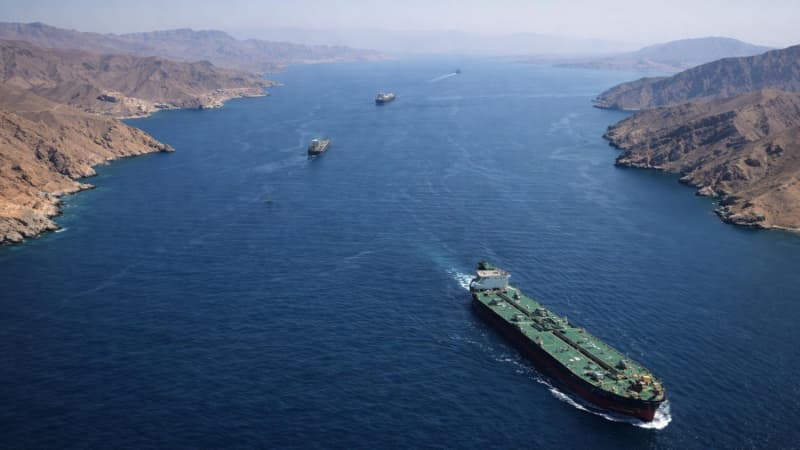

The administration under President Donald Trump reportedly did not fully appreciate the potential for Iran to close the strategically vital Strait of Hormuz in response to U.S. military actions, according to information from various insiders. Sources indicated that during the planning phases for military operations, both the Pentagon and the National Security Council failed to account for a possible Iranian attempt to disrupt traffic in this key maritime route, even though long-term contingency strategies were in place for such circumstances.
Lack of Detailed Economic Analysis
Meetings leading up to the military action included officials from the U.S. Departments of Energy and Treasury. However, insiders noted that the comprehensive economic assessments and interagency evaluations that typically guide significant decisions were not prioritized in the discussions. This omission may have contributed to a gap in understanding the broader implications of military engagement in the region.
Iran’s Commitment to Strategic Deterrence
Mojtaba Khamenei, Iran’s new Supreme Leader, emphasized that the option to close the Strait would continue to serve as a leverage tool, as stated in a broadcast on Iranian state television. He referred to the sentiment among the populace regarding the ongoing defense efforts, noting, “The leverage of blocking the Strait of Hormuz must certainly continue to be used.”
He further asserted that Iran has identified specific targets that could be vulnerable to military strikes, citing that studies have been conducted to explore potential new fronts against adversaries lacking experience in combat.
Iran’s Position on Marine Navigation
Subsequently, Iran’s UN Ambassador Amir Saeid Iravani clarified that Tehran does not aim to close the Strait of Hormuz amid escalating regional tensions but underscored its right to maintain security in the waterway. He stated, “We are not going to close the Strait of Hormuz, but it is our inherent right to preserve the peace and security in this waterway.” In his comments at a UN stakeout, Iravani affirmed Iran’s commitment to upholding the principles of safe passage under maritime law, specifying that the current circumstances in the Strait are not attributable to Iran’s lawful defenses.
Ongoing Tensions and Restrictions
Recently, Iran has heightened its controls over shipping traffic in the Strait of Hormuz amidst ongoing strikes conducted by the U.S. and Israeli forces. Iranian authorities have asserted that vessels failing to align with the interests of the U.S. and Israel may face challenges but that those aligned with other interests can navigate the waters without issue.