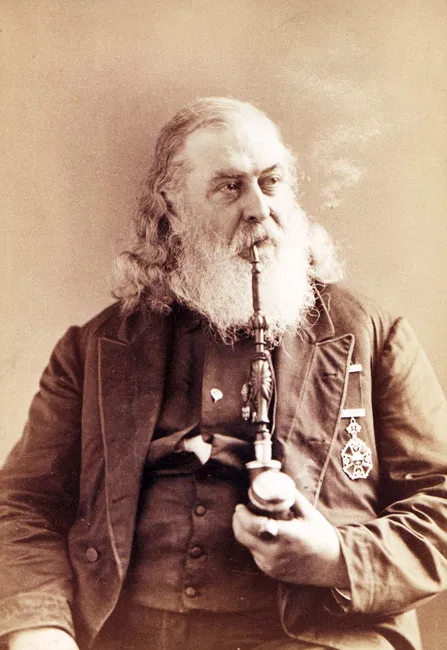
In August 1871, a narrative emerged surrounding Albert Pike, an influential American Freemason, suggesting he made prophetic predictions about global conflicts. This tale posits that Pike wrote a letter to Giuseppe Mazzini, an Italian revolutionary, forecasting three world wars. The first two, according to proponents, led to World War I and World War II, respectively, which reshaped political ideologies and dismantled empires. The impending third conflict is framed as a dramatic clash poised to reshape religious beliefs and world order. However, no original manuscript of this letter has ever appeared, and both the British Museum and British Library have disclaimed any record of it.
Historical Context of Mazzini and Pike
Giuseppe Mazzini (1805–1872) was a leading figure behind the Italian unification movement, known as the Risorgimento. As a journalist and political activist, he founded the secret society Young Italy, advocating for a unified, republican state. He promoted themes of nationalism and democratic ideals during a period dominated by monarchical governance. Albert Pike (1809–1891) was a multifaceted personality; he began as a journalist and lawyer, became a brigadier general in the Confederacy during the American Civil War, and later rose to prominence within Freemasonry, serving as Sovereign Grand Commander of the Scottish Rite’s Southern Jurisdiction. Both men operated during an era where secret societies and revolutionary organizations were key to political mobilization.
The Prophetic Text and Its Claims
The purported Pike letter has gained notoriety for its bold forecast of three world conflicts, each designed to fulfill specific objectives. It claims that the First World War would be orchestrated to overthrow the Tsarist regime in Russia and to elevate atheistic communism. For the Second World War, the prophecy suggests it was to be instigated through strife between fascists and political Zionists, culminating in the establishment of Israel. The alleged text outlines that the Third World War would arise from escalating disputes between Western powers and the Islamic world, leading to a significant restructuring of both religious and moral frameworks.
Origins of the Myth
The origins of the letter, however, are contentious. The narrative surfaced in the 1950s, prominently popularized by Canadian naval officer William Guy Carr in his book “Pawns in the Game.” Carr asserted that the Pike letter had once been stored in the British Museum Library and remained there until 1977, yet provided no archival evidence or direct citations. Earlier iterations of this myth trace back to anti-Masonic discourse in the late 19th century, particularly through Léo Taxil, who infamously acknowledged in 1897 that his sensational claims were fabricated.
Analysis of the Text’s Language and Historical Accuracy
Historians have observed several inconsistencies in the language of the circulating text. Key terms such as “Zionism” and “fascism” were coined after 1871, raising doubts about the authenticity of the letter’s timeline. Zionism emerged in the 1890s, while fascism became prominent in political discussions in the 1920s. This chronological mismatch complicates claims regarding the document’s origin in the early 1870s.
Contemporary Relevance and Ongoing Narratives
Despite the lack of physical evidence supporting the letter’s existence, the narrative retains a following among certain groups who argue that its absence indicates suppression of the truth. Historians, however, point out that no contemporaneous records support such claims, and they attribute the letter’s characteristics to texts that appeared well after the historical events it supposedly forecasts. Although Pike and Mazzini were both prominent figures in turbulent times, verified correspondence outlining a plan for three world wars is absent, leaving the prophecy largely within the realm of speculation and myth.