
The Day Her Life Hit the Brakes
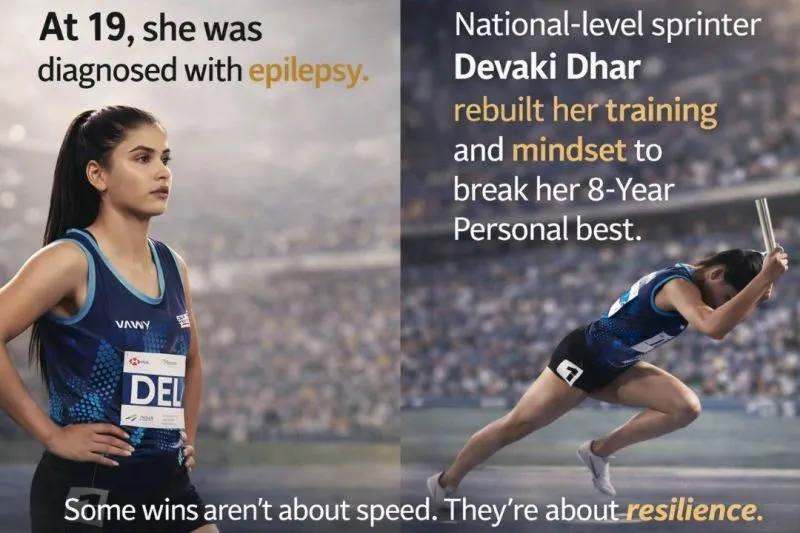
At 19, Devaki Dhar wasn’t thinking about hospitals or diagnoses. She was thinking about split seconds, race starts, and how to shave milliseconds off her sprint. Running was her language. Her safe space. Her identity.
Then came the diagnosis: epilepsy
In one conversation, everything she had built her life around was put on hold. Not because she wanted to stop — but because she had to. Training paused. Track shoes stayed untouched. Instead of race plans, there were prescriptions and warnings. For a young athlete, it felt like the ground had disappeared beneath her feet.
When the Body Stops Feeling Like Home
Medication came with its own challenges. Fatigue replaced explosiveness. Strength dipped. Confidence followed. The body she once trusted blindly now felt unpredictable, almost unfamiliar.
Running had always given Devaki control. On the track, things made sense. There was rhythm, discipline, and release. Now, even simple movements came with doubt. What if? became a constant companion. And for an athlete, fear is heavier than any physical weight.
She wasn’t just missing training. She was grieving a version of herself she didn’t know how to get back to.
The Quiet Decision Not to Quit
Devaki didn’t make a dramatic comeback plan. There was no loud declaration that she would “fight” epilepsy. There was simply a quiet, stubborn decision: she wasn’t done.
Instead of rushing, she slowed down. Instead of chasing old benchmarks, she rebuilt from scratch. Her routine changed. Nutrition became about balance, not extremes. Mindset work mattered as much as speed drills. She learned something most athletes struggle with — listening.
Listening to her body. Listening to fatigue. Listening to fear, without letting it control her.
Learning a New Way to Train
Devaki’s training transformed. It wasn’t about pushing harder anymore; it was about training smarter. She respected rest like she once respected effort. Recovery stopped being optional. Sleep, consistency, and mental calm became non-negotiable.
Epilepsy demanded structure, and Devaki leaned into it. Some days were strong. Some days weren’t. Progress came slowly — and not always visibly. But she kept showing up, trusting that patience itself was a form of strength.
Eight Years. One Moment. A Personal Best.
Months turned into years. There were setbacks, doubts, and long stretches where improvement felt invisible. But in 2025, eight years after being told she had epilepsy, Devaki returned to the track and clocked her personal best.
It wasn’t just a time on the stopwatch. It was validation. Proof that pauses don’t erase potential. That detours don’t mean dead ends. That growth doesn’t always look fast — sometimes, it looks steady.