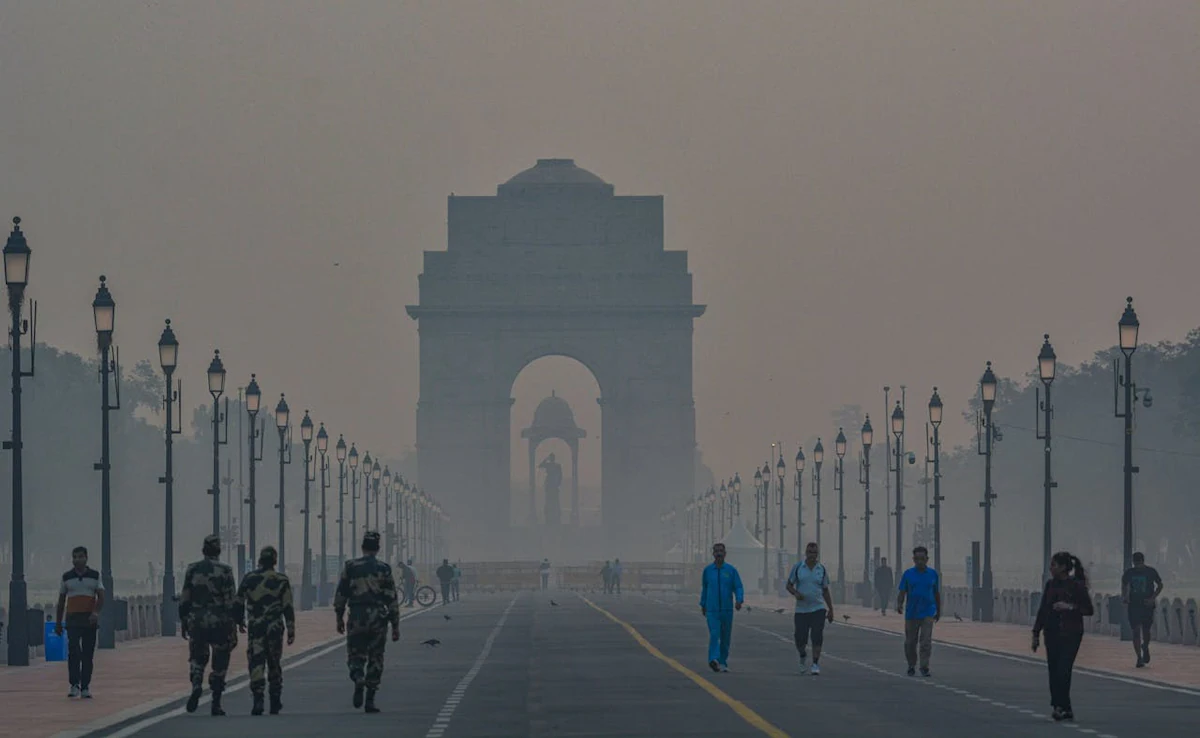
Air quality in New Delhi experienced a slight enhancement on Friday, with the Air Quality Index (AQI) reported at 183 at 8 am, placing it within the ‘moderate’ category, as per data from the Central Pollution Control Board (CPCB). This marks a noteworthy reduction from the ‘poor’ AQI levels recorded earlier in the week, including 209 on Thursday and a peak of 294 on Wednesday. Additionally, the temperature in the capital was noted at 12 degrees Celsius around 7 am, coupled with humidity levels at 95 percent, as reported by the India Meteorological Department (IMD).
Regional Variations in Air Quality
The AQI varied across different areas of the city, with Mundka recording a significant AQI of 230, followed closely by Shadipur at 248 and Nehru Nagar at 207. Other locations included Rohini at 221, Bawana at 220, and Jahangirpuri at 245. Comparatively, Wazirpur and Ashok Vihar both recorded AQIs of 207 and 201, respectively. In contrast, areas with notably better air quality included Sri Aurobindo Marg at 123 and Lodhi Road at 135. The readings from Major Dhyan Chand Stadium, Mandir Marg, IIT Delhi, Dwarka-Sector 8, and IGI Airport stood at 142, 141, 144, 190, and 141, respectively.
Understanding the Air Quality Index
The AQI is categorised based on specific readings. An AQI score ranging from 0 to 50 is classified as ‘good’, 51 to 100 as ‘satisfactory’, 101 to 200 as ‘moderate’, and scores of 201 to 300 fall into the ‘poor’ category. Ratings of 301 to 400 are deemed ‘very poor’, while those between 401 and 500 are classified as ‘severe’. On the previous day, notable AQI readings included 159 at Sri Aurobindo Marg and 158 at IIT Delhi, indicating comparatively better air quality conditions on Thursday.
Political Response to Air Quality Concerns
The declining air quality has ignited political discussions within the region. On Tuesday, the Aam Aadmi Party (AAP) expressed skepticism regarding the credibility of pollution data in Delhi, criticising the governing BJP’s decision to install six new AQI monitoring stations in green and open spaces across the city. Saurabh Bharadwaj, AAP Delhi State President, voiced concerns that the intent behind this initiative was not to genuinely improve air quality but rather to artificially lower AQI readings by relocating monitoring stations to areas with better air quality, thereby masking the real pollution levels with superficial measures.
Statements from Political Leaders
In a statement on social media, Bharadwaj remarked on the actions taken by the BJP government, describing them as manipulative tactics aimed at misrepresenting Delhi’s air quality status. He highlighted the lack of substantial anti-pollution efforts and criticised the Central Air Quality Management (CAQM) body for remaining inactive despite these alleged discrepancies. Bharadwaj’s commentary indicates an ongoing tension regarding air quality management and the responsibilities of governing bodies in the national capital.