


Delhi Replaces Jantar Mantar With Three New Protest Locations
The CSR Journal Magazine

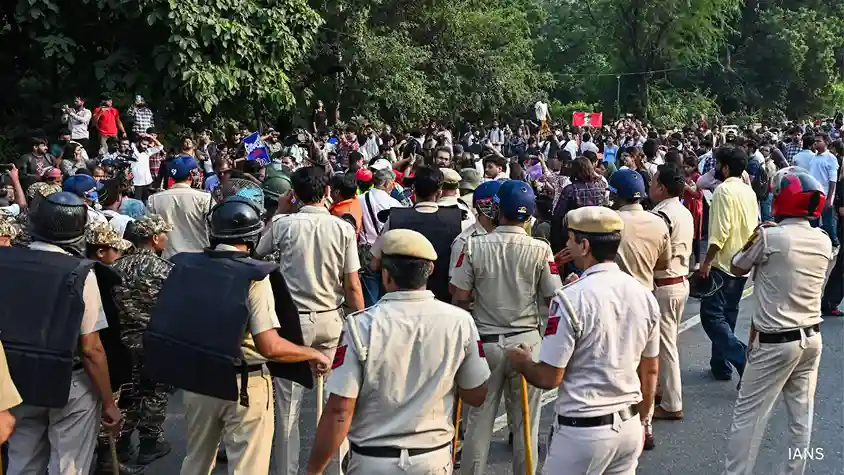
Delhi Police Commissioner Anurag Kumar issued a standing order on October 11, 2023, which officially de-notified Jantar Mantar Road as a designated site for protests. This historic location, long regarded as a central venue for public demonstrations in the capital, will now be replaced by Ramlila Maidan in Central Delhi, Burari Ground in North Delhi, and CBD Ground in East Delhi.

This modification forms part of the ongoing tradition of relocating spaces for public dissent in Delhi. For many years following India’s Independence, the Boat Club lawns near India Gate and Vijay Chowk were prominent venues for large gatherings. Protesters have also previously occupied areas behind the Red Fort to voice their demands to the government.

The historical context of public protests in Delhi can be traced back many decades. Historians note significant events, such as the notable assembly led by farmer leader Mahendra Singh Tikait in October 1988, where thousands of farmers rallied at the Boat Club to urge the Rajiv Gandhi administration to respond to their concerns. This marked a turning point in how authorities viewed spaces designated for protests.

Jantar Mantar’s Historical Importance

Jantar Mantar, established in 1724 by Maharaja Sawai Jai Singh II, served originally as an astronomical observatory under the Mughal emperor Muhammad Shah. Its large instruments, designed to measure celestial movements, contribute to its rich heritage. Over time, however, the area transformed from a scientific site into a prominent location for citizens to raise questions and express dissent against governmental actions.

As public demonstrations increased, concerns from local residents regarding noise, waste, and temporary structures emerged. In response, the National Green Tribunal imposed a ban on protests at Jantar Mantar on October 5, 2017, subsequently directing protest activities to take place at Ramlila Maidan.

The Supreme Court later intervened, overturning the complete prohibition in July 2018, stating that a blanket ban was not a viable solution. Instead, the court recommended guidelines to allow for protests while balancing residents’ right to a peaceful life with citizens’ right to demonstrate. This intervention led to adjusted regulations for protests at Jantar Mantar, permitting gatherings under specific limitations.

New Venues for Protest and Their Implications

The recent decision to remove Jantar Mantar as a designated protest venue follows a review conducted by a committee from the Union Ministry of Home Affairs. The panel assessed alternative sites for citizens to express their views and concluded Ramlila Maidan, Burari Ground, and CBD Ground would serve as more suitable options moving forward. This shift reflects the continuing evolution of designated protest spaces within the capital.

Over the years, various locations have been utilised for public demonstrations as authorities work to address concerns over security, public order, and the management of protests. Looking ahead, the new designated venues are likely to shape the landscape of public protests in Delhi. Each site presents unique opportunities for demonstrators while adhering to regulatory measures established to maintain order and address community concerns.

Long or Short, get news the way you like. No ads. No redirections. Download Newspin and Stay Alert, The CSR Journal Mobile app, for fast, crisp, clean updates!

App Store –  https://apps.apple.com/in/app/newspin/id6746449540 

Google Play Store – https://play.google.com/store/apps/details?id=com.inventifweb.newspin&pcampaignid=web_share

Latest News

Popular Videos
