


app-store-logo
play-store-logo
February 27, 2026

Delhi Court Grants Bail to JNU Student Protestors
The CSR Journal Magazine

The Patiala House Court in New Delhi has granted bail to all students accused in connection with a recent protest at Jawaharlal Nehru University (JNU). Each of the accused is required to submit a bail bond of Rs. 25,000, with the court also mandating verification of these bonds.

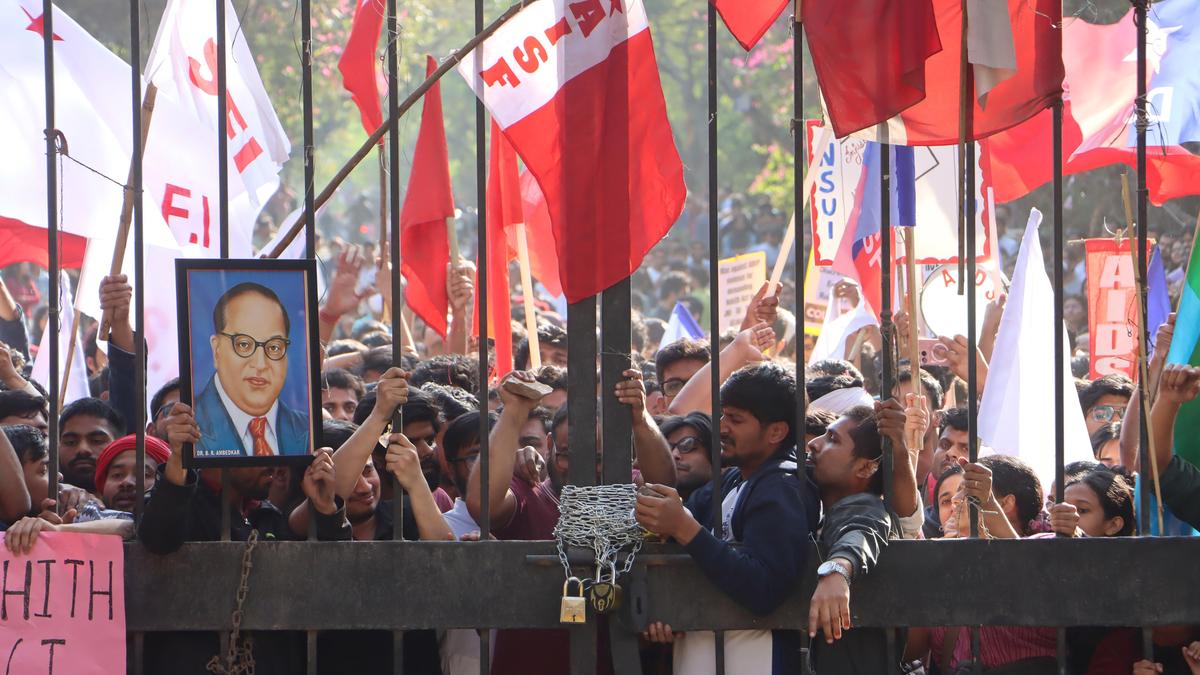
This decision follows a protest led by the JNU Student Union (JNUSU) on Thursday, during which student demonstrators expressed their dissent against the Vice-Chancellor, Santishree D Pandit. The protest escalated when Delhi Police barricaded university entrances, restricting the protestors from moving beyond certain points. In this context, a scuffle ensued between the police and the demonstrators, resulting in the detention of several individuals.

Accusations by Delhi Police

The Delhi Police have accused the student protestors of engaging in violent behavior that included physical assaults on security personnel. According to the police, protestors committed acts of aggression, such as throwing objects like banners and sticks, as well as physically assaulting officers, leading to injuries among the police force. The police stated that the protest, which involved actions like damaging barricades, necessitated the detention of those not complying with lawful orders.

Scale of the Protest

Authorities reported that the student march involved approximately 500 participants, who defied the university administration’s instructions to remain on campus. The JNUSU organized the march urging students to proceed from the university to the Ministry of Education. Despite being clearly informed that such a protest was not permitted, the students continued their plans and proceeded towards the exit at around 3:20 PM.

University Administration’s Response

The university administration had explicitly denied permission for the protest outside the campus, urging the students to confine their activities to JNU grounds. In light of this, police stated that they had engaged in discussions with the protestors to dissuade them from marching outside. However, a considerable number of students chose not to heed these requests, ultimately resulting in the tense confrontation.

Reaction from JNUSU

Following these events, the JNUSU condemned what they termed police brutality against the protestors, who were advocating for the implementation of the Rohith Act and calling for the Vice-Chancellor’s resignation. The student union also claimed that those injured during the protest were not provided with necessary medical assistance, raising concerns over the treatment of the demonstrators.

Next Steps

Further developments regarding the case and the ongoing situation at JNU are anticipated as the legal proceedings continue. The protest and its aftermath have sparked a significant dialogue surrounding student rights, administrative regulations, and police conduct in educational environments.

Long or Short, get news the way you like. No ads. No redirections. Download Newspin and Stay Alert, The CSR Journal Mobile app, for fast, crisp, clean updates!

App Store –  https://apps.apple.com/in/app/newspin/id6746449540 

Google Play Store – https://play.google.com/store/apps/details?id=com.inventifweb.newspin&pcampaignid=web_share

Latest News

Popular Videos
