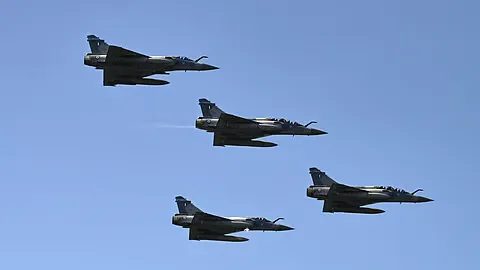
In a significant move for India’s defence capabilities, the Defence Acquisition Council (DAC) has approved proposals valued at approximately ₹3.60 lakh crore, which includes the procurement of 114 Rafale fighter jets for the Indian Air Force (IAF). The decision was made under the ‘Acceptance of Necessity’ (AoN) category and marks a crucial step in India’s defence modernisation programme. This development has generated considerable attention from defence experts and political figures, who have described it as a transformative measure for military readiness, self-reliance, and strategic deterrence.
Key Features of the Rafale Procurement
The DAC meeting, chaired by Union Defence Minister Rajnath Singh, saw the approval of various acquisitions across the Air Force, Army, Navy, and Coast Guard. Among these, the focus on the 114 Rafale Multi-Role Fighter Aircraft (MRFA) stands out as a pivotal element of the modernisation initiative. Defence expert Colonel TP Tyagi emphasized the importance of this decision, labeling it a monumental change for India’s security framework. He highlighted that the Rafale jets come equipped with sophisticated satellite communication systems and a full suite of weapons, maintenance, and training provisions. Furthermore, about 100 of these jets are slated for production in India, promising to boost the domestic manufacturing ecosystem.
Addressing Air Force Squadrons’ Shortage
Tyagi noted that the acquisition would directly tackle the shortfall of seven to eight squadrons in the IAF vital for addressing potential multi-front conflict scenarios. He pointed out that the proposed combat missiles will possess ‘stand-off’ capabilities, allowing strikes against deep targets without crossing into enemy territory. This is expected to enhance operational effectiveness significantly.
Enhancements for the Army and Navy
On the Army’s front, the DAC sanctioned the procurement of anti-tank mines and upgraded T-72 tanks, which are designed for superior speed and power. The Navy will also benefit from the acquisition of P-8I reconnaissance aircraft and advanced gas turbines that will reduce reliance on international suppliers. Enhanced electronic and infrared systems for the Coast Guard were also outlined, aimed at bolstering coastal surveillance capabilities.
Political Reactions to the Procurement
Following the announcement, political leaders expressed their support. BJP MP Manan Kumar Mishra mentioned that this initiative aligns with India’s evolving security strategies, asserting the need for a robust defence sector. He referred to the recent successes of Indian operations as indicative of the necessity of possessing advanced capabilities like the Rafale fighters. Rajasthan BJP Chief Madan Rathore framed the decision as crucial for national deterrence, affirming the government’s commitment to ensuring security.
Broader Implications of Defence Modernisation
The DAC’s approval for the IAF includes the procurement of Multi-Role Fighter Aircraft (Rafale), combat missiles, and airships intended for high-altitude reconnaissance tasks. According to the Ministry of Defence, this procurement will significantly enhance the IAF’s capabilities in air-dominance operations and long-range offensive strikes while ensuring a shift towards indigenous production. The Army will also see improvements in its operational effectiveness through the approved anti-tank mine systems and the refurbishment of armoured vehicles. In addition, the Navy’s acquisition of long-range surveillance aircraft will enhance its maritime capabilities.
Coast Guard Enhancements
The DAC has confirmed that the Indian Coast Guard will receive new Electro-Optical/Infra-Red systems for its Dornier aircraft, which will improve maritime surveillance and security operations. This agreement indicates a comprehensive push towards self-reliant military procurement, contributing to India’s strategic interests in the region.