


app-store-logo
play-store-logo
March 2, 2026

Debate Over Foreign Intervention in Iran Intensifies Amid Leadership Uncertainty
The CSR Journal Magazine

In recent discussions surrounding Iran’s political landscape, the notion of foreign intervention has garnered significant attention. Advocates argue that the long-standing issues within Iran, such as governmental repression and economic decline, surpass the potential dangers posed by violent changes to the current regime. Following the severe suppression of protests in January, the moral objections to such interventions appear to have diminished considerably.

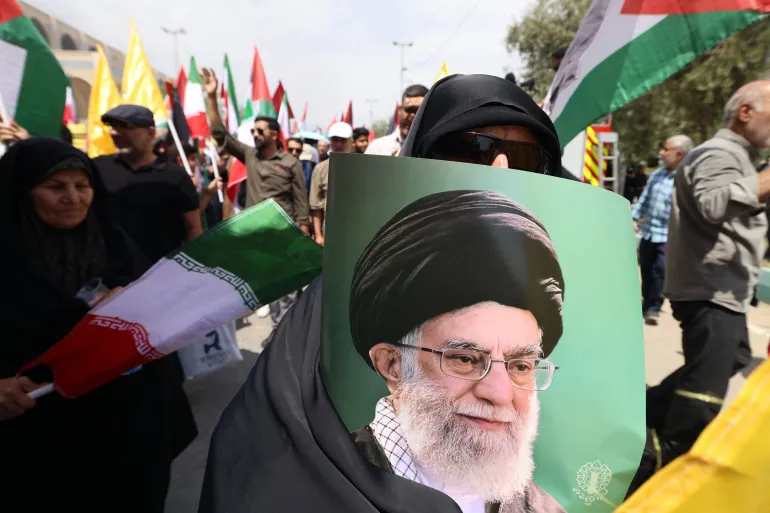
The United States and Israel quickly escalated their rhetoric, with both leaders encouraging Iranian citizens to rise against their government. This included notable calls for the assassination of key figures, including Ayatollah Ali Khamenei, which proponents celebrated as major successes.

However, the belief that removing a central leadership figure would result in a swift, significant transformation is not assured. The aftermath of regime changes in the broader Middle East suggests that external interventions often lead to instability rather than a smooth transition.

Historical Context of Similar Interventions

Looking to past instances, countries like Afghanistan, Iraq, and Libya highlight the complexity of foreign military action. After the US-led invasion of Afghanistan in 2001, the country faced two decades of ongoing conflict. In Iraq, similarly, the aftermath of the 2003 invasion resulted in persistent civil unrest despite attempts at establishing democratic governance.

Libya represents another case in point, where NATO intervention in 2011 brought about a collapse of societal order, leaving the nation divided and struggling with significant governance issues. None of these nations have regained the stability they had prior to foreign involvement, illustrating that such actions can lead to lasting volatility.

Iran’s situation presents distinctive attributes that differentiate it from these earlier examples. Should Khamenei meet his end, it is possible that the outcome may not result in the collapse of the state. In Shia Islam, a leader’s martyrdom can be perceived as a sacred event, potentially galvanizing national unity against perceived external threats.

The Role of Internal Structures

The Iranian regime’s survival may hinge on the strength of its bureaucratic and security institutions. The continuation of operational ministries and local governance under a leadership vacuum will be critical in preventing fragmentation. The relationship between the conventional military, Artesh, and the Islamic Revolutionary Guard Corps (IRGC) is also vital for maintaining territorial integrity.

Finding a widely accepted leader amid this turbulence poses a significant challenge. Recent crackdowns on protests have severely damaged the rapport between the populace and political elite, leaving establishment figures without legitimacy. Figures such as Parliamentary Speaker Mohammad Bagher Ghalibaf or former President Hassan Rouhani might seek to stabilize the situation with a technocratic-military approach but would lack the necessary spiritual authority.

Without a unifying figure to bridge the gap between the populace and the regime’s security forces, any new leadership will likely face significant obstacles in establishing authority. The risk of fragmentation increases if institutional continuity falters, potentially resulting in persistent conflict.

Consequences of Fragmentation and Social Strife

Further complicating the situation, sanctions have led to the erosion of Iran’s middle class, traditionally a stabilizing force during political transitions. With a weakened middle class, armed factions and extremist elements may gain influence, creating a precarious environment for political stability.

Moreover, Iran’s ethnic and linguistic diversity adds another layer of vulnerability. Decreased central authority could allow long-standing regional grievances to resurface, leading to possible insurgencies among minority populations, particularly in border areas. Major cities could also experience chaos as competing militias vie for control over resources, escalating tensions further.

As the region witnesses these developments, the implications of a potential regime change are complex. While some argue for foreign intervention as a solution, historical patterns indicate that such military actions rarely facilitate smooth transitions, often resulting instead in deep-seated instability and institutional decline.

Long or Short, get news the way you like. No ads. No redirections. Download Newspin and Stay Alert, The CSR Journal Mobile app, for fast, crisp, clean updates!

App Store –  https://apps.apple.com/in/app/newspin/id6746449540 

Google Play Store – https://play.google.com/store/apps/details?id=com.inventifweb.newspin&pcampaignid=web_share

Latest News

Popular Videos
