


app-store-logo
play-store-logo
March 14, 2026

Communist Parties Suffer Significant Defeat in Nepal General Election
The CSR Journal Magazine

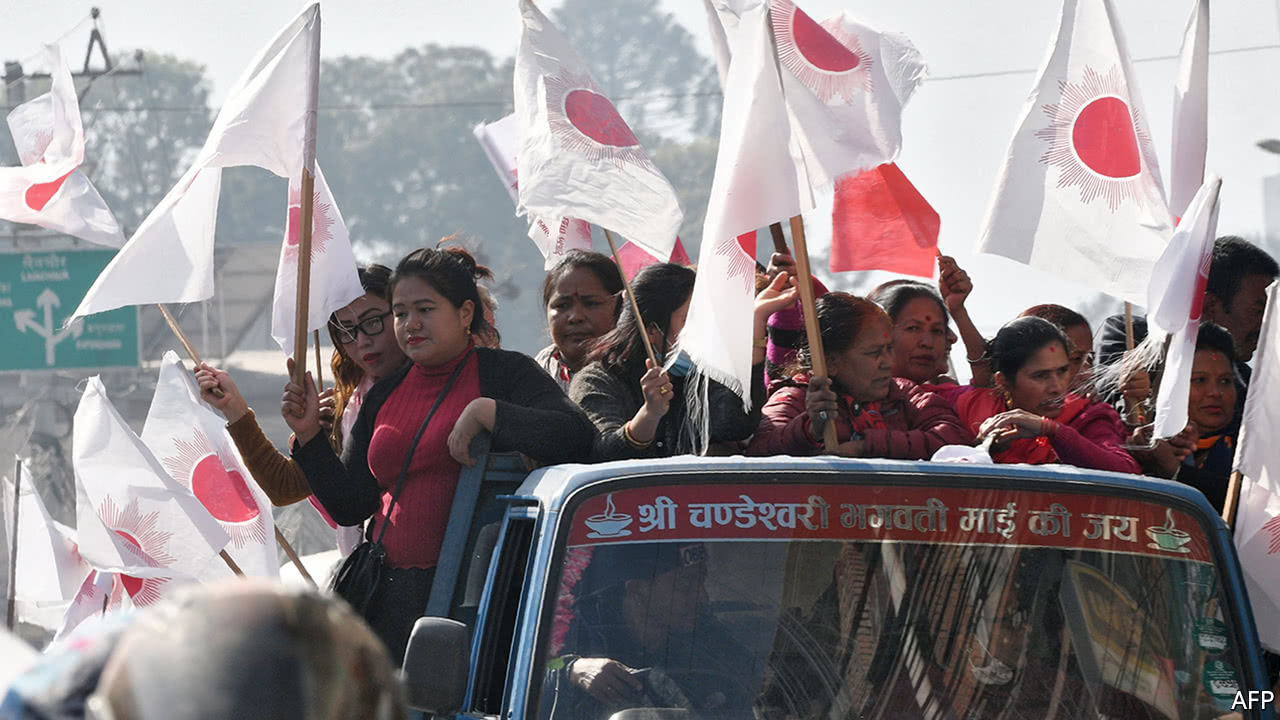
Nepal general elections held on March 5, 2026, marked a pivotal moment in the country’s political history. Once dominant for three decades, communist parties experienced a severe decline, capturing only around 21 percent of the popular vote, significantly down from their consistent 40 percent.

The Communist Party of Nepal-Unified Marxist Leninist (CPN-UML) secured just nine seats in the first-past-the-post system, while the Nepal Communist Party (NCP), a coalition of numerous leftist factions, managed to win only seven seats. This loss underscores a dramatic transformation in the political dynamics of Nepal.

Rise of the Rastriya Swatantra Party

In stark contrast, the Rastriya Swatantra Party (RSP) emerged as a major force, securing 125 seats and an impressive 47.8 percent of the proportional representation vote. The RSP’s leader, Balen Shah, an ex-mayor of Kathmandu famed for his infrastructure improvements, became the public face of the party.

Traditional leftist parties, such as Rastriya Janamorcha and Nepal Majdoor Kisan Party, lost their long-held constituencies, indicating a broader rejection of established communist politics in favor of new leadership.

Analysts Weigh In on the Shift

Political analysts noted that this election could have implications for the future of communist ideologies in Nepal. Analyst Arun Kumar Subedi remarked that the results had effectively “sterilized” the communist factions. Nabean Tiwari, a young Marxist scholar, contended that voters had not entirely dismissed the ideology of communism but had expressed dissatisfaction with the leadership, highlighting a disconnect between leaders and the electorate’s expectations.

The Decline of Communist Movements in South Asia

The struggles of communist parties are not limited to Nepal. The Indian Communist Party has fragmented over the years, resulting in weakened influence. In Pakistan, the Communist Party faced immediate suppression upon its formation in 1948, and its relevance has dwindled. The Bangladeshi left also saw its fortunes fade after the assassination of Sheikh Mujibur Rahman in 1975, revealing the fragility of these movements in the region.

Historical Context of Marxism in the Region

The Communist Party of India, founded in 1920 in Tashkent, grappled with legitimacy issues almost from its inception. MN Roy, the party’s founder, became embroiled in disputes regarding the party’s authenticity and roots.

This initial contention foreshadowed future splits, leading to the emergence of different factions that have persisted throughout the decades. A notable split in 1964 resulted in the formation of the Communist Party of India (Marxist), while the Naxal movement emerged later as a radical offshoot against parliamentary politics.

The Challenges of Modern Leftist Movements

As the ideological landscape in South Asia evolves, traditional leftist rhetoric continues to be repurposed by emerging political movements that distance themselves from the historical communist framework.

In India, anti-corruption and governance-focused parties like the Aam Aadmi Party and Imran Khan’s Pakistan Tehreek-e-Insaf reflect an electorate increasingly looking for accountability and clean governance rather than ideological alignment with traditional leftist parties.

Future Implications for Leftist Ideologies

Even as communist parties struggle to maintain relevance, the underlying issues that propelled their rise, inequality, land rights, and exploitation, persist and may serve to rejuvenate leftist discourse in the future. Despite the failures of these parties to deliver on their promises, the foundational ideas of socialism remain pertinent as younger generations in urban settings demand change, accountability, and effective governance.

Long or Short, get news the way you like. No ads. No redirections. Download Newspin and Stay Alert, The CSR Journal Mobile app, for fast, crisp, clean updates!

App Store –  https://apps.apple.com/in/app/newspin/id6746449540 

Google Play Store – https://play.google.com/store/apps/details?id=com.inventifweb.newspin&pcampaignid=web_share

Latest News

Popular Videos
