


Chandrayaan-4: India Changes Rocket Configuration Mid-Development for Lunar Mission
The CSR Journal Magazine

The announcement of India’s Chandrayaan-4 marks a significant milestone as the country prepares for its first lunar sample return mission. Scheduled for launch in October 2027, this mission aims to land in the Moon’s south polar region, with the objective of drilling and collecting up to three kilograms of lunar soil. The collected samples will be sent back to Earth after launching from the lunar surface and docking with a waiting spacecraft in lunar orbit.

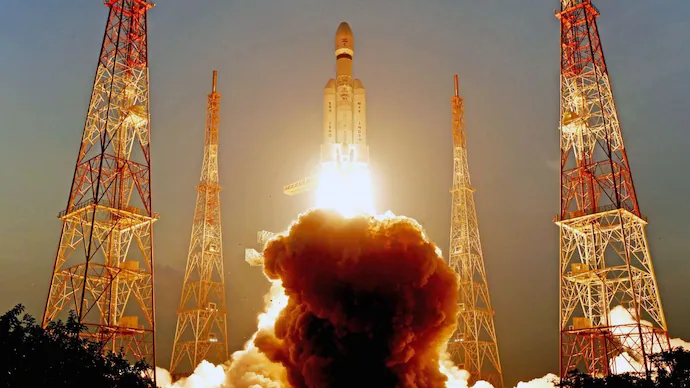
The mission involves five spacecraft modules, weighing approximately 9,200 kg altogether, which exceeds the payload capacity of a single LVM3 rocket. This limitation prompted the Indian Space Research Organisation (ISRO) to devise a plan for two separate launches that will later dock in Earth orbit, showcasing the complexity of the undertaking.

Rationale for Two Rocket Launches

The necessity for two rockets arises from the detailed structure of Chandrayaan-4, which consists of an Ascender Module, a Descender Module, a Re-entry Module, a Transfer Module, and a Propulsion Module. The combined weight of the modules poses a challenge since the LVM3 rocket can only carry about 8,000 kg to low Earth orbit. To successfully manage the load, ISRO decided to split the mission into two separate LVM3 launches.

The first launch will carry the landing stack consisting of the Descender and Ascender modules into orbit, followed by a second launch that will transport the remaining modules. Once in orbit, both groups will dock together, forming a single unit that will then travel to the Moon. Upon reaching lunar orbit, the modules will separate again to carry out surface operations.

This innovative solution addresses the weight issue while maintaining the mission’s integrity, reinforcing the complexity of orchestrating lunar exploration initiatives.

Engine Upgrade and Financial Implications

ISRO’s latest move involves changing the rocket configuration to implement a semi-cryogenic engine, known as the SE2000, which is under development. This engine will replace the standard liquid fuel used in the LVM3 rocket, allowing for a more compact and powerful thrust necessary for the mission’s requirements. The engine is designed to improve overall payload capacity, potentially allowing the LVM3 to handle weights necessary for Chandrayaan-4.

The financial ramifications of this decision have been notable, as reported by a Parliamentary Committee. Of the Rs 150 crore allocated for the mission in 2025-26, only Rs 34.6 crore had been spent by January 2026. The committee highlighted that this financial delay was due to the postponement of component procurement as ISRO adapted its engine specifications.

Looking forward, the first fully integrated engine test is expected by the end of 2026. However, there is a significant timeline gap, as the new SC LVM3, equipped with the SE2000 engine, is not anticipated to be ready until 2028-29. This discrepancy raises concerns regarding the feasibility of the October 2027 launch date for Chandrayaan-4, creating a degree of uncertainty in the mission’s timeline.

Long or Short, get news the way you like. No ads. No redirections. Download Newspin and Stay Alert, The CSR Journal Mobile app, for fast, crisp, clean updates!

App Store –  https://apps.apple.com/in/app/newspin/id6746449540 

Google Play Store – https://play.google.com/store/apps/details?id=com.inventifweb.newspin&pcampaignid=web_share

Latest News

Popular Videos
