


app-store-logo
play-store-logo
March 8, 2026

Challenges to Employee Mental Health Within the 9-to-5 Work Culture
The CSR Journal Magazine

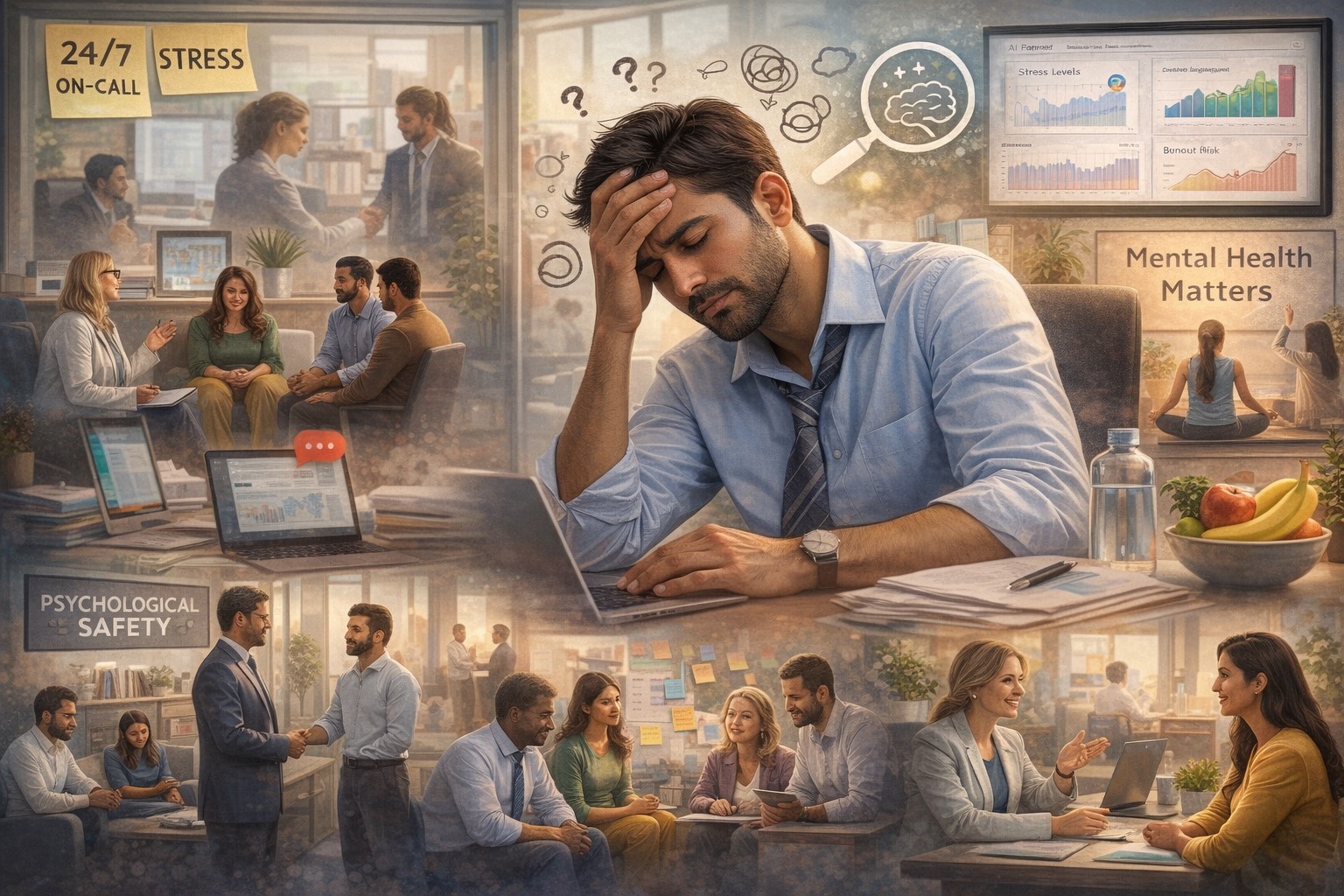
In light of economic uncertainty and rapid digital advancements, mental health has shifted from being a secondary concern to a primary workplace focus. Despite increased awareness, many employees still face stigma when considering mental health issues. A recent survey involving nearly 20,000 professionals across various industries found that around 75 percent of Indian workers are reluctant to take mental health leave. As organizations plan for 2026, there is a clear transition from intention to implementation, with mental wellbeing becoming integrated into leadership practices, workplace environments, and routine decision-making.

Understanding Psychological Safety as Leadership Essential

Psychological safety is now seen as a critical metric for leadership effectiveness rather than a vague cultural ideal. Research from Workplace Options underscores psychological safety as fundamental for high-performing teams, highlighting the role of inclusive leadership. Evaluations of leadership are extending beyond mere productivity metrics to also encompass empathy, effective communication, and overall team wellbeing. Training in emotional intelligence, active listening, and conflict resolution is increasingly common, fostering workplace environments where employees can voice concerns and share ideas without fear.

Personalized Approaches to Mental Health Support

The traditional one-size-fits-all wellness program is becoming obsolete. Companies are adopting personalized and holistic approaches that incorporate professional counseling, digital mental health resources, resilience training, and mindfulness activities. The Global Wellness Institute notes that organizations prioritizing employee wellbeing tend to experience enhanced productivity and reduced absenteeism. Furthermore, flexible wellness allowances are emerging, enabling employees to select support that aligns with their individual needs, such as stress management or caregiving responsibilities. There is also a growing awareness that diverse employee groups face unique mental health challenges, leading to more tailored support for specific demographics.

Empowering Managers and Promoting Healthy Boundaries

Burnout frequently originates from within management due to the pressures of constant availability and overwhelming responsibilities. To address this, companies are increasingly focusing on empowering managers with the resources necessary to handle workloads effectively, set achievable objectives, and establish healthy work-life boundaries. Clear guidelines regarding after-hours communication, protected time off, and established mental health leave are now considered essential components, particularly when reinforced by leadership actions rather than relying solely on policy documentation.

The Role of Data in Preemptive Wellbeing Strategies

Data analytics is becoming integral to developing workplace wellness strategies. By examining insights gathered from HR systems, pulse surveys, and engagement tools, companies can identify early warning signs of stress, disengagement, and burnout. Advancements in artificial intelligence facilitate large-scale data analysis, allowing for targeted interventions during particularly stressful periods or demanding roles. Concurrently, transparency regarding data usage and the implementation of ethical measures are vital for maintaining employee trust.

Fostering Connection and Community in the Workplace

Beyond formal policies, promoting human connection is crucial for enhancing mental wellbeing. Numerous organizations are investing in peer networks, such as parenting support groups, women’s forums, LGBTQ+ alliances, and mental health advocates to foster inclusivity and belonging. Research from Headspace indicates that employees who feel connected and supported exhibit greater resilience and engagement. Initiatives focused on wellness, volunteering, and interest-based clubs assist organizations in evolving from transactional HR models toward more community-driven workplace cultures.

Future Outlook on Mental Health and Organizational Success

By 2026, it is anticipated that mental health will be intrinsically linked to both organizational performance and long-term sustainability. Companies that infuse empathy, flexibility, and evidence-based mental health strategies into their leadership and corporate culture will likely enhance their ability to attract talent and maintain engagement during periods of change. Supporting employee mental wellbeing has transitioned from a moral imperative to a strategic necessity, with those who prioritize it today shaping the future landscape of effective, human-centered work environments.

Long or Short, get news the way you like. No ads. No redirections. Download Newspin and Stay Alert, The CSR Journal Mobile app, for fast, crisp, clean updates!

App Store –  https://apps.apple.com/in/app/newspin/id6746449540 

Google Play Store – https://play.google.com/store/apps/details?id=com.inventifweb.newspin&pcampaignid=web_share

Latest News

Popular Videos
