After the September uprising in Nepal also known as the Gen Z protest, Nepal will vote (March 5). What started as a protest against the corrupt government, nepotism and a social media ban, turned violent, leaving 19 dead, many injured and forcing then-PM K. P. Sharma Oli to resign. And now after months, Nepal is heading for the crucial change, that will shape its future.
What is the major frustration in Nepal?
Coalition government and patronage have dominated Nepal’s political system for decades. During the Gen Z protest youth protested against the existing system and said that very little had changed over the years. Because of this system, many Nepalis have left to find jobs abroad, seek stable lives, and pursue opportunity. So, this year’s election is all about accountability regarding why the current and forthcoming generations must migrate for better jobs.
Who is Balen Shah and how did he rise?
In Nepal one name heard everywhere is Balendra Shah or Balen Shah. Shah, 35, the former mayor of Kathmandu, is the face of the change. He is a rapper-turned-politician who tactfully handled Kathmandu’s years-long garbage crisis. He is known as the voice of Gen Z.
Shah mostly seen wearing black sunglasses and speaking directly with his followers on social media, is contesting from the same eastern Nepal constituency as Oli.
Shah initially ran as an independent, but currently supports the Rastriya Swatantra Party (RSP), a new political party that has fielded 9 Gen Z candidates, all former aides of Shah.
How Nepal Votes
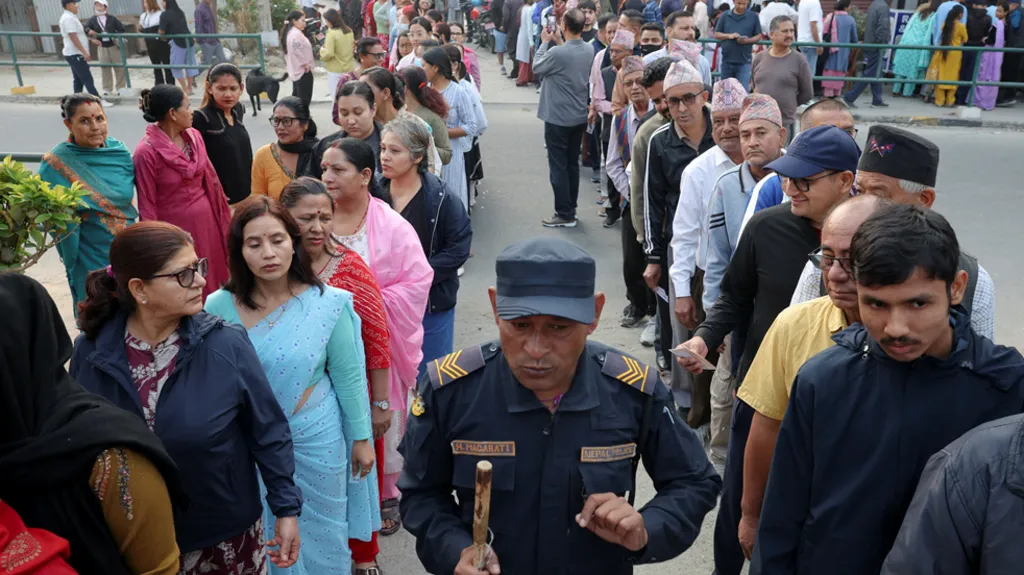
This year in Nepal 65 parties are contesting, with 160 Gen Z candidates in the race, 15 of whom are Gen Z women. Following the spring uprising, tight security arrangements are in place, with over 335,000 personnel deployed across Nepal. Even the voters are not allowed to drive directly to polling stations without special permission. This year due to the current Gulf crisis, many Nepali diasporas abroad won’t be able to cast their votes.
It is expected that the Gen Z candidates will perform well, however, it isn’t clear if they will secure a majority. Going by history, a coalition government is most likely. Currently the investigation into the violence that erupted in September is still in process and yet to be completed. Whatever the result may be, this election is a testing time for many Nepali locals.