


Buying Diamonds Is Costly While Selling Them Is Often Not Profitable
The CSR Journal Magazine

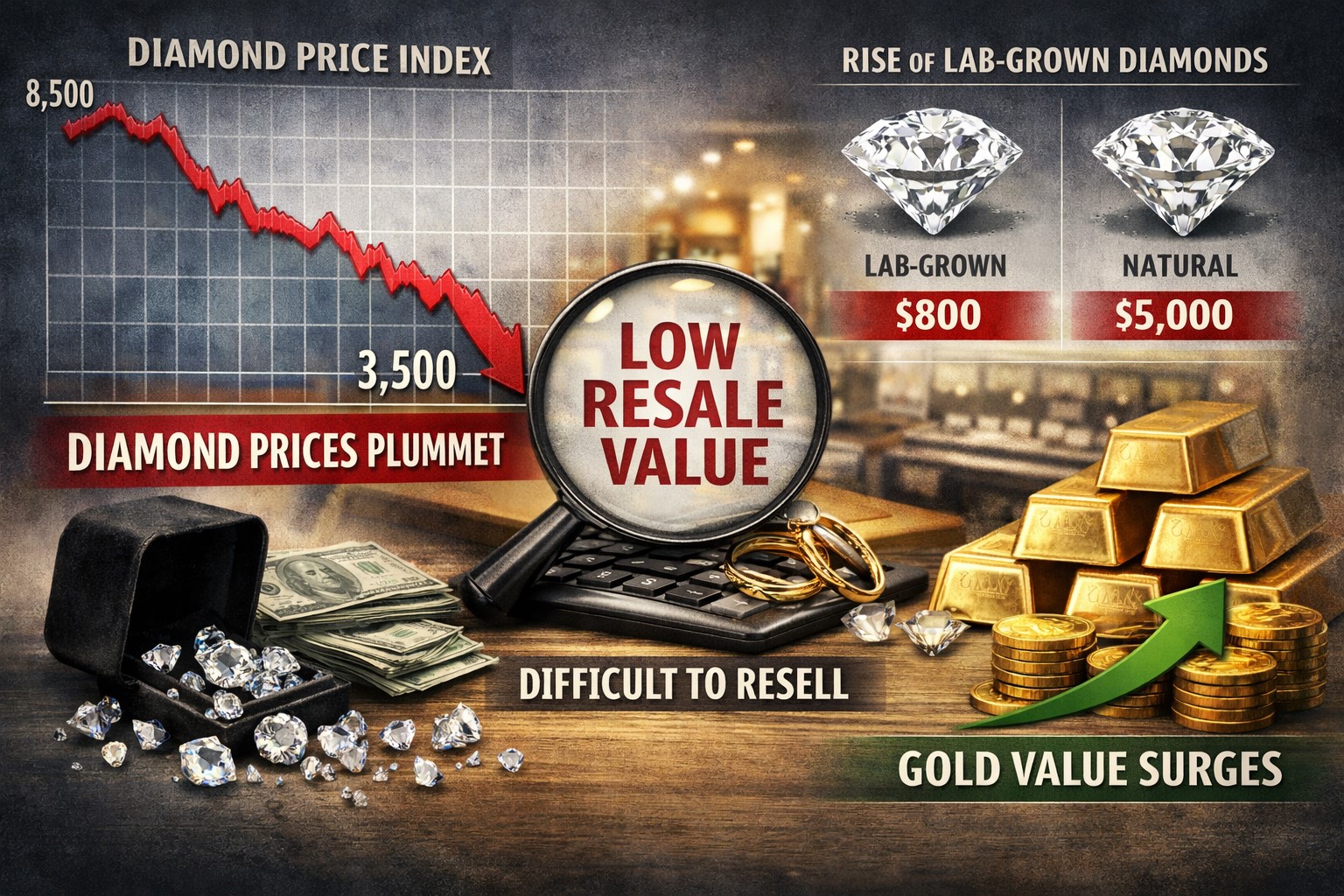
Buying diamonds has traditionally been associated with affluence and luxury, yet their market value has changed significantly over the years. Recent statistics indicate that diamond prices have reached their lowest levels this century. The diamond price index has seen a decline from approximately 8,500 to nearly 3,500, according to market assessments. This decline is notable as it occurred in the absence of a significant global recession or major geopolitical events, thereby highlighting the robustness of the trend.

When consumers purchase diamonds, they are not merely investing in a stone. The overall price includes various factors such as branding, marketing, retailer profit margins, and production costs. Unlike gold, which maintains a consistent daily market rate, diamonds lack a universally accepted benchmark price, resulting in less pricing transparency. As a result, two diamonds that are ostensibly similar may be priced differently based on their retailer, which contributes to higher retail costs.

Resale Value Challenges for Diamonds

A significant hurdle for diamond owners lies in the resale market. Unlike gold, which can be sold relatively easily at prices linked to the market, diamonds face a weak resale sector. When attempting to sell a diamond, owners frequently receive offers significantly below their original purchase price. Many jewellers either do not accept diamonds for resale or provide rates that are disproportionately lower, exacerbating the disparity between buying and selling prices. This incongruity makes diamonds a suboptimal investment choice.

The emergence of lab-grown diamonds has substantially influenced the diamond market, contributing to the recent decrease in prices. Chemically and physically identical to natural diamonds, lab-grown diamonds are produced in a significantly shorter time span, around 14 hours, as opposed to the millions of years needed for natural diamonds to form. The production costs for lab-grown diamonds have dramatically reduced by nearly 90 per cent since 2015, making it possible to create one for less than $300.

Lab-grown diamonds now represent approximately 45 per cent of engagement ring sales in the United States. This surge indicates a rapid shift in consumer preferences as buyers increasingly consider more affordable options, thereby placing further downward pressure on the value of natural diamonds.

Changing Market Dynamics and Consumer Behaviour

The traditional mechanism supporting diamond prices has relied on managed supply and extensive marketing strategies that cultivated an impression of scarcity and long-term value. However, the presence of lab-grown diamonds has prompted a reassessment of this model. With affordable alternatives readily accessible, buyers are now questioning the actual worth of natural diamonds. Additionally, younger consumers display a greater concern for cost, leading them to move away from lavish spending on conventional diamond jewellery.

In comparison, gold has sustained its reputation as a reliable store of value, with current prices hovering around Rs 4,814. Over the past two years, gold prices have appreciated by over 100 per cent. Its straightforward pricing mechanism, robust liquidity, and ability to sell smoothly across various markets render it a preferred option for both adornment and investment.

In light of the current market conditions, the stark contrast between diamonds and gold as investment assets comes into focus. While diamonds may possess emotional and aesthetic appeal, they do not serve well in terms of generating financial returns. For prospective buyers, spending on diamonds should thus be regarded as a consumption choice rather than a financial investment. As technological advancements and changing consumer preferences reshape the landscape, the disparities between gold and diamonds in terms of investment viability are becoming increasingly pronounced.

Long or Short, get news the way you like. No ads. No redirections. Download Newspin and Stay Alert, The CSR Journal Mobile app, for fast, crisp, clean updates!

App Store –  https://apps.apple.com/in/app/newspin/id6746449540 

Google Play Store – https://play.google.com/store/apps/details?id=com.inventifweb.newspin&pcampaignid=web_share

Latest News

Popular Videos
