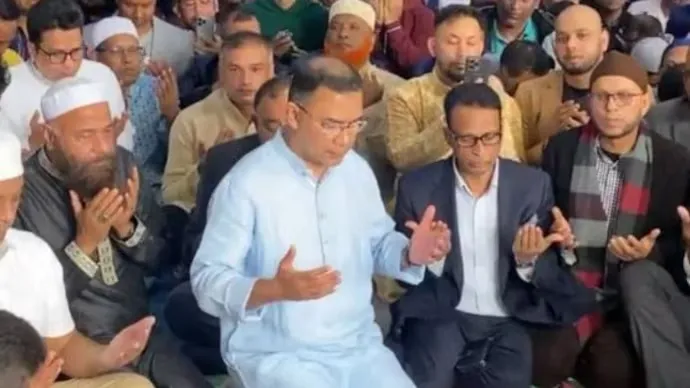
Tarique Rahman, the chief of the Bangladesh Nationalist Party (BNP), has urged party members and supporters to perform the Fajr namaaz, or dawn prayers, at polling booths as the nation approaches its critical elections on February 12. His call, while seemingly a plea for divine favor, stems from deep concerns regarding electoral manipulation and potential violence.
Rahman emphasized that supporters should not arrive at polling stations after performing the morning prayers, but should instead come a night earlier and offer the Tahajjud namaaz, a late-night prayer traditionally observed around 2 AM. This request is designed as a strategy to provide both physical and moral security for the ballots during a highly scrutinized electoral cycle marked by allegations of fraud and unrest. Reports have surfaced of a concerning rise in electoral violence, including incidents where polling booths were set on fire, intensifying the call for vigilance.
Recent events have highlighted the perilous climate: incidents of arson have been reported, including the burning of four polling booths in Netrokona. Additionally, law enforcement activities have led to arrests related to the possession of illegal weaponry and ballot tampering, indicating a heightened state of concern about electoral misconduct.
On February 12, voters will not only select a new government but will also cast ballots on the July Charter, an initiative led by Muhammad Yunus and his administration advocating for a “yes vote.” Amidst this backdrop, Rahman has reiterated his request for early prayers at election rallies across several regions, including Dhaka, Gazipur, and Narayanganj, signaling a proactive approach to safeguarding the electoral process.
Addressing supporters in Jatrabari, Dhaka, Rahman instructed them to remain at polling centers following the Fajr prayers. He argued that ensuring the integrity of the vote requires active participation beyond mere voting. “Do not leave after voting. Ensure your vote is counted accurately,” he urged, suggesting vigilance against conspiratorial actions that could undermine the election.
The Fajr namaaz is a mandatory Islamic prayer marking dawn, while the Tahajjud namaaz is an optional prayer linked with seeking divine supplication. Rahman framed the call for earlier prayer attendance as a protective measure against what he described as systematic efforts aimed at rigging the electoral outcome. He highlighted that the history of voter suppression by certain factions has necessitated this proactive approach.
In a political environment characterized by accusations of pre-voting booth captures, Rahman’s directive seeks to establish a deterrent against unlawful practices. The police have listed approximately half of the nation’s polling centers as high or medium-risk, amplifying the urgency of this call amidst a backdrop of increasing political violence leading up to the elections.
Allegations of violence have escalated as election day nears; recent outbreaks involved clashes resulting in injuries, further raising alarms about the safety of the electoral process. Prior incidents included threats made against voters and violent altercations between rival political groups, underscoring the existential stakes of the upcoming electoral face-off.
Human Rights Watch has also flagged concerns regarding the declining law and order situation under Yunus’s interim government, citing a scarcity of enforcement personnel and rising incidents of political violence since its inception. Alongside issues of arbitrary detentions and constraints on political freedoms, these factors contribute to a tense electoral atmosphere.
Tarique Rahman’s strategic encouragement for early attendance at polling stations encapsulates a larger concern regarding the integrity and safety of the electoral process in Bangladesh. With reports of escalating violence and uncertainty surrounding the election, the BNP is indicating that the onus of securing a fair vote lies on the voters, rather than relying solely on institutional assurances.