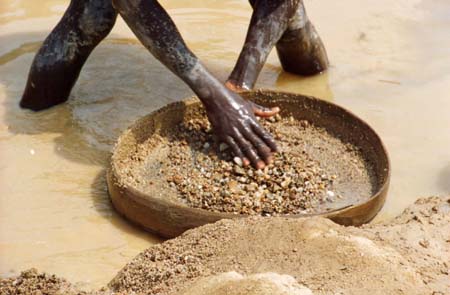
The term “blood diamonds” designates gems mined in war-torn regions and sold to finance armed conflicts. These stones are often extracted in areas dominated by militias or armed groups, as noted by organizations tracking illicit trade. Unlike other valuable resources such as oil or gold, diamonds can be easily concealed and transported across borders, making them ideal for illegal transactions. A small quantity of these rough diamonds can hold significant value, facilitating their use in funding warfare.
During the 1990s, it was estimated that conflict diamonds accounted for approximately 4 to 15 percent of the global diamond market; however, stringent international regulations have reduced this figure over time. Despite improvements, the networks supporting the trade of conflict diamonds have not entirely disappeared. Often, these diamonds are smuggled into international markets, mixed with those sourced through legitimate means, obscuring their origins.
How Diamonds Are Used as Currency in War
The transformation of diamonds into instruments of war is complex but follows a recognisable pattern. In regions where government control is minimal or nonexistent, armed factions seize control of diamond mining sites. Civilians, including children, are frequently coerced into harsh labor conditions. Communities may be uprooted, forcing people into these perilous working environments.
Once mined, the diamonds are illegally transported across borders, often passing through networks of traders who mask their origins. By the time they reach global markets, distinguishing them from legally produced stones becomes nearly impossible. Furthermore, some armed groups engage in direct trade of diamonds for weapons without involving financial institutions, while others convert the stones into cash used to procure arms and other supplies. The revenue generated from this illicit activity often circulates beyond the mining regions, prolonging conflicts.
Diamond Trade and Conflicts in Africa
The issue of blood diamonds garnered global attention during civil wars in Africa, specifically in countries such as Sierra Leone during the 1990s. Rebel groups like the Revolutionary United Front (RUF) seized diamond-rich territories, often exploiting alluvial deposits that required minimal tools for extraction. At the peak of the conflict, Sierra Leone reportedly produced diamonds worth hundreds of millions of dollars annually, much of it illicit.
The illegal diamond trade flourished as gems mined through forced labor were smuggled into neighboring Liberia and then sold in international markets. In return, rebel groups acquired monetary resources, arms, and logistical supplies. Similar patterns emerged in Angola, where the rebel group UNITA reportedly generated over $3 billion from diamond sales, which fueled prolonged military strife. Other nations such as Liberia and the Democratic Republic of Congo became involved as conduits in this complex network. While diamonds were not the sole catalysts for these wars, they exacerbated violence and prolonged hostilities.
The Human Cost Behind the Trade
The mining of diamonds in conflict zones has a significant human toll. Typically, this work is manual, lacking machinery and safety measures. Miners, including children, endure long hours digging in dangerous conditions. The physical demands of the job often lead to injuries, while access to education diminishes.
Global labor organizations indicate that tens of thousands of children find themselves in artisanal mining activities across Africa, driven by extreme poverty or coerced by armed groups. The line between laborers and victims often becomes blurred in regions lacking governmental oversight, where exploitative practices remain prevalent.
Efforts to Regulate the Diamond Trade
In response to the issues surrounding blood diamonds, the Kimberley Process was established in 2003. This international certification initiative aims to prevent conflict diamonds from entering the market by ensuring that participating countries only trade in certified conflict-free stones. Currently, over 99 percent of the global diamond trade is reported to be certified under this system.
Critics, however, argue that the Kimberley Process primarily addresses diamonds associated with rebel conflicts and often overlooks abuses linked to state-controlled systems. Monitoring compliance is also challenging given the complex supply chains and the number of borders involved in diamond sales.
Shifting Focus in Contemporary Conflicts
In the modern landscape of warfare, funding often arises from multiple, interconnected sources, blurring the boundaries between legal and illegal channels. Natural resources like diamonds remain integral to these networks. During periods of heightened tension, scrutiny intensifies over financial flows that sustain conflicts.
While most diamonds originate from regulated systems, the enduring legacy of blood diamonds continues to invite questions regarding the ethical implications of the diamond trade. This multifaceted issue illustrates the complex relationship between natural resources and global conflicts, ensuring that the topic remains relevant.
Long or Short, get news the way you like. No ads. No redirections. Download Newspin and Stay Alert, The CSR Journal Mobile app, for fast, crisp, clean updates!
Hollywood Star Leonardo DiCaprio seems dedicated not only to belting out award winning performances on the big screen but is also actively committed to fighting for the preservation of Earth’s natural resources and biodviersity.