


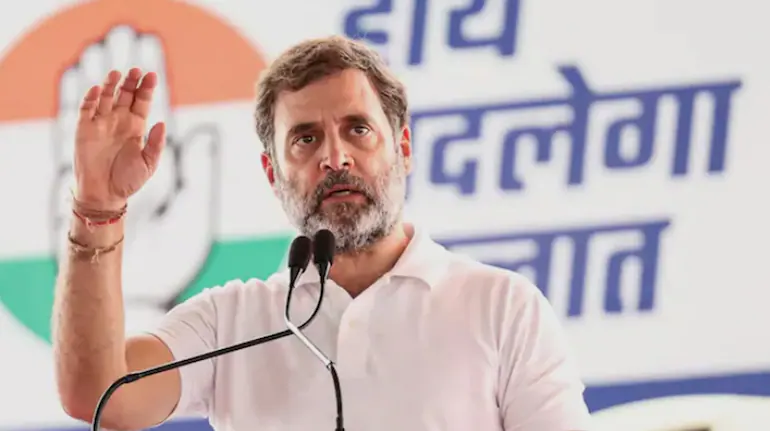

Congress leader Rahul Gandhi expressed his support for the nationwide ‘Bharat Bandh’ initiated by workers and farmers who are advocating for their rights. He highlighted various issues concerning labour reforms, trade policies, and possible changes to the rural employment scheme known as MGNREGA.
In a post on X, he conveyed the apprehensions of workers regarding the impact of the four labour codes on their rights, and farmers’ fears over a trade agreement that may jeopardize their livelihoods. Gandhi stressed that any decision impacting their future had not adequately considered their voices.
He further questioned whether Prime Minister Modi would pay heed to these concerns or remain under what he termed a “grip.” Gandhi affirmed his solidarity with those engaged in the protests, advocating for the rights of both workers and farmers.
General Strike Supported by Trade Unions
An all-India general strike, orchestrated by ten Central Trade Unions and endorsed by the Samyukta Kisan Morcha, was announced for Thursday. This collective action aims to challenge several government policies, including the controversial four labour codes, privatization efforts, the Electricity Amendment Bill 2025, potential changes to MGNREGA, and the proposed Seed Bill. Protest sites across the nation are expected to see substantial participation from farmers, agricultural workers, and industrial unions, including employees from the power sector and various other worker organizations.
In a statement, the Samyukta Kisan Morcha outlined key demands, including the withdrawal of the four labour codes, the Electricity Bill 2025, the Seed Bill 2025, and other legislative measures. They have also called for the reinstatement of the old pension scheme and the enforcement of minimum wage standards for all workers, including those under various schemes.
Support from Various Political Entities
Binoy Viswam of the Communist Party of India, who also serves as the working president of the All India Trade Union Congress, voiced full support for the farmers’ strike, characterizing it as a movement aimed at protecting fundamental rights. The mobilization reflects a broader discontent among various sectors regarding government policy shifts.
In Himachal Pradesh, local apple farmers have ramped up preparations to join the nationwide strike scheduled for February 12. They plan to march to Delhi, citing concerns over recent reductions in import duties under free trade agreements, which they believe could adversely affect the state’s apple economy. Farmers in the region are worried that these lower-priced imports may threaten local agriculture, and have called into question assurances from Union Minister Piyush Goyal regarding the protection of Indian apple farmers’ interests.
Despite the extensive support for the strike from numerous trade unions and farmers’ organizations, the National Front of Indian Trade Unions has opted not to participate, describing the initiative as “politically motivated.”