



app-store-logo
play-store-logo
February 12, 2026

Bharat Bandh 2026: Why Trade Unions are Protesting and Which Sectors Are Affected?

The CSR Journal Magazine

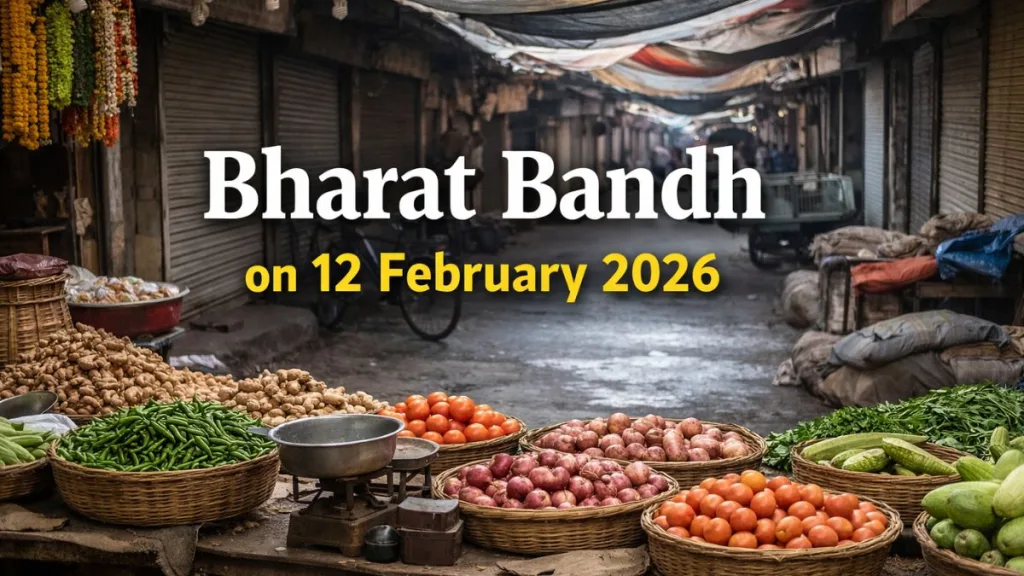
Today, over ten central trade unions, supported by farmers’ organizations and civil groups, have called a Bharat Bandh, or nationwide strike. The protest targets what unions describe as “anti-worker” policies implemented by the central government. An estimated 30 crore workers across various sectors are expected to participate, signaling widespread disruption across the country.

Reasons Behind the Protest

The Samyukt Kisan Morcha (SKM), representing farmers and agricultural laborers, has urged participation in the strike to oppose several policies affecting workers and rural communities. Key demands include:

Repeal of four labor codes

  • Withdrawal of the Electricity Bill 2025

  • Rejection of the Seed Bill 2025 and VB-G RAM G Act 2025

  • Restoration of the previous pension scheme

  • Introduction of minimum wages for all workers, including those in government programs

SKM has highlighted that the Electricity Bill could raise tariffs for households and farmers and impose smart meter systems with peak-hour charges. The VB-G RAM G Act is seen as a threat to the Mahatma Gandhi National Rural Employment Guarantee Act (MGNREGA), while the Seed Bill is criticized for enabling black marketing of seeds.

Farmers’ unions have also denounced free trade agreements, claiming they undermine wages, fair pricing, and employment for youth, and compromise national sovereignty.

Impact on Public Services

The strike is expected to impact multiple sectors, including banking, insurance, transport, education, utilities, and rural employment programs. Public sector banks, state transport services, and insurance offices in certain regions may face partial or full closures. However, some banking unions are not participating, as they previously struck on January 27.

Essential Services Will Continue

Despite the bandh, critical services such as healthcare, hospitals, emergency medical units, and pharmacies will operate. Metro services may continue based on regional directives, while private businesses, IT firms, schools, and colleges could maintain regular operations depending on local administrative decisions. Supply chains for essential goods like milk and medicines are largely expected to remain unaffected.

Public Advisory and Safety Measures

Authorities have advised citizens to plan travel in advance, especially in regions with high union participation. Commuters and workers are urged to check the operational status of public transport, banking, and government offices before heading out.

The bandh underscores ongoing tensions over labor and agricultural policies and highlights the significant influence of unions and farmer groups on national socio-economic debates.

Long or Short, get news the way you like. No ads. No redirections. Download Newspin and Stay Alert, The CSR Journal Mobile app, for fast, crisp, clean updates!

App Store –  https://apps.apple.com/in/app/newspin/id6746449540 

Google Play Store – https://play.google.com/store/apps/details?id=com.inventifweb.newspin&pcampaignid=web_share

Latest News

Popular Videos