


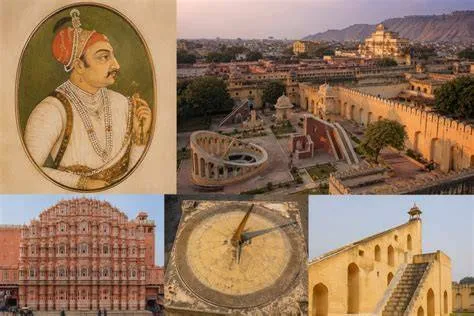

Bengali Brahmin’s Role in Transforming Jaipur from Sand to City

The CSR Journal Magazine

The story of Jaipur’s establishment highlights the significant contribution of Vidyadhar Bhattacharya, a Bengali Brahmin, who played a crucial role in designing the city. When British military officers visited Jaipur in 1820, they were misled into believing that an Italian architect was responsible for its planning. Historian Sir Jadunath Sarkar later refuted this claim, asserting that it was Bhattacharya who was the true architect behind the city’s layout. Under the patronage of Maharaja Sawai Jai Singh II, Bhattacharya transformed a barren landscape into a meticulously planned capital for the Kachhwaha Rajput kingdom in 1727.

Jaipur’s establishment was not merely an architectural feat; it was a strategic move by Jai Singh II to assert his power amid the declining Mughal influence. The choice of location was significant, as the open plains south of Amber provided a more accessible and expandable area for trade and governance. The city was designed with wide streets and a unique layout that facilitated commerce and community life, marking a departure from the traditional mountain strongholds typical of Rajput capitals.

Jaipur celebrated its 299th anniversary on November 18, 2026, as it prepares to enter its 300th year. The city, now the capital of Rajasthan, was recognised as a UNESCO World Heritage Site in 2019 for its exceptional urban planning and architectural heritage. This milestone has led to a resurgence of interest in Jaipur’s historical significance, with many paying tribute to its rich cultural legacy on social media.
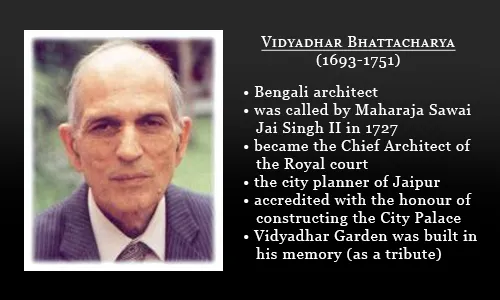
Planning and Construction of Jaipur

The planning of Jaipur was remarkably systematic, with royal directives ensuring adherence to Bhattacharya’s designs. A letter from 1729 mandated that a merchant follow Bhattacharya’s instructions while constructing his house, showcasing the level of control exercised over the city’s development. To encourage commerce, Jai Singh II offered tax incentives and guaranteed loans to traders, fostering a bustling economic environment.

One of the major challenges faced by the founders was the lack of a perennial water source. The founders devised an intricate water management system, including canals and reservoirs, to ensure a reliable water supply for the city. This network connected to existing water bodies, allowing for effective distribution and storage of water, which was essential for sustaining the burgeoning population.

Jaipur’s layout was designed to accommodate both residential and commercial spaces, with broad roads dividing the city into wards. The central royal palace complex was strategically located, influenced by traditional Indian architectural principles. The city’s construction progressed rapidly, with major wards established by 1734, just seven years after the foundation ceremony.

The Evolution of Jaipur’s Identity

Jaipur’s distinctive pink hue, often associated with a royal visit in 1876, has a deeper historical context. Evidence suggests that the city was already characterised by terracotta and reddish-pink buildings well before this event. This colour choice was not merely aesthetic; it symbolised Jaipur’s aspirations to rival other imperial cities in India.

Historians have noted that the architectural style of Jaipur was influenced by the need for cost-effective construction methods. Many buildings were made from locally sourced materials, requiring plastering and painting to achieve a finished look. The reddish-earth wash used in the city was intended to mimic the grandeur of Mughal architecture, reinforcing Jaipur’s identity as a significant cultural centre.

Jaipur’s transformation from a sandy plain to a thriving capital is a testament to the vision of its founder, the expertise of Vidyadhar Bhattacharya, and the collective efforts of countless artisans. The city stands today as a symbol of meticulous planning and rich heritage, with its streets and structures narrating a story that extends far beyond the misconceptions of the past.

Long or Short, get news the way you like. No ads. No redirections. Download Newspin and Stay Alert, The CSR Journal Mobile app, for fast, crisp, clean updates!

App Store – https://apps.apple.com/in/app/newspin/id6746449540

Google Play Store – https://play.google.com/store/apps/details?id=com.inventifweb.newspin&pcampaignid=web_share

Latest News

Popular Videos