


app-store-logo
play-store-logo
February 12, 2026

Bangladesh Votes Today Amid Political Turmoil: What It Means for India?
The CSR Journal Magazine

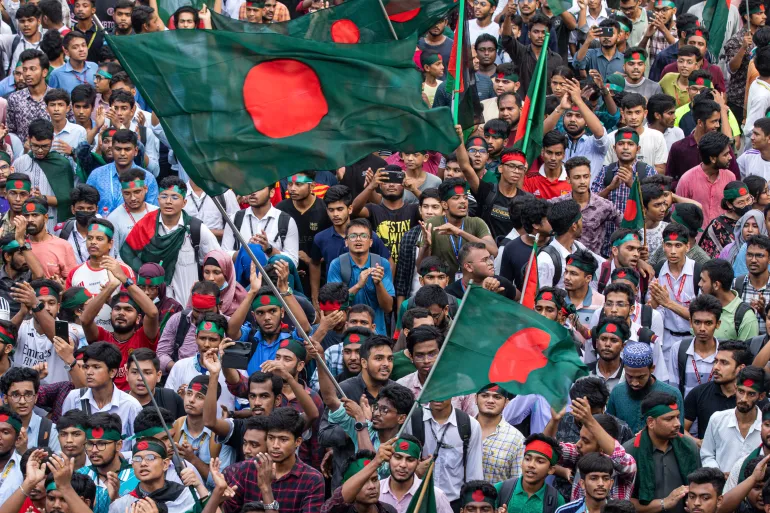
Bangladesh went to the polls on Thursday in what is being described as a pivotal election after years of intense political upheaval and instability. Millions of voters cast their ballots under tight security in the first general election since the mass uprising that ousted long-time leader Sheikh Hasina in 2024.

The election, overseen by interim chief adviser Muhammad Yunus, is widely seen as crucial for the country’s democratic future, regional stability and relations with neighbouring India.

A Landmark Election Without Hasina

This election marks a historic moment for Bangladesh’s political landscape. Sheikh Hasina,whose Awami League governed Bangladesh for over a decade and a half, is currently in exile and her party is absent from the ballot. Her party’s ban, imposed by the interim government and authorities in Dhaka, has reshaped the electoral field.

In place of the Awami League’s iconic ‘boat’ symbol, the main contest is between Tarique Rahman’s Bangladesh Nationalist Party (BNP) and an 11-party coalition fronted by Jamaat-e-Islami. Tarique Rahman, returning from 17 years in exile, leads the BNP and is widely expected to secure a significant share of seats in parliament.

Election Dynamics and Governance Challenges

Bangladesh’s parliament (Jatiya Sangsad) has 300 constituencies, with a simple majority of 151 seats needed to form a government. Voting was accompanied by a constitutional referendum, and results are expected by Friday, though outcome timing may be affected by vote counting and legal challenges.

The political atmosphere ahead of the election has been tense, with reports of violence and unrest linked to persistent factional disputes. Activists from different parties have clashed, and security forces were deployed nationwide to ensure the polls proceed without major disruption.

India’s Strategic and Economic Concerns

For India, Bangladesh is a neighbour of immense strategic importance. The two countries share a long boundary across five Indian states, making stability in Dhaka vital for border security, trade and regional cooperation.

Historically, ties have been strong, especially during Hasina’s leadership; however, the political shift and rising tensions under the interim government have introduced new challenges. Reports indicate disruptions in trade flows and infrastructure projects, with some Indian exports seeing declines in recent periods amid trade bottlenecks and policy shifts.

Diplomatic exchanges have also felt the strain: visa processing delays and logistical hiccups reflect broader unease. Yet, recent high-level talks, including visits by Indian foreign officials, signal efforts to mend ties and emphasise cooperation post-elections.

India’s focus remains on ensuring stable governance in Dhaka that prioritises economic collaboration, border management, and counter-terror efforts. New Delhi must also watch for any shifts in Bangladesh’s geopolitical alignment, especially amid concerns about China’s growing influence in South Asia.

What Lies Ahead

Bangladesh’s election outcome could redefine its domestic politics and impact regional cooperation with India. A peaceful transition and inclusive governance will be key to stabilising bilateral relations, revitalising trade links, and ensuring a peaceful neighbourhood. For India, engagement with a democratically elected Bangladesh government, regardless of which party comes to power, will be crucial to sustained stability in the region.

Long or Short, get news the way you like. No ads. No redirections. Download Newspin and Stay Alert, The CSR Journal Mobile app, for fast, crisp, clean updates!

App Store –  https://apps.apple.com/in/app/newspin/id6746449540 

Google Play Store – https://play.google.com/store/apps/details?id=com.inventifweb.newspin&pcampaignid=web_share

Latest News

Popular Videos
