


app-store-logo
play-store-logo
February 20, 2026

“As Long As No ‘Broken Bones’: New Penal Code in Taliban-Controlled Afghanistan Legalises Domestic Violence”

The CSR Journal Magazine

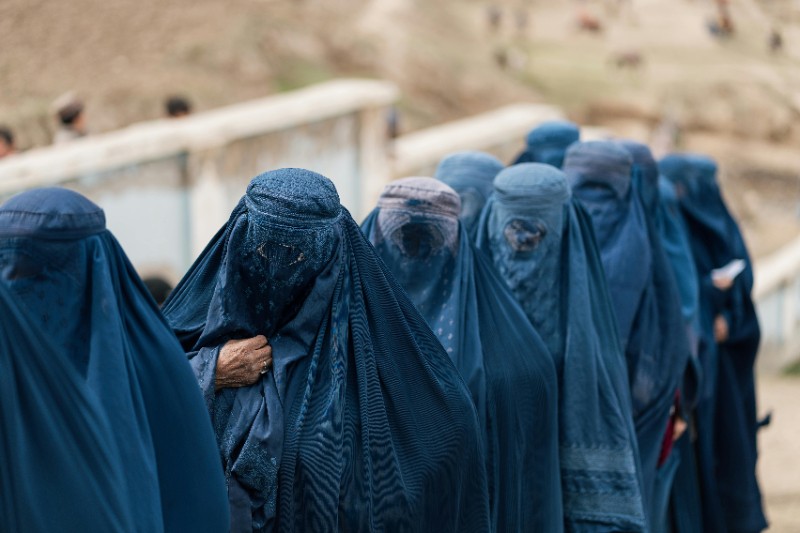
A recently introduced penal code in Afghanistan, governed by the Taliban, has evoked significant concern and condemnation from women’s rights activists. This new legislation appears to equate women with “slaves,” granting husbands and so-called “slave masters” permission to administer physical punishment, provided they do not break any bones or cause “open wounds.” This formalizes extensive constraints on women’s rights under the current regime.

Creation of a Tiered Social System

The 90-page penal code features provisions that categorize society into various strata, leading to differential punishments based on an individual’s social status. Reportedly, individuals can be classified as “free” or “slave,” which establishes a rigid hierarchy akin to a caste system. According to the code, religious leaders occupy the highest tier, followed by elites, the middle class, and the lower class.

Disparate Punishments Based on Social Class

Under the new structure, the consequences for crimes vary greatly among different social categories. A religious scholar committing an offense may receive only a warning, while those in the elite class may face advice or a summons. Individuals from the middle class risk imprisonment, and for those in the lower class, punishments could include both imprisonment and corporal penalties.

Women Classified as “Slaves”

Within this framework, women are treated as being equivalent to “slaves,” allowing husbands and “slave masters” to exercise discretionary control, including physical punishment. Rights advocates have expressed heightened alarm regarding this specific aspect of the penal code.

Implementation of the Penal Code

Copies of the new criminal code, titled De Mahakumu Jazaai Osulnama, have reportedly been distributed to courts throughout Afghanistan. Many individuals in the country are reluctant to discuss its provisions, fearing retribution from the Taliban. Additionally, separate guidelines are said to criminalize public discussions regarding the code.

Judicial Process for Women

The code stipulates that serious offenses will be adjudicated by Islamic clerics rather than conventional legal institutions. Lesser offenses fall under “ta’zir” (discretionary punishment), which can mean a husband beating his wife if she is perceived as the “offender.” Although the legislation technically allows women to pursue legal redress for assaults, significant hurdles remain. Women must demonstrate serious injury to a judge, and to do so, they must remain fully covered and be accompanied by a male relative, even if the accused is their husband.

Challenges to Seeking Justice

Deterioration of Legal Protections for Women

The code represents a notable regression in legal protections that were established under the previous NATO-backed government, which had outlawed forced marriages and other forms of gender-based violence, imposing penalties ranging from three months to a year for domestic violence. Under the new code, even if women navigate the barriers to prove an assault, the maximum penalty for the husband is a mere 15 days.

Additional Restrictions for Women

The Taliban’s penal code does not explicitly condemn physical, psychological, or sexual violence against women. One of the few avenues for women who experience severe abuse to seek justice involves displaying their injuries in court while fully veiled and accompanied by a male guardian. This requirement, along with the need for a male chaperone, significantly hampers women’s ability to file complaints, especially when their abuser is their spouse.

Criminalization of Seeking Refuge

The rights organization Rawadari points to a specific clause in the code that further jeopardizes women’s safety from domestic violence. Article 34 states that if a woman frequently visits her father’s home or that of other relatives without her husband’s consent and declines to return upon his request, both she and any family members who support her are subject to a three-month prison sentence.

Widespread Concerns About Legal Protections

The swift distribution and implementation of the penal code across Afghan courts have generated anxiety regarding legal protections, particularly for women and those from lower social echelons. Legal experts are reporting growing distress among individuals who fear facing severe penalties under the new regulations. Observers note that the code’s provisions reflect historical interpretations of Islamic texts, revealing a stark divergence from previous Afghan legal standards.

Institutionalization of Discrimination

Human rights groups and legal professionals caution that this new penal code effectively institutionalizes discrimination and diminishes safeguards for society’s most vulnerable members.

Long or Short, get news the way you like. No ads. No redirections. Download Newspin and Stay Alert, The CSR Journal Mobile app, for fast, crisp, clean updates!

App Store –  https://apps.apple.com/in/app/newspin/id6746449540 

Google Play Store – https://play.google.com/store/apps/details?id=com.inventifweb.newspin&pcampaignid=web_share

Latest News

Popular Videos