


Archaeologists Discover 2,000-Year-Old Carbonised Bread
The CSR Journal Magazine

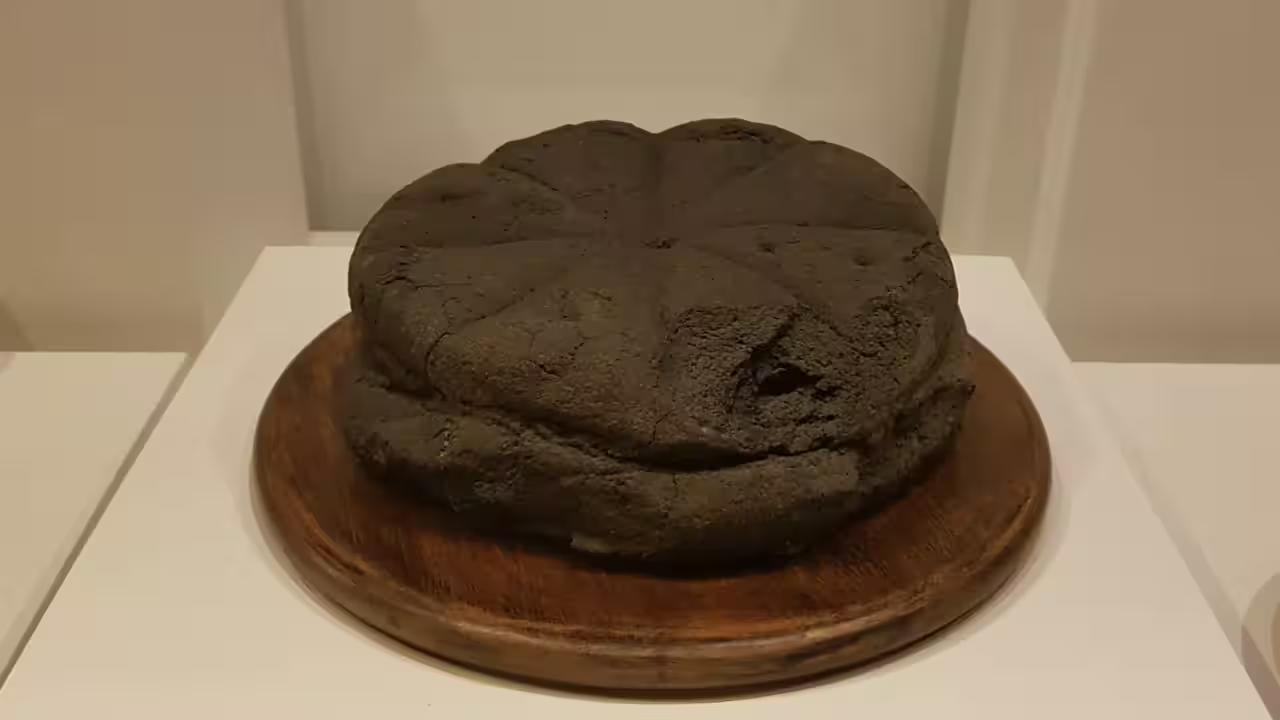
The eruption of Mount Vesuvius in AD 79 preserved a loaf of bread in an oven in the Roman town of Herculaneum. This catastrophic event buried the town under volcanic material, effectively trapping the bread for nearly two millennia.

Archaeologists unearthed the loaf during excavations in 1930, revealing a carbonised relic that provides invaluable insights into ancient Roman culinary practices. The discovery is significant as it offers a tangible connection to the food consumed during that era, complementing historical records.

Features of Roman Bread

Analysis of the bread from Herculaneum indicates that bakers employed various techniques to enhance the loaves’ functionality. Many of the loaves were round and slightly flattened, with lines cut into the surface prior to baking. These incisions served a practical purpose, facilitating easier division into portions.

The most prevalent design in the vicinity of Mount Vesuvius featured eight segments, known as ‘panis quadratus’, derived from the Latin term ‘quadra’, which referred to the division of bread. The eight-section design allowed the loaf to be halved and further divided into four and subsequently eight pieces. However, this was not the sole design found; archaeologists also recovered two well-preserved loaves featuring six segments each.

One of these was excavated from the House of the Brick Altar, while the other was located in the Palestra area, showcasing the variety of bread types produced in ancient Herculaneum. In addition to segmentation, some loaves bore stamps pressed into the dough, which remained visible post-baking. This practice likely served as a means of identification, as many households prepared dough at home but used communal ovens for baking.

The stamps helped distinguish ownership among the various loaves baked in shared facilities. Rectangular stamps were commonly used, with one notable example from the House of the Brick Altar displaying the letters “VM”. While the exact meaning of these letters remains unknown, they offer further insight into the bread-making practices of the time.

Recreation of Ancient Roman Bread

The British Museum highlighted the significance of this ancient bread during a 2013 exhibition on Pompeii and Herculaneum. Italian chef Giorgio Locatelli was invited to recreate the loaf, following a recipe that aimed to replicate the appearance of Roman bread. The ingredients included wholemeal or plain flour, spelt or buckwheat flour, salt, sugar, water, and biga acida, a type of sourdough starter.

The preparation involved mixing the flours, gradually adding the sourdough and water, and kneading the dough before allowing it to rise for approximately one and a half to two hours. To achieve the distinctive look of the loaf, a string was tightened around the exterior to create a raised edge, while a knife was used to divide the top into eight segments.

The addition of a stamp before baking was also explained by the museum. The loaf was then baked at 200 degrees Celsius for around 30 to 45 minutes, resulting in a modern interpretation of the ancient recipe. Excavations in Herculaneum revealed more than just large loaves; smaller flatbreads were also discovered.

These flatbreads, some resembling biscuits, featured hollowed centres and holes that may have been used for strings. Their surfaces displayed geometric designs and plant-like patterns. Archaeologists found three groups of these flatbreads stacked along the Lower Decumanus, suggesting they were likely sold in thermopolia, establishments that offered prepared food to the public.

Long or Short, get news the way you like. No ads. No redirections. Download Newspin and Stay Alert, The CSR Journal Mobile app, for fast, crisp, clean updates!

App Store – https://apps.apple.com/in/app/newspin/id6746449540

Google Play Store – https://play.google.com/store/apps/details?id=com.inventifweb.newspin&pcampaignid=web_share

Latest News

Popular Videos
