


Apple iPhone Duo Review: What Stands Out About The Company’s First Foldable
The CSR Journal Magazine

Apple launched the iPhone Duo, its first foldable smartphone, on September 9 alongside the iPhone 18 Pro and iPhone 18 Pro Max. While the two Pro models are already available in India and globally, the Duo will arrive in India on October 23, ahead of the Diwali shopping season.

While foldable phones have been around for years and Apple is a late entrant to the category, the Duo feels distinct from many of the devices already available, particularly because of its design, folding mechanism and inner display.

A Different Take On Foldable Design

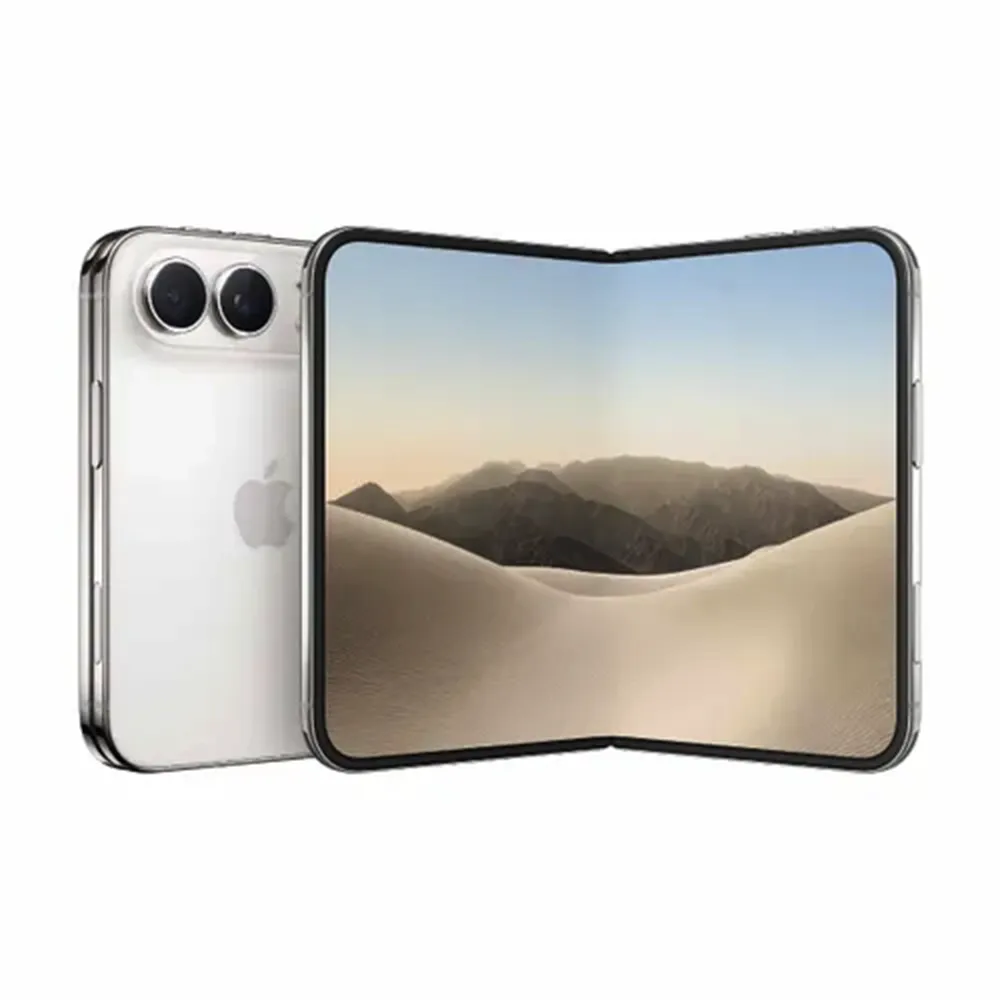
Apple has opted for what can be described as a pocket-book design rather than the more familiar tablet-style or flip-phone form factors. The phone has a straight spine with rounded edges, giving it a shape closer to a thick passport when folded.

The rounded edges on the right side of the device make the Duo look different from other foldables. Given Apple’s influence on smartphone design, this approach could also become a reference point for other Android manufacturers in the coming months.

Apple says the passport-like shape allows the phone to sit comfortably in the hand and makes it easy to carry and use when folded. That is largely true, although the device may feel somewhat broad for people with smaller hands.

The almost square form factor nevertheless feels natural when carrying the phone, much like a pocket book or passport.

The Mathematics Behind The Displays

One of the more unusual aspects of the Duo is that its inner and outer displays share the same aspect ratio. The phone has a 5.4-inch outer display and a 7.6-inch inner screen, with both using an aspect ratio based on the square root of 2:1, or approximately 1.4:1.

That ratio has a useful geometric property. It is also used for paper sizes such as A3, A4 and A5 because a sheet can be divided in half while retaining the same aspect ratio.

On the iPhone Duo, this means the outer screen and inner display maintain the same proportions. Apps can therefore divide the displays in different ways while retaining a consistent aspect ratio.

The approach gives Apple and developers a simple framework to build interfaces and features across the two displays. It may also explain why the software experience feels cohesive when moving between the outer and inner screens.

The consistent proportions allow Apple to create interface animations that transition smoothly between the two displays. The result is a software experience that makes the foldable design feel more integrated rather than like two separate screens.

A Folding Mechanism That Stands Out

The software is not the only part of the Duo that feels carefully engineered. The physical folding mechanism is one of the most noticeable aspects of the phone.

Apple uses magnets inside the phone to make the device fold with a satisfying snap. At the same time, the magnets are calibrated so that opening the phone does not require the user to force the two halves apart.

The folding and unfolding process feels seamless, much like the software transitions between the inner and outer displays.

Of all the foldable phones tried so far, the Duo’s folding and unfolding mechanism stands out as particularly refined.

Matte Inner Display Reduces Glare And Crease

The other major surprise is the nano-textured matte finish on the inner display. Apple says the finish was chosen to reduce glare on the larger screen, which is expected to be used frequently for watching and consuming content.

Beyond reducing reflections, the matte finish also gives the inner display a more premium appearance. It may also help Apple minimise the visibility of the foldable screen’s crease.

The Duo does not have a completely crease-free display, but the crease is fainter than expected and is difficult to see unless specifically examined. It is also barely noticeable when running a finger across the screen.

After nearly eight years of foldable smartphones, the Duo comes close to offering a crease-free experience, even though the display itself is not technically creaseless.

Premium Hardware With Some Foldable Compromises

The rest of the phone follows a familiar Apple formula, although the foldable form factor imposes some limitations.

The titanium body feels strong and the overall finish appears highly refined. The software is polished and includes animations and features designed specifically around the larger display.

The phone is powered by the A20 chipset. Despite its extremely thin profile, the device appeared to run cool and efficiently during the brief hands-on experience.

The rear camera system, however, does not appear to be in the same class as the cameras on the iPhone 18 Pro. That remains one of the compromises manufacturers are still attempting to address with foldable phones.

The inner display houses an under-display camera. Whether that camera represents a noticeable compromise will require a more detailed assessment closer to the phone’s sale.

The absence of Face ID is another aspect that will need to be evaluated. Apple instead offers Touch ID through the side button, and it remains to be seen whether that system can compensate for the loss of Face ID.

Can The Duo Match The iPhone 18 Pro?

Overall, the iPhone Duo appears to be a sophisticated foldable package, although its price makes it almost prohibitively expensive.

Apple has taken a different approach from Samsung and other foldable phone makers, but there appears to be a clear logic behind many of its choices. The company has also approached the device in its characteristic way, prioritising engineering and refinement without placing cost at the centre of the design process.

The folding mechanism is a good example. It looks simple and effortless when used, but achieving that experience requires considerable engineering. The same applies to the matte inner display and the barely visible crease.

Whether the Duo can match the hardware heights reached by the iPhone 18 Pro series remains uncertain. It is unlikely to match the Pro models in every hardware category, particularly cameras, but it should compete closely in several core areas.

Where the Duo could have the biggest advantage is the overall user experience. Based on the brief hands-on experience, Apple’s first foldable has the potential to offer an experience that not only distinguishes it from other foldables but could surpass what the category has offered so far.

Long or Short, get news the way you like. No ads. No redirections. Download Newspin and Stay Alert, The CSR Journal Mobile app, for fast, crisp, clean updates!

App Store –  https://apps.apple.com/in/app/newspin/id6746449540 

Google Play Store – https://play.google.com/store/apps/details?id=com.inventifweb.newspin&pcampaignid=web_share

Latest News

Popular Videos
