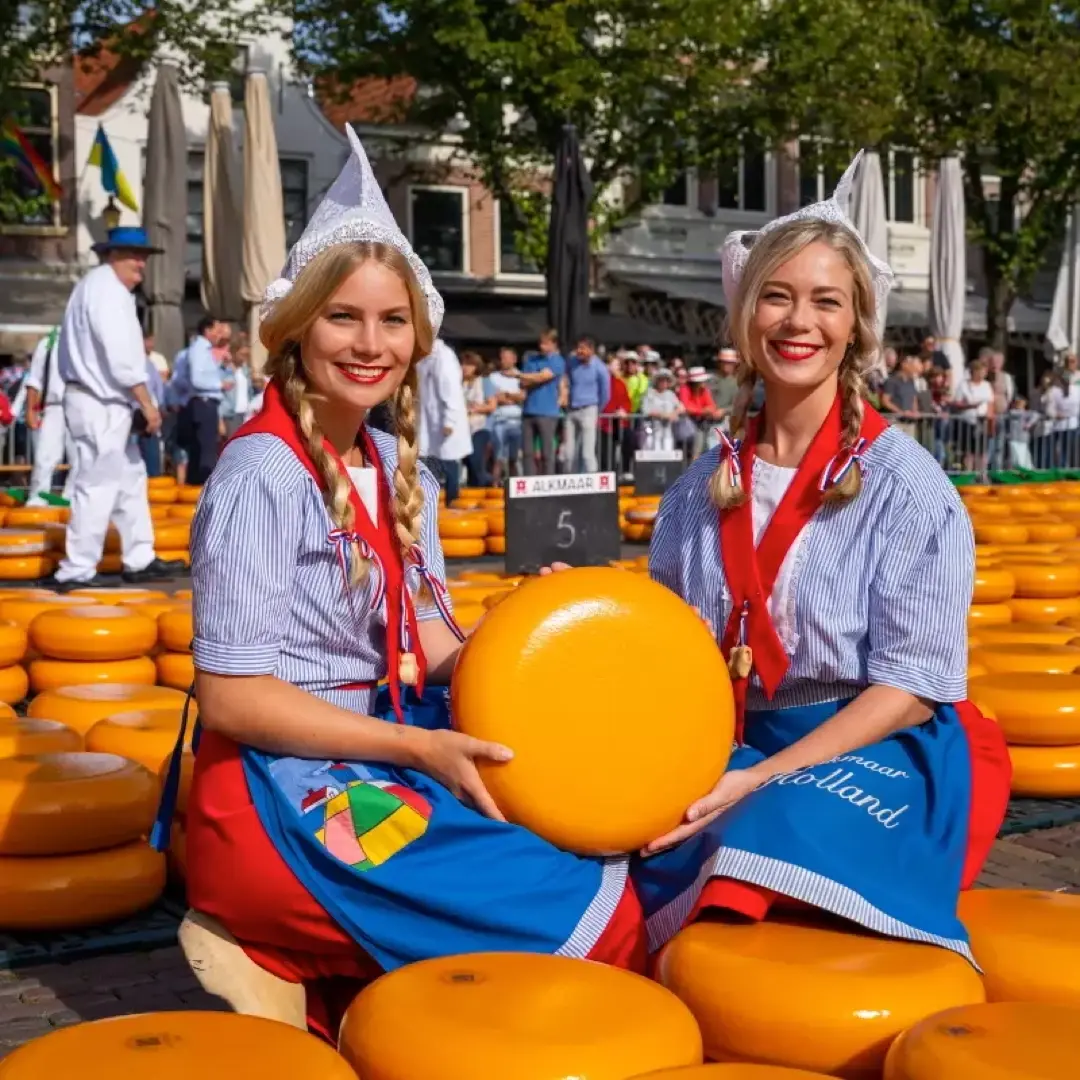
Every summer Friday in Alkmaar, the air is filled with the aromas of aged cheese as wooden stretchers navigate the cobblestoned Waagplein. At 10 a.m., a bell signals the beginning of a longstanding market tradition. Men in pristine white attire and straw hats move swiftly, carrying hefty stretchers adorned with vibrant yellow cheese wheels. This ritual is not merely for tourists; it is a deeply rooted trading custom that has persisted for centuries. For the residents of Alkmaar, cheese is an integral part of their cultural identity, tracing its lineage back to 1365 when the city became authorized to weigh cheese. Over time, farmers and merchants transformed the weekly gathering into one of the Netherlands’ most cherished customs, rekindling age-old practices of bargaining, weighing, and transporting cheese every Friday from April to September.
The Roots of Trade in Alkmaar
Before it became a prominent tourism attraction, the cheese market played a crucial role as a trading hub. Farmers from nearby villages delivered their cheeses to local traders who then exported them across Europe. The establishment of weighing scales in 1365 facilitated fair transactions under city oversight. By the early seventeenth century, the cheese trade flourished, necessitating multiple weighing stations within Waagplein. During the Dutch Golden Age, thousands of cheese wheels funneled through Alkmaar annually, as the Netherlands rose as a major trading entity. The market today continues to embody these historical practices, offering visitors a glimpse into the operations that once defined the economic landscape of the city.
The Cheese Carriers’ Guild
At the heart of this ritual lies the Cheese Carriers’ Guild, known as the Kaasdragersgilde, founded in 1593. This guild is pivotal in the transportation of cheese during the market. Its membership is exclusive, adhering to a structured hierarchy that reflects the organization’s historical lineage. Members don white uniforms and straw hats embellished with colored ribbons that signify their respective teams. Each team, overseen by a foreman, collaborates to maneuver the heavy cheese loads across the square. The ceremonial head of the guild, often referred to as the Cheese Father, initiates proceedings each week by gathering the carriers, confirming their attendance, and announcing the market’s official commencement, marked by the ringing of the bell.
The Carriers’ Distinctive Movement
The visual centerpiece of the market is the dynamic movement of the cheese carriers. In pairs, they lift wooden stretchers, each capable of holding eight large cheeses, amounting to approximately 160 kilograms. Their fast, rhythmic trot across the square is crucial for maintaining balance and stability while navigating the bustling market scene. This unique motion adds to the ceremonial atmosphere, showcasing the skill required to transport the cheese while captivating onlookers from around the globe.
The Art of Hand-Clap Bargaining
Before any cheese reaches transportation, it must undergo the traditional bargaining process known as handjeklap, or hand clapping. During this negotiation, buyers and sellers repeatedly clap their hands while announcing prices. Each clap signifies a new offer or counteroffer, proceeding until mutual agreement is achieved, culminating in a final clap that seals the deal. Although this method now serves mainly as a lively performance, it remains a nostalgic nod to how business was historically conducted.
The Weighing House and Fairness
Once a transaction is finalized, cheese carriers transport the wheels to the historic Waag, a central weighing house that has served this purpose for centuries. Inside, the weighing master oversees the process to ensure accurate weight registration, a crucial task historically, as merchants relied on weight for pricing cheese. Specialist inspectors also played a vital role, using precise tools to assess the quality and standards of the cheese being sold.
The Enduring Legacy of Dutch Cheese
The assortment of cheeses showcased includes celebrated Dutch varieties like Gouda and Edam, which have become symbolic of the nation’s culinary tradition. Dutch farmers have mastered cheese aging and transport techniques, facilitating extended preservation and global distribution. The significance of cheese in the Dutch diet and economy remains strong, with the Netherlands producing and exporting large quantities annually.
The Market’s Cultural Evolution
Throughout its history, the Alkmaar cheese market has experienced interruptions, notably during World War II. However, post-war, it resumed, reviving a tradition central to the city’s character. While now a cultural event, it attracts crowds eager to witness the carriers, the spirited bargaining, and traditional weighing processes.
Long or Short, get news the way you like. No ads. No redirections. Download Newspin and Stay Alert, The CSR Journal Mobile app, for fast, crisp, clean updates!
For many years, the general perception of cheese in India was limited to processed options like cheese cubes, slices, and spreads. The introduction of...