


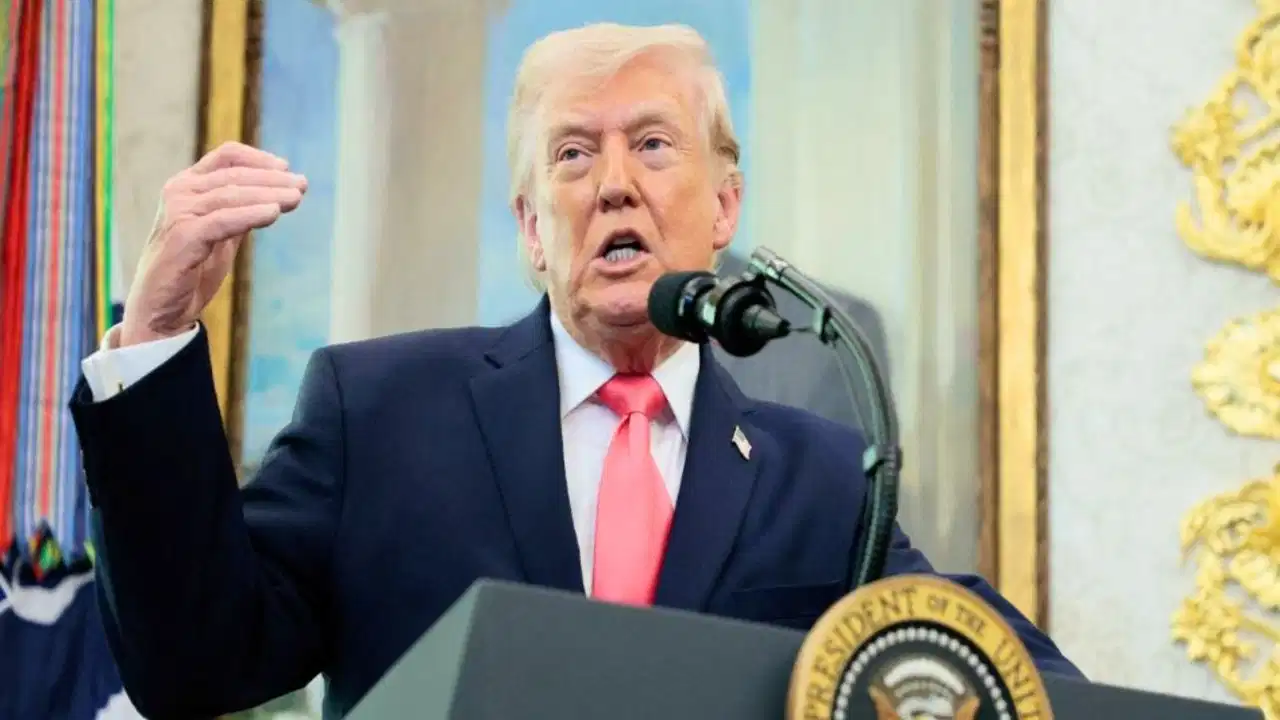

US President Donald Trump expressed a lack of concern regarding Iran’s return to the negotiation table after recent talks in Islamabad. Speaking at Joint Base Andrews, Trump claimed that Iran is in a “very bad shape” and “very desperate,” signalling a decisive shift in the assessment of Tehran’s military capabilities. He stated that Iran’s military strength has allegedly been severely diminished following US military operations.
During his statements, the President asserted that Iran’s missile stockpiles have been “largely depleted,” suggesting that the results of the US actions have made a significant impact. Trump’s remarks follow over a month of US military engagement aimed at curtailing Iran’s capabilities. He conveyed that the United States has a superior understanding of the circumstances, citing a prolonged 21-hour meeting as a key factor in their judgement.
Trump characterised the Iranian leadership as unreliable, accusing them of failing to maintain commitments made during a ceasefire agreement, particularly regarding the strategic Strait of Hormuz. His characterisation of Iranian leaders as “liars” reflected a broader disdain for their actions, as he pointed to unfulfilled promises linked to maritime security.
Details on the Continued Blockade and Naval Actions
As part of the ongoing pressure on Iran, Trump announced that a blockade on the Strait of Hormuz would be enforced starting at 10 am the following day. The blockade is aimed at hindering Iran’s ability to export oil and is expected to be supported by other nations. The President described this measure as “very effective,” emphasising the coordinated international effort to limit Iran’s oil trade.
In his statements, Trump emphasised that some vessels are allegedly attempting to navigate around traditional routes to transport oil, highlighting a need for correction in these practices. He reiterated that the United States has substantial oil reserves, claiming a production capacity exceeding that of both Russia and Saudi Arabia combined. This assertion served to bolster the US’s position in the current regional dynamics.
The President further stated that the US Navy would immediately commence operations to intercept vessels in the region. This action aims to prevent any shipments that may enable Iran’s economic activities through the Strait. Trump’s declaration of the Navy’s readiness underscores heightened tensions and an escalated military presence in the region.
Stalemate in US-Iran Negotiations
The recent negotiations in Islamabad concluded without a resolution, continuing a pattern of stalled discussions between the two nations. Despite the extended 21-hour dialogue, US Vice President JD Vance stated that no agreements were reached. The current deadlock appears to reinforce the difficulties faced in addressing the broader US-Iran relationship.
Following the conclusion of the talks, Vice President Vance returned to the United States, emphasising the ongoing nature of the issues at hand. The stalemate reflects the complexities in negotiating parameters surrounding Iran’s nuclear ambitions and regional activities, underscoring the persistent challenges in diplomatic engagements.
The situation remains fluid, and the implications of the announced blockade and military operations are yet to be fully realised. Discussions continue among international parties regarding the future of negotiations and the strategic path forward in dealing with Iran, amid increasing regional tensions.