


Ancient Indian Artisans Perfected Tabla’s Acoustic Harmony
The CSR Journal Magazine

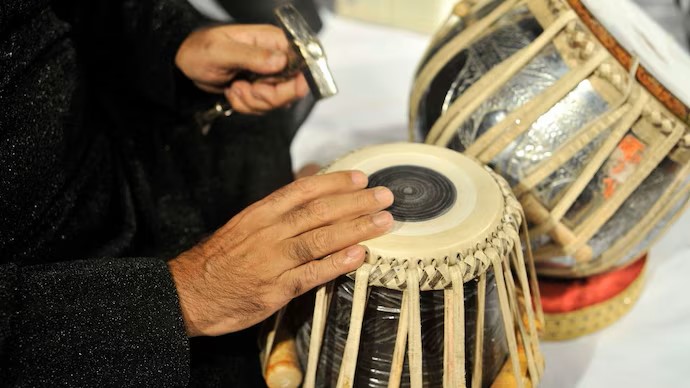
The tabla is renowned for more than just maintaining rhythm; it is celebrated for its melodic qualities. When the right-hand drum is struck, it produces a distinct sound characterised by clarity and warmth reminiscent of string instruments like the sitar. This unique tonal quality allows the tabla to resonate alongside vocalists during Hindustani music performances, effectively accompanying the melody.

Listeners often appreciate how the tabla does not merely act as a percussive element but rather interacts dynamically with the music, enhancing the overall performance. Yet, what makes the tabla’s ability to carry melody so extraordinary is that it defies the conventions of physics that govern percussion instruments.

For many years, traditional views held that circular drums lacked the capability to create distinct musical notes associated with melodies. Despite these beliefs, Indian artisans managed to craft these ‘singing’ drums well before any scientific exploration could explain the phenomenon.

Acoustic Properties of Drums

Most drums are, in strict acoustic terms, considered to be flawed in their ability to produce harmonious music. When a drumhead is struck, the skin vibrates in a chaotic manner, resulting in multiple overlapping vibrations called modes. Each mode produces sound at distinct frequencies, which can lead to dissonance rather than harmony.

This complexity is less of an issue for string instruments, where tones align in an orderly sequence known as the harmonic series. In these instruments, harmonic overtones complement the primary note, creating a rich, melodic sound. However, the sound produced by circular drumheads, like those of the tabla, does not conform neatly to such structures, making it ostensibly unsuitable for melodic purposes.

Traditionally, physicists believed that percussion instruments could only serve to maintain rhythm and could not carry melodies due to their inherent acoustic limitations. The case of tabla, however, challenges this understanding, signifying that something unique was at play within the tradition of Indian drumming.

C.V. Raman’s Groundbreaking Research

In 1919, C.V. Raman, a notable physicist based in Calcutta, set out to explore the acoustic properties of Indian drums. Attending concerts, he observed that the tabla and mridangam produced pitched sounds, with their higher notes blending harmoniously with string instruments. This observation led him to embark on a systematic study of their acoustics.

On January 15, 1920, Raman’s findings were published in the journal Nature in a paper entitled “Musical Drums with Harmonic Overtones.” Raman concluded that Indian drums, contrary to established belief, could produce overtones that fit into a perfect harmonic series. This revelation not only validated the expertise of Indian artisans but also posed further questions about the underlying mechanism.

The secret to the tabla’s unique sound lies in the syahi, a dark paste of iron oxide and starch applied in layers on the drumhead. This added weight and careful distribution of material redistribute the vibration patterns, allowing selected frequencies to reinforce one another, hence producing clear musical tones instead of chaotic noise.

Despite the absence of formal acoustic theory in its development, the craftsmanship behind the tabla represents a sophisticated understanding of sound acoustics that was achieved through generations of meticulous listening and refinement. Modern analyses have confirmed Raman’s initial discoveries, demonstrating the enduring accuracy of this traditional technique.

Long or Short, get news the way you like. No ads. No redirections. Download Newspin and Stay Alert, The CSR Journal Mobile app, for fast, crisp, clean updates!

App Store –  https://apps.apple.com/in/app/newspin/id6746449540 

Google Play Store – https://play.google.com/store/apps/details?id=com.inventifweb.newspin&pcampaignid=web_share

Latest News

Popular Videos
