


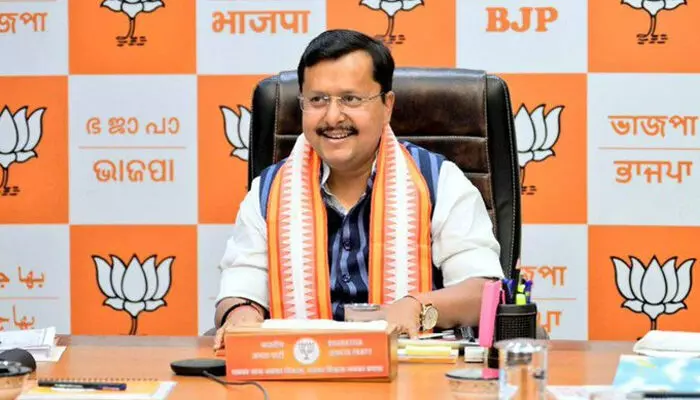
“33% Women’s Reservation In Line With Mahatma Phule’s ideals”: BJP President Nitin Nabin
The CSR Journal Magazine

On April 11, BJP National President Nitin Nabin expressed that the proposed 33 per cent reservation for women legislators in the Lok Sabha is aligned with the principles of Mahatma Jyotiba Phule. This remark was made during a tribute ceremony commemorating Phule’s 200th birth anniversary in New Delhi. Alongside Nabin, key BJP leaders, including national general secretaries Arun Singh, Dushyant Kumar Gautam, and Tarun Chugh, paid floral respects to the social reformer.

Legacy of Mahatma Jyotirao Phule

Mahatma Jyotirao Phule, born on April 11, 1827, in Satara, Maharashtra, is recognised as a prominent Indian activist, reformer, and writer. He was instrumental in the fight against the caste system and was a pioneer in promoting women’s education. Phule, in collaboration with his supporters, established the Satyashodhak Samaj, which aimed to secure equal rights for peasants and those from lower castes.

Nitin Nabin highlighted Phule’s significant contributions to social reform, stating that the nation continues to honour his legacy. He referenced Phule’s introduction of the first girls’ school and efforts to abolish the Sati system as foundational achievements that resonate with contemporary values. The BJP, under Prime Minister Narendra Modi, has initiated numerous programmes, such as ‘Beti Bachao Beti Padhao,’ to empower women through education and self-sufficiency.

Nabin further articulated that the introduction of 33 per cent reservation in the Lok Sabha serves to uphold the ideals espoused by Phule regarding women’s rights and representation in governance.

Government’s Legislative Proposals

The government is contemplating amendments to increase the number of Lok Sabha seats from 543 to 816, proposing that a minimum of 273 of these be reserved for women. This change aims to facilitate increased female representation in India’s legislative processes. Currently, the Lok Sabha comprises 543 seats, and the proposed expansion would represent a 50 per cent increase, emphasising the importance of including women’s voices in politics.

The Union Cabinet has already greenlighted a draft amendment bill pertaining to the Nari Shakti Vandan Adhiniyam, 2023, which sets the stage for the implementation of such measures in the upcoming 2029 Lok Sabha elections. This legislative framework strives to guarantee 33 per cent representation of women in both Parliament and State Legislative Assemblies.

Furthermore, the Constitution (One Hundred and Sixth Amendment) Act, 2023, establishes a robust provision for female representation, encompassing reserved quotas specifically designed for Scheduled Castes and Scheduled Tribes women. This initiative marks a pivotal advancement toward achieving greater gender equality within Indian political structures.

Conclusion: Significance of Female Representation

The advocacy for a 33 per cent reservation for women in the Lok Sabha is emblematic of both historical and modern efforts to enhance gender representation in governance. By honouring Mahatma Jyotiba Phule’s ideals, the BJP aims to address gender disparities in Indian politics. As legislative measures evolve, the commitment towards empowering women and valuing their contributions in societal developments remains a cornerstone of political discourse in India.

Long or Short, get news the way you like. No ads. No redirections. Download Newspin and Stay Alert, The CSR Journal Mobile app, for fast, crisp, clean updates!

App Store –  https://apps.apple.com/in/app/newspin/id6746449540 

Google Play Store – https://play.google.com/store/apps/details?id=com.inventifweb.newspin&pcampaignid=web_share

Latest News

Popular Videos
