


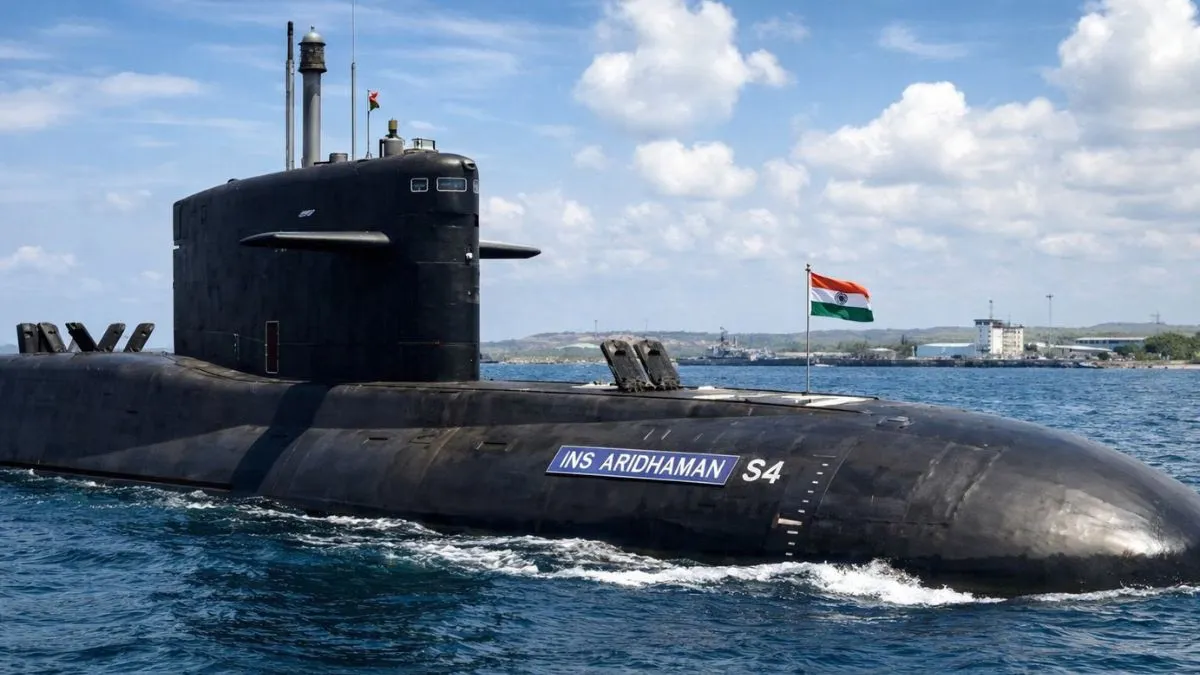
INS Aridhaman Commissioned as India’s Third Ballistic Missile Submarine
The CSR Journal Magazine

The induction of INS Aridhaman marks a pivotal moment in India’s naval capabilities, signifying the country’s advancement in nuclear deterrence. This submarine, India’s third indigenously developed nuclear-powered ballistic missile submarine, enhances India’s position alongside established nuclear powers such as the United States, the United Kingdom, and France. The government made a subdued announcement of this milestone, with Defence Minister Rajnath Singh acknowledging its importance through a brief social media post instead of a formal press release.

INS Aridhaman complements India’s existing fleet, which includes the earlier submarines, INS Arihant and INS Arighaat. These developments in India’s naval strategy highlight a critical evolution towards maintaining a Continuous At Sea Deterrence (CASD) posture. CASD refers to the strategy of ensuring that at least one nuclear submarine is operational at all times, thereby presenting a formidable deterrent against potential adversaries.

For India, whose nuclear doctrine revolves around a no-first-use policy, the ability to maintain an effective second-strike capability is crucial. Nuclear-powered submarines like INS Aridhaman provide the stealth and mobility necessary for this capability, ensuring that India can respond to any nuclear aggression with assured destruction.

Technical Aspects of SSBNs

INS Aridhaman is classified as a Ship Submersible Ballistic Nuclear (SSBN) submarine. Unlike conventional submarines, which rely on diesel-electric propulsion and require surfacing for air, SSBNs use a compact nuclear reactor for power. This allows them to operate underwater for extended periods without surfacing for air, enhancing their stealth capabilities. The endurance of an SSBN is primarily limited by crew fatigue and food supplies rather than fuel.

Ballistic missile submarines are characterised by their ability to carry nuclear-tipped missiles, not for engaging in conventional naval conflicts, but for remaining hidden and poised for a potential retaliatory strike. This concealment provides a strategic advantage over other nuclear delivery systems, which may be targeted on land or in the air.

The development of INS Aridhaman underscores the growth of India’s SSBN program, which has been shrouded in secrecy since its inception in the late 1960s. The construction of such submarines involves complex engineering challenges, particularly in integrating a functioning nuclear reactor capable of withstanding the rigours of sea service.

Future Developments and Strategic Implications

Despite the advancements represented by INS Aridhaman, India’s current fleet may not meet all its strategic needs. Analysts suggest that a robust CASD posture ideally requires a fleet of at least four operational submarines to mitigate risks associated with maintenance and unexpected operational issues. This need became evident when INS Arihant was reportedly out of action for several months due to a mishap.

Looking ahead, the Indian Navy plans to expand its capabilities further with the proposed S5 class of submarines. These new vessels are expected to feature enhanced size and capabilities, allowing for a more significant operational range and a modernised missile launch system.

Additionally, the establishment of INS Varsha, a designated submarine base along India’s eastern coast, aims to provide a secure environment for submarines during maintenance and preparations. This facility will enhance the survivability of India’s nuclear submarines, ensuring they can maintain readiness and resilience in the face of potential threats.

Long or Short, get news the way you like. No ads. No redirections. Download Newspin and Stay Alert, The CSR Journal Mobile app, for fast, crisp, clean updates!

App Store –  https://apps.apple.com/in/app/newspin/id6746449540 

Google Play Store – https://play.google.com/store/apps/details?id=com.inventifweb.newspin&pcampaignid=web_share

Latest News

Popular Videos
