


Dragonflies and Humans Share Red Light Detection Mechanism: Study Suggests Medical Potential
The CSR Journal Magazine

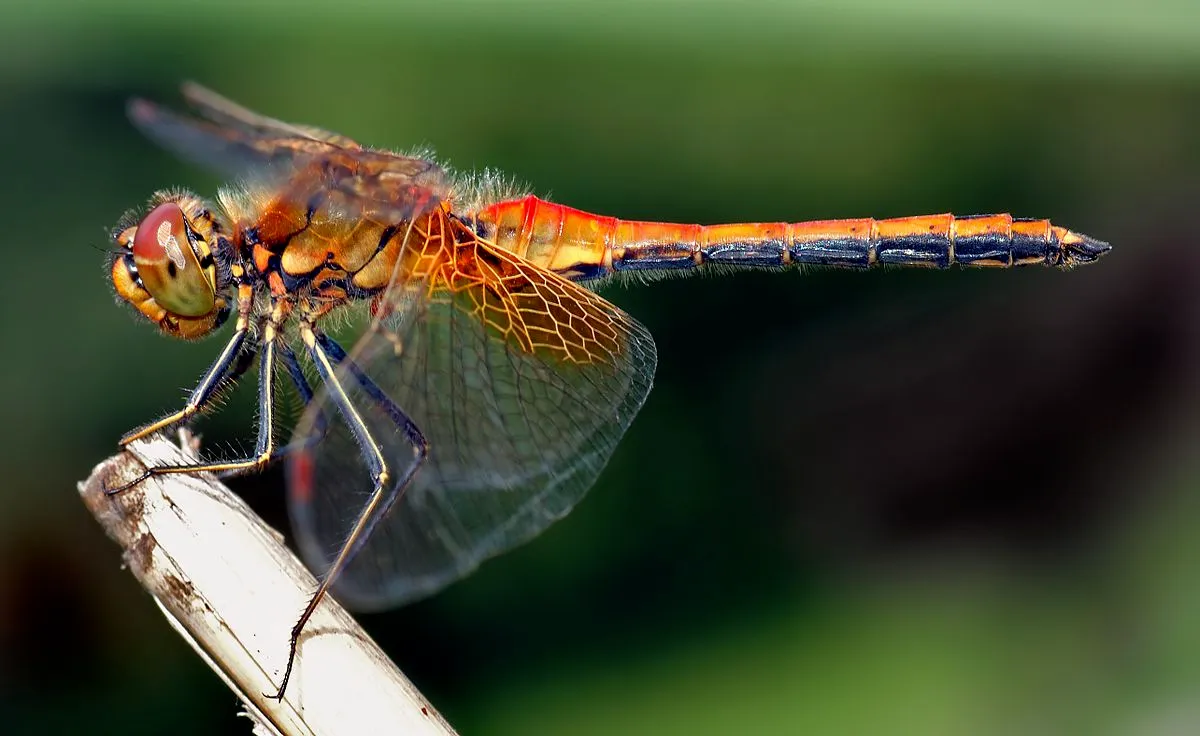
This article discusses a remarkable discovery that connects the vision of dragonflies with that of humans. Researchers at Osaka Metropolitan University (OMU) in Japan have identified that both species utilise the same biological mechanism to detect red light. This finding opens up possibilities for advancements in medical treatments.

Both dragonflies and humans rely on proteins known as opsins to perceive colour. In humans, there are three types of opsins that detect blue, green, and red wavelengths. Interestingly, dragonflies are equipped with a more acute response to red light than most insects, as one of their opsins can detect wavelengths around 720 nanometres, surpassing the range visible to the human eye.

According to Professor Akihisa Terakita, one of the key researchers, this sensitivity in dragonflies represents one of the most effective red-sensitive visual pigments documented. Such acute vision is advantageous for dragonflies, particularly in distinguishing males from females in flight.

The Evolutionary Advantage of Dragonflies

The study also explores the evolutionary reason behind dragonflies’ enhanced ability to see red. The researchers found that differences in the red and near-infrared reflections from dragonfly bodies aid in gender recognition during aerial encounters. This trait likely aids male dragonflies in locating potential mates more efficiently.

The research team conducted experiments measuring how light interacts with dragonflies, which shed light on the distinct visual capabilities in the context of mating behaviours. This adaptability in their vision suggests a strategic evolutionary adaptation for reproductive success.

Additionally, the researchers discovered the remarkable similarity in the molecular mechanisms of red light detection between dragonflies and mammals. Graduate student Ryu Sato, the leading author of the study, highlighted that the mechanism behind dragonfly red opsin is strikingly similar to that of humans, suggesting an independent evolutionary occurrence among unrelated species.

Potential Applications in Medicine

Beyond the implications for zoology, these findings may carry significant medical benefits. The research indicates a critical position within the dragonfly opsin protein that influences light sensitivity. By manipulating this position, scientists managed to extend the protein’s sensitivity further into the near-infrared spectrum, demonstrating its ability to trigger cellular responses.

This discovery has particular relevance in the field of optogenetics, which utilises light-sensitive proteins for investigating and potentially treating various medical conditions. Near-infrared light boasts the advantage of penetrating deeper into body tissues compared to standard red light, thus offering more effective options for targeting internal organs or nerves.

Professor Mitsumasa Koyanagi remarked on the significance of these developments, indicating that the dragonfly opsin could serve as a valuable optogenetic tool capable of detecting light within living organisms at greater depths. The implications of this research extend towards innovative therapeutic avenues, demonstrating how the intersection of biology and technology can enhance medical practices.

Long or Short, get news the way you like. No ads. No redirections. Download Newspin and Stay Alert, The CSR Journal Mobile app, for fast, crisp, clean updates!

App Store –  https://apps.apple.com/in/app/newspin/id6746449540 

Google Play Store – https://play.google.com/store/apps/details?id=com.inventifweb.newspin&pcampaignid=web_share

Latest News

Popular Videos
